



How We Rank Listings
Addictions.com organizes local rehab listings to help you compare real treatment options in and around Jamaica, not to promote any single facility. Listings are drawn from licensed and accredited providers, and we prioritize centers that hold recognized credentials such as Joint Commission or CARF accreditation and current state licensure through the New York State Office of Addiction Services and Supports (OASAS).
We surface the details that matter most when someone is choosing care: the levels of care a facility offers, the substances and populations it treats and the ways it accepts payment, including Medicaid, Medicare, private insurance and sliding-scale fees. We do not accept payment for higher placement, and we regularly review listings to keep facility information current.
Every listing is meant to be a starting point for a direct conversation with a provider about your situation.
Rehab in Jamaica: What to Know
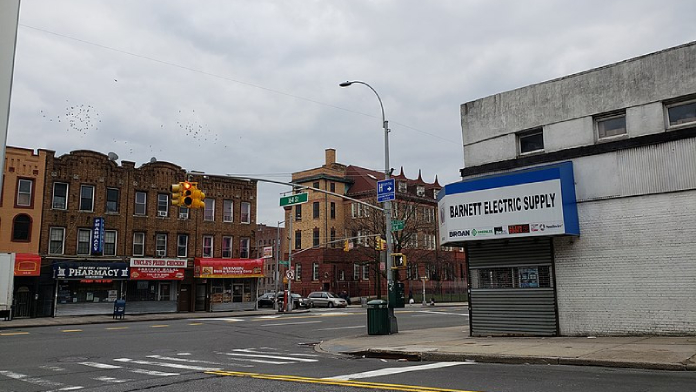
Jamaica is a large, densely populated neighborhood in the southeastern section of Queens, one of the five boroughs of New York City. People searching for treatment here are covered by New York City’s public health system and by New York State’s OASAS-regulated provider network, which gives the area a deeper mix of nonprofit, hospital-affiliated and community-based programs than many parts of the state.
Addictions.com currently lists 28 treatment facilities serving Jamaica, spanning medical detox, inpatient care and a large base of outpatient clinics. You can compare programs across the borough and the rest of the state through the New York rehab directory.
Jamaica has a long-standing local treatment presence built around neighborhood providers rather than out-of-town facilities. The Queens Village Committee for Mental Health for J-CAP, founded in Jamaica in 1968 and now part of the Acacia Network, runs residential and integrated care from its health center on Sutphin Boulevard and is licensed by OASAS.
Other established local programs, including Bleuler chemical dependence services and outpatient providers along Jamaica Avenue and Guy Brewer Boulevard, offer intensive and standard outpatient care close to public transit. For a broader look at how these programs fit together, see our overview of addiction treatment options.
Most treatment need in the area is tied to opioids. This is because fentanyl was detected in 81% of drug overdose deaths across New York City in 2022, and it remains the substance most often involved in fatal overdoses in Queens. Many Jamaica providers reflect this by offering medication-assisted treatment with buprenorphine and naltrexone alongside counseling.
If opioid use is the primary concern for you or a loved one, our guide to opioid use disorder explains what treatment typically involves.
Cost of Rehab in Jamaica
There is no single price for rehab in Jamaica. What you pay depends on the level of care, the length of the program and how you pay for it.
Because facility-level pricing in Jamaica is not published in a way we can verify, the figures below reflect New York State averages for the full cost of care without insurance. Actual costs in New York City often run higher than the statewide average for hospital-based detox and lower for community-based and OASAS-funded outpatient clinics.
These averages cover a mix of program lengths and settings. In practice, Medicaid and OASAS-funded programs can reduce out-of-pocket costs to little or nothing for eligible New York residents, which is why so many Jamaica providers accept public coverage.
If you have private insurance, confirming your benefits before you enroll is the single biggest factor in what you will actually pay; our guide to using insurance for rehab walks through how to check.




How to Pay for Rehab in Jamaica
Across the 28 facilities listed in Jamaica, most accept several forms of payment, and public coverage is widely available. Nearly all listed centers accept self-payment, most work with private insurance and a large majority accept Medicaid, which reflects the neighborhood’s reliance on New York’s public health programs.
The cards below show how many local facilities accept each common payment type.

The right payment path depends on your coverage and income. The sections below outline how the most common options work for treatment in Jamaica.
Medicare
Medicare covers medically necessary addiction treatment, including inpatient care, outpatient services and counseling, for people 65 and older and for some younger people with qualifying disabilities. Twelve of the facilities listed in Jamaica accept Medicare. Coverage details, including copays and the number of covered days, vary by the specific plan, so it helps to confirm what your plan includes before enrolling.
Our guide explains how Medicare and other insurance cover addiction treatment.
Medicaid
New York Medicaid is one of the most important payment sources for treatment in Jamaica, accepted by 22 of the facilities listed here.
For eligible residents, Medicaid can cover detox, inpatient rehab, outpatient care and medication-assisted treatment, often at little or no out-of-pocket cost. Many local OASAS-licensed programs, including community providers on Sutphin Boulevard and Jamaica Avenue, build their services around Medicaid coverage.
If medication is part of your care plan, our overview of medication-assisted treatment explains how buprenorphine and methadone are typically covered.
Military Benefits
Four Jamaica facilities accept TRICARE, the health program for active-duty service members, veterans and their families. Veterans may also be eligible for substance use treatment through the VA. If you are a veteran or family member, our rehab resources for veterans and military can help you understand what is available.
Insurance and Private Pay
Most Jamaica facilities, 23 of the 28 listed, accept private health insurance, and 27 accept self-payment. If you are paying privately, ask each program about its total cost, what a typical length of stay looks like and whether it offers a payment plan. Verifying your benefits in advance is the best way to avoid surprise costs.
Other Low-Cost Options
For people without insurance or with limited income, 15 Jamaica facilities offer sliding-scale fees and 16 offer some form of financial assistance. Scholarships and grant-funded slots can also lower the cost of care at some New York programs; our guide to rehab scholarships explains how to find and apply for them.
Levels of Care Available in Jamaica
Treatment in Jamaica is weighted toward outpatient care, with a solid base of detox and inpatient options and strong support for people managing both a substance use disorder and a mental health condition. Of the facilities listed, 22 offer standard outpatient care, 10 offer inpatient rehab, 5 offer medical detox and 24 offer dual diagnosis treatment.


Medical detox is usually the first step for people with physical dependence on alcohol, opioids or benzodiazepines. It provides 24-hour medical supervision to manage withdrawal safely. You can learn what to expect in our guide to supervised medical detox.
Inpatient rehab, also called residential treatment, has clients live at the facility for a set period, typically 30 to 90 days, with structured therapy and around-the-clock support. It is often recommended for more severe substance use or when a stable home environment is not available. See our overview of inpatient rehab for more.
Outpatient care is the most common level of care in Jamaica. Clients live at home and attend treatment sessions on a schedule, which makes it easier to keep working or caring for family while in recovery. Programs range from standard weekly counseling to more intensive schedules; our guide covers outpatient rehab and intensive outpatient programs.
Dual diagnosis programs, offered by 24 of the listed facilities, treat a substance use disorder alongside a co-occurring mental health condition such as depression or an anxiety disorder. Integrated care that addresses both at once tends to produce better outcomes than treating either alone. Learn more about co-occurring depression and recovery.
Specialty Programs in Jamaica
Many Jamaican facilities tailor treatment to specific groups and to particular substances. Young adult, alcohol and opioid programs are especially well represented, and several centers offer care designed for women, men, older adults, veterans and LGBTQ+ clients.
The cards below show how many local facilities offer each specialty.





Alcohol and opioids drive most treatment demand in Jamaica, and the 20 alcohol-specific and 17 opioid-specific programs reflect that. If alcohol is your main concern, our guide to alcohol use disorder explains what treatment looks like.
The five LGBTQ+ friendly programs provide LGBTQ+ affirming addiction care, and 25 young adult programs serve a group with distinct needs around young adult and college student substance use.
Free and Low-Cost Rehab Resources in Jamaica
If cost or insurance is a barrier, a network of free and low-cost services is available to Jamaica residents through New York City and New York State programs. The resources below can help with immediate crisis support, treatment referrals, harm reduction supplies and connections to care.
Contact each program directly to confirm current hours and services.
Crisis and Treatment Referral Lines
These free, confidential lines are available at any hour and can connect you to counseling, treatment referrals and support. If you are in immediate danger, call 911. For ongoing emotional support, see our crisis and suicide prevention resources.
- 988 Suicide and Crisis Lifeline
nyc.gov/988
Free, confidential, 24/7 support, including counseling referrals and connections to local services. Multilingual assistance is available. - SAMHSA National Helpline
samhsa.gov
Free, confidential, 24/7 treatment referral and information service. - NYC 311
nyc.gov/311
Information on local drug and alcohol resources, the 988 hotline and social services.
State and Government Programs
- NYS Office of Addiction Services and Supports (OASAS)
oasas.ny.gov
Provides a treatment locator, prevention and recovery resources and harm reduction services statewide, and lets residents order free naloxone kits. - NYS OASAS HOPEline
oasas.ny.gov
A 24/7 confidential helpline for addiction support and treatment referrals across New York.
Community and Local Providers
- Queens Village Committee for Mental Health for J-CAP (Acacia Network)
acacianetwork.org/j-cap
An OASAS-licensed nonprofit offering residential substance use treatment, integrated primary and behavioral health care, and services for veterans.
Harm Reduction
- NYS DOH and OASAS harm reduction services
health.ny.gov
Free naloxone (Narcan), overdose training and fentanyl test strips are available through registered opioid overdose prevention programs across New York, with syringe services programs available in New York City.
Drug and Alcohol Use Statistics in Jamaica
Jamaica’s treatment need is best understood through Queens and citywide data, since neighborhood-level figures are not separately reported.
In 2023, 463 Queens residents died from an unintentional drug overdose, a slight decrease from 472 the year before, and Queens continued to have the lowest overdose death rate of the five boroughs.
Fentanyl is still the substance most often involved in these deaths. The figures below place Jamaica’s situation in local context.
The prominence of fentanyl in local overdose deaths is the clearest signal of where treatment need is greatest in Jamaica, and it is reflected in the number of local programs offering medication-assisted treatment for opioid use. For national context on how these trends compare, see our national substance use statistics.
Resources
- New York City Department of Health and Mental Hygiene. (2024). Health Department Announces Drug Overdose Deaths in 2023 Decreased Slightly for the First Time in Four Years. https://www.nyc.gov/site/doh/about/press/pr2024/doh-announces-overdose-deaths-decreased-in-2023.page
- New York City Office of the Chief Medical Examiner and NYC DOHMH Bureau of Vital Statistics. (2022). Overdose Deaths Among Queens Residents, 2022. https://www.nyc.gov/assets/doh/downloads/pdf/basas/overdose-deaths-among-residents-qn-2022.pdf
- New York City Department of Health and Mental Hygiene. (2023). Health Department Issues Commissioner’s Advisory As Overdose Crisis Reaches Historic Levels. https://www.nyc.gov/site/doh/about/press/pr2023/commissioner-advisory-overdose-crisis-reaches-historic-levels.page
- Acacia Network. Queens Village Committee for Mental Health for J-CAP, Inc. https://acacianetwork.org/j-cap/
- New York State Office of Addiction Services and Supports. Naloxone and Harm Reduction Resources. https://oasas.ny.gov/naloxone