




How We Rank Listings
Every facility on this page is independently reviewed before it appears in our directory. We do not accept payment for placement, and advertising relationships don’t influence ranking position. Listings are evaluated on a consistent set of criteria so that families comparing options in Brooklyn can trust what they see.
- Licensure and accreditation: active New York State Office of Addiction Services and Supports (OASAS) certification, with Joint Commission or CARF accreditation noted where present.
- Levels of care: the range of services offered, from medical detox through outpatient and aftercare.
- Evidence-based treatment: use of clinically supported therapies and FDA-approved medications.
- Payment transparency: clarity around insurance, Medicaid, sliding-scale fees, and self-pay options.
- Specialty populations: dedicated programming for veterans, LGBTQ+ adults, young adults, older adults, and people with co-occurring mental health conditions.
- Patient feedback and complaint history: publicly available reviews and any disciplinary record on file with state regulators.
We update listings on a rolling basis as facilities change their services, accreditations, or contact information. If you spot an error in a listing, please let us know.
Rehab in Brooklyn: What to Know
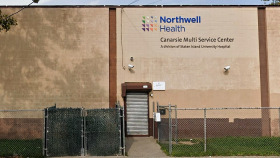
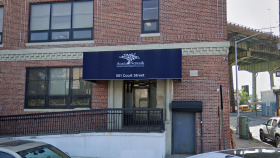
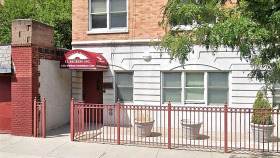
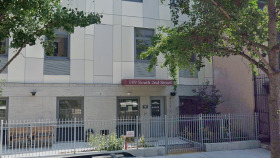
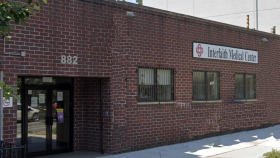
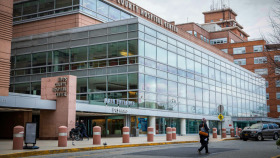
Brooklyn, which is coterminous with Kings County, is home to roughly 2.6 million people and is the most populous of New York City’s five boroughs. The borough has 134 addiction treatment facilities serving its neighborhoods, ranging from large hospital-based programs at NYC Health + Hospitals/Kings County and Maimonides Medical Center to community-based outpatient clinics, OASAS-licensed residential programs, and federally qualified health centers offering medication-assisted treatment. For a wider view of what is available across the state, see our New York rehab directory.
Most treatment in Brooklyn is delivered through outpatient and standard ambulatory care. The borough has 122 outpatient clinics, 52 facilities offering medical detox, 38 inpatient or residential programs, and 108 facilities that treat co-occurring mental health and substance use disorders.
Brooklyn is also served by the New York State Office of Addiction Services and Supports (OASAS), which oversees more than 1,700 addiction treatment programs statewide and operates its own network of state-run Addiction Treatment Centers.
The borough has been deeply affected by the overdose crisis driven by fentanyl in the unregulated drug supply. In 2023, Brooklyn residents had an overdose death rate of 32.9 per 100,000, the second-lowest among NYC boroughs but still a serious public health emergency, with East New York, Bedford-Stuyvesant, and Crown Heights experiencing some of the highest neighborhood-level rates in the city.
Central Brooklyn remains one of three areas, alongside the South Bronx and Harlem, where overdose deaths have remained highest through 2025. The NYC Department of Health and Mental Hygiene (DOHMH) distributes free naloxone, fentanyl test strips, and xylazine test strips through 15 syringe service programs and public health vending machines across the city, several of them in Brooklyn. For broader context on opioid use disorder and how the drug supply has changed, see our overview of heroin addiction and current treatment options.
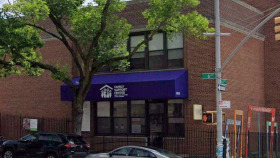
Brooklyn also has a robust network of harm reduction organizations rooted in local neighborhoods, including the After Hours Project in Bushwick, Family Services Network of New York, and VOCAL-NY in Boerum Hill. These organizations provide a low-barrier entry point for people who use drugs, with referrals into clinical care when someone is ready. For a primer on the full continuum of services, our guide to addiction treatment options explains how detox, residential care, outpatient, and aftercare fit together.
Cost of Rehab in Brooklyn
There is no single price for addiction treatment in Brooklyn. What a person pays depends on the level of care, the length of stay, the facility’s insurance contracts, and whether they qualify for Medicaid, sliding-scale fees, or scholarship support. Statewide averages for New York provide a useful anchor, with the understanding that costs in New York City typically run at or above the state average due to higher facility and staffing costs in the downstate region.
These figures represent the full sticker price before any insurance, Medicaid, or scholarship offsets are applied. Most people in Brooklyn pay a small fraction of these totals once coverage is factored in. The next section walks through how to pay for treatment in Brooklyn, including how to verify your insurance benefits before admission.





How to Pay for Rehab in Brooklyn
Of the 134 addiction treatment facilities in Brooklyn, 124 accept self-payment, 113 accept private health insurance, and 114 accept New York State Medicaid. Coverage in New York is among the broadest in the country. Under state law, OASAS-funded providers cannot turn anyone away based on inability to pay, and the Mental Health Parity and Addiction Equity Act requires commercial plans to cover substance use disorder treatment at parity with other medical care.






Medicare
87 Brooklyn facilities accept Medicare. Medicare Part A covers inpatient detox and rehab when admitted to a participating hospital, while Part B covers outpatient counseling, partial hospitalization, opioid treatment program services, and screening. Part D plans typically cover the medications used in medication-assisted treatment, including buprenorphine. Older adults represent a growing share of overdose deaths in New York City, and 63 Brooklyn programs offer dedicated services for people in this age group.
Medicaid
New York State Medicaid is the largest single payer for addiction treatment in Brooklyn, accepted by 114 of the borough’s 134 facilities. Coverage is administered through Medicaid Managed Care plans contracted with the state. Benefits include inpatient detox, residential treatment, partial hospitalization, intensive outpatient, standard outpatient counseling, and all three FDA-approved medications used in medication-assisted treatment for opioid use disorder. Telehealth coverage has been expanded since 2020 and is now a standard option for ongoing outpatient care.
TRICARE and Military Benefits
26 Brooklyn facilities accept TRICARE for active-duty service members, retirees, and eligible dependents. Veterans enrolled in VA health care can also access substance use treatment directly through the Brooklyn campus of the VA NY Harbor Healthcare System on Poly Place, which operates an Ambulatory Substance Abuse Program and residential domiciliary services at no cost to eligible veterans.
Insurance and Private Pay
Most large commercial carriers serving New York contract with Brooklyn treatment providers. Plans vary in their network of in-network facilities, prior authorization rules, and cost-sharing requirements. Before admission, a facility’s intake team or your insurer’s behavioral health line can confirm benefits and out-of-pocket exposure. Self-pay remains an option for people who want to avoid insurance involvement or whose plan does not contract with a specific provider.
- Aetna
- Cigna
- Empire BlueCross BlueShield
- EmblemHealth
- Fidelis Care
- Healthfirst
- MetroPlusHealth
- MVP Health Care
- Oscar
- UnitedHealthcare
Other Low-Cost Options
68 Brooklyn facilities offer sliding-scale fees based on household income, and 78 provide some form of financial assistance, scholarship, or charity care. Federally qualified health centers throughout the borough provide outpatient substance use services on an income-adjusted basis. 29 facilities offer in-house financing or payment plans for people who do not qualify for other forms of assistance.
Free Treatment Programs
2 Brooklyn facilities advertise fully free treatment. A larger number of free or near-free slots are available through OASAS-funded programs that accept patients regardless of insurance status, through nonprofit scholarship programs, and through Catholic Charities and Samaritan Daytop Village. Our overview of rehab scholarships and free treatment pathways walks through how to apply.
Levels of Care Available in Brooklyn
Brooklyn has 52 facilities offering medical detox, 38 inpatient or residential programs, 122 outpatient clinics, 108 programs treating co-occurring mental health and substance use disorders, and 10 sober living homes. The borough also has 2 partial hospitalization programs.

Medical Detox
Medical detox provides 24-hour monitoring during withdrawal from alcohol, opioids, benzodiazepines, or other substances. Withdrawal from alcohol and benzodiazepines can be medically dangerous and is the most common reason a person needs supervised medical detox. Detox typically ranges from 3 to 7 days and is the entry point into a longer course of treatment, not a standalone solution.
Inpatient and Residential Rehab
Inpatient programs provide live-in treatment ranging from 14 days to several months, with structured therapy, peer support, medical care, and often medication-assisted treatment. Residential treatment is most often recommended for people with severe substance use, unstable housing, co-occurring mental health conditions, or a history of multiple unsuccessful outpatient attempts.
Partial Hospitalization Programs (PHP)
PHP provides intensive day treatment, typically 5 to 6 hours a day, 5 days a week, while a person sleeps at home or in sober living. With only 2 partial hospitalization programs in Brooklyn, capacity is limited, and many patients access PHP through providers in Manhattan or Queens instead.
Outpatient and Intensive Outpatient
Outpatient is the most common form of treatment in Brooklyn by a wide margin, with 122 clinics ranging from once-weekly counseling to intensive outpatient programs meeting three or more days a week. Outpatient is appropriate for people with stable housing, lower-acuity substance use, or as a step-down from inpatient or PHP.
Dual Diagnosis and Co-Occurring Care
108 Brooklyn programs treat co-occurring mental health and substance use disorders in an integrated way. This matters because conditions like depression and other co-occurring mood disorders are present in roughly half of people entering treatment for substance use, and treating only one side of the picture is associated with worse outcomes.
Sober Living and Aftercare
10 sober living homes operate in Brooklyn, offering substance-free housing for people transitioning out of residential treatment. Sober living is typically paired with outpatient counseling and community participation. Our guide to rehab aftercare and continuing care covers what to expect after a formal treatment episode ends.
Specialty Programs in Brooklyn
Brooklyn has a deep specialty-care landscape, reflecting both the borough’s size and the cultural and linguistic diversity of its neighborhoods. Specialty programs structure their therapy groups, intake screening, and discharge planning around the needs of a specific population, which can substantially improve engagement and retention compared to general-population programs.






34 Brooklyn programs offer LGBTQ+ affirming addiction care, with intake processes and group therapy designed for people whose gender identity, sexual orientation, or family-of-origin experience shapes their treatment needs. 16 programs offer dedicated rehab resources for veterans and military, with several integrating trauma-focused therapy for combat-related PTSD alongside substance use treatment.
120 Brooklyn programs serve young adults, including programs designed to address the unique pressures and developmental stage of college and early-career adults. For families looking at this population, our overview of young adult and college student substance use covers what to look for. 63 programs offer dedicated services for older adults, a group with growing overdose risk and frequent polypharmacy considerations.
89 Brooklyn facilities treat alcohol use disorder, the single largest reason people enter treatment in New York State, and 79 treat opioid use disorder, which drives the majority of overdose deaths in the borough.
Free and Low-Cost Rehab Resources in Brooklyn
Several no-cost or low-cost resources serve Brooklyn residents directly, in addition to the OASAS-funded treatment system. Crisis lines are available 24/7 for people in immediate need, and harm reduction programs across the borough distribute free naloxone, fentanyl test strips, and referrals to treatment.
Crisis and Helplines
Anyone in Brooklyn experiencing a substance use or mental health crisis can call or text 988 to reach the 988 Suicide and Crisis Lifeline, available 24/7 in English and Spanish, and with interpretation in more than 240 languages. For more on crisis support and warning signs, see our resources on suicide prevention and crisis support.
- 988 Suicide and Crisis Lifeline: call or text 988, 24/7. 988lifeline.org
- SAMHSA National Helpline: 1-800-662-HELP (4357), 24/7, free and confidential treatment referrals. samhsa.gov/find-help/national-helpline
- NYC 311: dial 311, non-emergency city services and referrals to substance use programs. nyc.gov/311
- New York State HOPEline (OASAS): 1-877-846-7369, 24/7, addiction treatment referrals statewide. oasas.ny.gov
City and State Government Resources
- NYC Department of Health and Mental Hygiene (DOHMH), Alcohol and Drug Use Services: citywide programs including free naloxone, fentanyl and xylazine test strips, and treatment referrals. https://www.nyc.gov/site/doh/health/health-topics/alcohol-and-drug-use-services.page
- NYS Office of Addiction Services and Supports (OASAS) treatment finder: search OASAS-certified outpatient and bedded programs statewide. findaddictiontreatment.ny.gov
- Free naloxone by mail: NYC residents can request free naloxone kits delivered to their home. https://www.nyc.gov/site/doh/health/health-topics/naloxone.page
Harm Reduction Programs in Brooklyn
- After Hours Project: 1204 Broadway, Brooklyn (Bushwick). 718-249-0755. Syringe services, naloxone, HIV and HCV testing, treatment referrals. afterhoursproject.org
- Family Services Network of New York: 1420 Bushwick Avenue, Brooklyn. 718-455-6010. Syringe services, harm reduction counseling, case management. fsnny1.org
- VOCAL-NY: 80-A Fourth Avenue, Brooklyn (Boerum Hill). 718-802-9540. Syringe services, advocacy, peer support for people who use drugs. vocal-ny.org
- NYC DOHMH Community Syringe Redemption Program: Borinquen Place mobile site, near the Borinquen Overpass under the BQE, Brooklyn. 8:30 a.m. to 11:30 a.m., select days. https://www.nyc.gov/site/doh/health/health-topics/community-syringe-redemption-program.page
Veterans and Military
- VA NY Harbor Healthcare System, Brooklyn Campus: 800 Poly Place, Brooklyn, NY 11209. 718-836-6600. Ambulatory Substance Abuse Program (ext. 1004), residential domiciliary services, and medication-assisted treatment for eligible veterans. https://www.va.gov/new-york-harbor-health-care/locations/brooklyn-va-medical-center/
- Veterans Crisis Line: dial 988 then press 1, or text 838255. 24/7 confidential support for veterans, service members, and their families. veteranscrisisline.net
Community-Based Nonprofits
- Samaritan Daytop Village: multiple Brooklyn locations offering residential, outpatient, and recovery support services on a sliding-scale and Medicaid-accepting basis. samaritanvillage.org
- OnPoint NYC: harm reduction, overdose prevention services, and referrals to treatment. Citywide programming with referral pathways into Brooklyn-based providers. onpointnyc.org
Drug and Alcohol Use Statistics in Brooklyn
Overdose remains a leading cause of premature death in New York City. After four consecutive years of increases, citywide overdose deaths declined slightly in 2023 and more substantially in 2024. However, Central Brooklyn neighborhoods, including East New York, Bedford-Stuyvesant, and Crown Heights, continue to have some of the highest overdose death rates in the city. Fentanyl in the unregulated drug supply continues to drive the crisis, and xylazine, a non-opioid sedative, is increasingly present in fentanyl-involved overdoses.
For national context on substance use prevalence and the most recent treatment data, see our overview of national substance use statistics.
Resources
- New York City Department of Health and Mental Hygiene. (2024). Unintentional Drug Poisoning (Overdose) Deaths in New York City in 2023. https://a860-gpp.nyc.gov/downloads/44558j08h
- New York City Department of Health and Mental Hygiene. (2024). Health Department Announces Drug Overdose Deaths in 2023 Decreased Slightly for the First Time in 4 Years. https://www.nyc.gov/site/doh/about/press/pr2024/doh-announces-overdose-deaths-decreased-in-2023.page
- New York City Department of Health and Mental Hygiene. (2023). Overdose Deaths Among Brooklyn Residents, 2022. https://www.nyc.gov/assets/doh/downloads/pdf/basas/overdose-deaths-among-residents-bk-2022.pdf
- New York City Department of Health and Mental Hygiene. (2024). Alcohol and Drug Use Services. https://www.nyc.gov/site/doh/health/health-topics/alcohol-and-drug-use-services.page