



How We Rank Listings
Every Bronx facility profile in our directory is built from licensed-provider data and verified against public records. We surface facilities based on the level of care offered, accepted payment types, accreditation status, and the specialty programs each center runs. Listings are not paid placements, and we do not rank facilities by advertising relationships.
Our team reviews directory entries against the New York State Office of Addiction Services and Supports (OASAS) provider registry, SAMHSA’s national treatment locator, and the accrediting bodies listed for each facility (Joint Commission, CARF, LegitScript, NAATP).
We prioritize transparency about cost, insurance, and clinical services so people in the Bronx can compare options on the criteria that matter most to them and their families. When a facility’s information changes, we update the profile within our regular review cycle.
Rehab in the Bronx: What to Know
The Bronx, one of New York City’s five boroughs and within the boundaries of Bronx County, is home to roughly 1.4 million residents and has long borne the heaviest overdose burden in New York City. Our directory currently lists 92 addiction treatment providers serving the borough, ranging from hospital-based detox programs to community outpatient clinics and OASAS-certified opioid treatment programs. People searching for care can also compare options across the broader New York rehab directory for facilities in nearby boroughs and counties.
The local treatment landscape is shaped by a small number of large hospital systems and a dense network of community-based and OASAS-certified providers. NYC Health + Hospitals operates two major public hospitals in the borough, Lincoln in the South Bronx and Jacobi in the East Bronx, both of which run substance use programs and hospital-based detox.
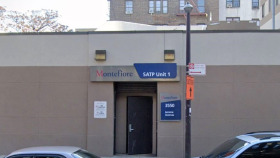
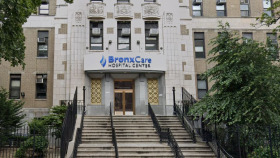
Montefiore Einstein’s Department of Psychiatry and Behavioral Sciences operates one of the longest-running networks of outpatient substance use programs in the borough, with MAT, adolescent services, and integrated care for co-occurring mental health conditions. BronxCare Health System runs additional outpatient chemical-dependence and opioid treatment programs in the central Bronx, and the James J. Peters VA Medical Center on West Kingsbridge Road provides comprehensive substance use disorder care for veterans.
City and state policies have shaped how addiction treatment options are delivered locally. Treatment in the Bronx is heavily public-pay: roughly 83% of facilities in our directory accept Medicaid, and most are OASAS-certified, which means full coverage for eligible New Yorkers.
New York’s opioid settlement funds have flowed to Bronx-based providers, including the Acacia Network, VIP Community Services, and several Caring for Denver-style city initiatives funded through the New York State Opioid Settlement Fund. The South Bronx in particular has received targeted investment, including a Robin Hood Foundation-supported “Hotspotting” program at Lincoln Hospital that pairs ED patients with community health workers and peer counselors for up to a year after discharge.
The borough’s overdose crisis continues to drive treatment demand. The Bronx recorded the highest overdose death rate of any New York City borough in 2023, at 78.0 per 100,000 residents, with neighborhoods including Hunts Point-Mott Haven, Highbridge-Morrisania, Crotona-Tremont, and Fordham-Bronx Park bearing the greatest burden. Fentanyl remains the most common substance involved in overdose deaths, present in 73% of citywide fatal overdoses in 2024. Treatment demand is highest for opioid use disorder, alcohol use disorder, and co-occurring conditions, with stimulant-involved deaths also climbing.




Cost of Rehab in the Bronx
Treatment costs in the Bronx track New York’s statewide averages, which place the state in the middle of the national range for affordability. New York ranks 22nd nationwide in overall addiction treatment costs. Within the borough, prices vary widely by level of care, facility type, and length of stay. Hospital-based and academic medical center programs typically price at or slightly above the state average, while OASAS-certified community programs and city-operated public hospital services are often available at no out-of-pocket cost for Medicaid members and uninsured residents.
Because the Bronx sits within the New York City metro, prices for residential inpatient care often run at the higher end of state averages, particularly at private freestanding facilities. People comparing programs should request a written estimate, ask for the all-inclusive daily rate, and confirm whether items like medication, lab work, and aftercare planning are billed separately.
All health plans regulated in New York must cover substance use disorder treatment under the state’s parity and behavioral health benefit rules, and verifying rehab benefits before admission is the single most effective way to control out-of-pocket costs.





How to Pay for Rehab in the Bronx
Of the 92 treatment providers in our Bronx directory, the majority accept multiple forms of payment. Self-pay is the most widely accepted option, but Medicaid and private health insurance are accepted at more than 75 facilities, reflecting the Bronx’s strong public-payer orientation. Medicare, sliding-scale fees, and financial assistance are also broadly available, widening access for people without comprehensive coverage.






Coverage rules and out-of-pocket exposure vary significantly by payment type. The breakdown below summarizes what each option typically covers in the Bronx and how to confirm benefits before admission.
Medicare
Medicare covers medically necessary substance use disorder treatment for people who are 65 or older or who qualify through disability. Part A covers inpatient hospital and inpatient rehab stays, while Part B covers outpatient counseling and medication management. Part D covers prescription medications, including those used in medication-assisted treatment. Medicare Advantage plans bundle these benefits, often with their own network rules. About 55 facilities in our Bronx directory accept Medicare directly.
Medicaid
New York State Medicaid covers the full continuum of substance use disorder treatment for eligible members, including outpatient counseling, intensive outpatient programs, partial hospitalization, residential treatment, inpatient hospital care, medical withdrawal management, and medication-assisted treatment with methadone, buprenorphine, or naltrexone. OASAS-certified programs accept Medicaid as full payment with no copays for behavioral health services. Medicaid is accepted at 76 facilities in our Bronx directory, including all NYC Health + Hospitals sites, Montefiore Einstein outpatient programs, and BronxCare Health System programs.
Military Benefits
Veterans living in the Bronx can access substance use disorder treatment through the James J. Peters VA Medical Center on West Kingsbridge Road, which offers outpatient substance use programs, medications for opioid use disorder, and integrated mental health care.
The VA Bronx Healthcare System also serves veterans in Northern Queens and Westchester counties. Active-duty service members and dependents enrolled in TRICARE can use benefits at 8 Bronx-area facilities that accept the plan. Families navigating the system can find more guidance through our rehab resources for veterans and military page.
Insurance and Private Pay
Private health insurance is accepted at 76 facilities in our Bronx directory. New York enforces the federal Mental Health Parity and Addiction Equity Act through the Department of Financial Services, which means substance use disorder benefits must be comparable to medical and surgical benefits in the same plan. Major in-state carriers each maintain provider networks across the Bronx, and verifying in-network status is the most important step in controlling cost.
- Aetna
- Anthem Blue Cross Blue Shield
- Cigna
- EmblemHealth
- Empire BlueCross BlueShield
- Fidelis Care
- Healthfirst
- MetroPlusHealth
- Oxford Health Plans
- UnitedHealthcare
Other Low-Cost Options
52 Bronx-area facilities offer sliding-scale fees adjusted to household income, and 50 provide some form of financial assistance. An additional 29 offer financing or payment plans for people paying out of pocket. Sliding-scale and assistance terms vary by provider, so it is worth asking each facility’s intake team directly about eligibility and required documentation.
Free Treatment Programs
Two facilities in our Bronx directory offer free treatment for eligible clients. Free care in the Bronx is most commonly delivered through OASAS-certified community programs, NYC Health + Hospitals safety-net services for uninsured residents, and grant-funded initiatives supported by the New York State Opioid Settlement Fund. People who do not qualify for Medicaid but cannot afford treatment may also be able to access rehab scholarships through individual facilities or nonprofit organizations.
Levels of Care Available in the Bronx
The Bronx’s 92 providers span the full clinical continuum, from acute medical detox to long-term sober living. Our directory includes 36 detox facilities, 35 inpatient rehab programs, and 74 outpatient clinics, with a smaller number of partial hospitalization programs, dual diagnosis programs, and sober living homes.



Medical Detox
Medical detox is typically the first step for people who are physically dependent on alcohol, opioids, or benzodiazepines. The Bronx’s detox capacity includes hospital-based units at NYC Health + Hospitals/Lincoln and NYC Health + Hospitals/Jacobi, freestanding OASAS-certified detox centers, and the state-operated 38-bed Bronx Addiction Treatment Center. A typical medical detox lasts five to seven days, during which clinical staff monitor vital signs and manage withdrawal symptoms with medication when appropriate.
Inpatient Rehab
Inpatient or residential treatment provides 24-hour structured care in a licensed facility, typically lasting 30 to 90 days. Programs combine individual and group therapy, psychoeducation, medication management, and aftercare planning. The 35 inpatient programs in our Bronx directory include a mix of OASAS-certified residential treatment centers, hospital-based units, and gender-specific tracks.
Partial Hospitalization Programs (PHP)
Partial hospitalization is a step down from residential care. Clients attend treatment six or more hours a day, five days a week, while living at home or in sober living. The Bronx has 2 PHP providers in our directory. PHP treatment is often used as a bridge between inpatient rehab and outpatient care, or as a standalone program for people whose home environment is stable enough to support recovery.
Outpatient Treatment
Outpatient programs let people continue working, attending school, or caring for family while receiving treatment. The Bronx has 74 standard outpatient clinics in our directory, including OASAS-certified opioid treatment programs that dispense methadone and buprenorphine, and intensive outpatient programs that meet nine to twelve hours per week. People can compare formats through our broader outpatient rehab guide.
Dual Diagnosis (Co-Occurring Disorders)
72 Bronx facilities are equipped to treat co-occurring substance use and mental health conditions, the highest concentration of any specialty in the borough. Common conditions treated alongside addiction include depression, post-traumatic stress disorder, bipolar disorder, and co-occurring anxiety disorders. Integrated dual-diagnosis care has been shown to produce better outcomes than treating addiction and mental health separately.
Sober Living
Sober living homes provide alcohol- and drug-free residential environments for people transitioning out of formal treatment. The Bronx has 12 sober living homes in our directory, ranging from peer-run recovery houses to clinically supported transitional residences. Most sober living homes work in coordination with outpatient programs and recovery community organizations as part of rehab aftercare.
Specialty Programs in the Bronx
Many Bronx facilities run dedicated tracks for specific populations or substances. Specialty programming can improve engagement and retention by matching the clinical environment to a person’s identity, life stage, or primary substance of concern.






Free and Low-Cost Rehab Resources in the Bronx
The Bronx has one of the densest networks of publicly funded behavioral health resources in New York State, supported by OASAS opioid settlement dollars, NYC Department of Health and Mental Hygiene programs, and NYC Health + Hospitals’ safety-net mission. The resources below cover crisis support, city services, harm reduction, veteran-specific care, and Medicaid-funded treatment.
Crisis Lines
- 988 Suicide and Crisis Lifeline — Call or text 988. Free, 24/7 support for mental health, emotional, and substance use concerns. More information on crisis support and suicide prevention resources.
- NYC 988 — Call 988 or text WELL to 65173. New York City’s free, confidential mental health and substance use support line. Counselors speak more than 200 languages. https://nyc988.cityofnewyork.us/en/
- SAMHSA National Helpline — 1-800-662-HELP (4357). Free, confidential, 24/7 treatment referral service in English and Spanish.
- Veterans Crisis Line — Call 988 then press 1, or text 838255. Connects veterans and their families to VA crisis counselors.
- NYC HOPE Domestic Violence Hotline — 1-800-621-HOPE (4673). 24/7 support for people experiencing intimate partner violence, with referrals to safety planning and shelter.
City Health Department
- NYC Department of Health and Mental Hygiene – Bronx Neighborhood Health Action Center — 1309 Fulton Ave., 3rd Floor, Bronx, NY 10456. Phone: (347) 396-4400. Hub for community health programs, naloxone distribution, and referrals. https://www.nyc.gov/site/doh/health/neighborhood-health/neighborhood-health-action-centers.page
- NYC DOHMH Bureau of Alcohol and Drug Use Prevention, Care and Treatment — Coordinates citywide overdose prevention strategy, naloxone distribution, and Relay program (peer-led ED outreach). Information at nyc.gov/health
Community and Nonprofits
- NYC Health + Hospitals/Lincoln — 234 E. 149th St., Bronx, NY 10451. Public hospital serving the South Bronx with hospital-based detox, addiction recovery services, and the Robin Hood Foundation-funded Hotspotting program for ED patients with opioid use disorder. Phone: (718) 579-5000. https://www.nychealthandhospitals.org/locations/lincoln/
- NYC Health + Hospitals/Jacobi — 1400 Pelham Pkwy. S., Bronx, NY 10461. Public hospital with addiction services and integrated behavioral health programs. Phone: (718) 918-5000. https://www.nychealthandhospitals.org/locations/jacobi/
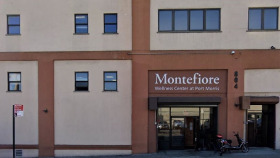
- Montefiore Einstein Division of Services for Addiction — Multiple Bronx locations. Outpatient substance use treatment for adults and adolescents, MAT, and integrated co-occurring care. Access line: (718) 920-2273. https://einsteinmed.edu/departments/psychiatry-behavioral-sciences/division-of-substance-abuse
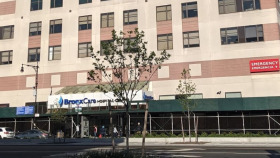
- BronxCare Health System Chemical Dependence Services — 1285 Fulton Ave., Bronx, NY 10456. Outpatient and opioid treatment programs serving the central Bronx. Phone: (718) 590-1800. https://www.bronxcare.org/highlights/latest-news/bronxcare-life-recovery-center
- Acacia Network — Citywide nonprofit with multiple Bronx locations providing OASAS-certified outpatient and residential addiction services, primarily to Spanish-speaking and Latino communities. Phone: (718) 299-1100. https://acacianetwork.org/
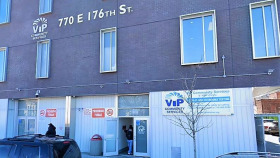
- VIP Community Services — 770 E. 176th St., Bronx, NY 10460. Long-running Bronx provider offering MAT, residential treatment, and supportive services. Phone: (718) 299-1100. https://www.vipservices.org/
- Argus Community Inc. — Bronx-based residential and outpatient programs including specialized dual-diagnosis tracks. Phone: (718) 401-5740. https://www.arguscommunity.org/
Harm Reduction
- BOOM!Health — 540 E. Fordham Rd., Bronx, NY 10458. Bronx-based syringe service program, naloxone distribution, fentanyl and xylazine test strips, HIV and hepatitis C testing, and treatment referrals. Phone: (718) 295-5605. https://hepfree.nyc/hepfree-partner/boomhealth/
- St. Ann’s Corner of Harm Reduction — 886 Westchester Ave., Bronx, NY 10459. South Bronx syringe access, overdose prevention, and integrated behavioral health services. Phone: (718) 585-5544. https://www.hispanicfederation.org/nonprofit-member/st-anns-corner-of-harm-reduction-inc/
- OASAS Harm Reduction Delivered — Free naloxone, fentanyl test strips, and xylazine test strips mailed directly to any valid New York State address. Order at oasas.ny.gov/harm-reduction-delivered.
- NEXT Distro — Mail-based naloxone and harm reduction supply program for New York residents who cannot reach an in-person service. nextdistro.org
VA and Military
- James J. Peters VA Medical Center — 130 W. Kingsbridge Rd., Bronx, NY 10468. Outpatient and residential substance use disorder programs, MAT, integrated mental health care, and Supported Recovery Services for eligible veterans. Phone: (718) 584-9000. https://www.va.gov/bronx-health-care/locations/james-j-peters-department-of-veterans-affairs-medical-center/
- VetConnect NYC — Citywide directory of veteran-focused mental health and addiction resources, peer support, and counseling. Coordinated through the NYC Department of Veterans’ Services. https://www.nyc.gov/employment/programs/vetconnectnyc
Government and Medicaid
- New York State OASAS HOPEline — 1-877-8-HOPENY (1-877-846-7369). 24/7 free, confidential support and referrals to OASAS-certified providers across the state. https://nyproblemgambling.org/support/hopeline/
- New York State Medicaid — Information and enrollment through NY State of Health: 1-855-355-5777 or nystateofhealth.ny.gov
- NYC 311 — Dial 311 or visit nyc.gov/311. City information and referral line for treatment, housing, food, and other basic-needs resources. https://portal.311.nyc.gov/
Faith-Based
- Salvation Army Adult Rehabilitation Center – Bronx — Free long-term residential rehabilitation for men. Citywide intake: (212) 757-2311. https://manhattanarc.salvationarmy.org/
- Catholic Charities Community Services of the Archdiocese of New York — provides counseling, family support, and treatment referrals. Phone: 1-888-744-7900. catholiccharitiesny.org
University and Student Services
- Montefiore Adolescent and Family Wellness Clinic — Outpatient psychiatric and substance treatment for adolescents and young adults, affiliated with Albert Einstein College of Medicine. Phone: (718) 920-2273. https://montefioreeinstein.org/patient-care/services/psychiatry/programs/child-adolescent-outpatient-mental-health/behavioral-health-center
- Fordham University Counseling and Psychological Services — Counseling, assessment, and referral for Fordham students experiencing substance use concerns. Phone: (718) 817-3725. https://www.fordham.edu/student-life/safety-health-and-wellness/counseling-and-psychological-services/
Drug and Alcohol Use Statistics in the Bronx
The Bronx remains at the center of New York City’s overdose crisis. After New York City recorded its first decline in overdose deaths in four years in 2023 (3,046 deaths citywide, down 1% from 2022), 2024 brought a far steeper drop to 2,192 deaths, the largest single-year decline in nearly a decade.
Even with that progress, Bronx residents continued to die from overdose at the highest rate of any New York City borough, with neighborhoods including Hunts Point-Mott Haven, Highbridge-Morrisania, Crotona-Tremont, East Tremont, and Fordham-Bronx Park bearing the heaviest burden. Fentanyl was present in 73% of all fatal overdoses in New York City in 2024, down from 80% in 2023. National context for these figures is available in our overview of national substance use statistics.
Overdose deaths in 2023 remained disproportionately high among Black and Latino New Yorkers, residents of very high-poverty neighborhoods, and New Yorkers ages 55 to 64, a pattern the NYC DOHMH has cited in expanding naloxone distribution, drug-checking services, and peer-led ED outreach in Bronx neighborhoods most affected.
Between 2016 and 2018 alone, New York State agencies distributed more than 330,000 naloxone kits statewide. Since the 2023 launch of OASAS’s Harm Reduction Delivered campaign, 80,000 additional naloxone kits and more than 12 million test strips have been ordered. Bronx-based syringe service programs at BOOM!Health and St. Ann’s Corner of Harm Reduction continue to anchor the borough’s frontline overdose response.
Resources
- New York City Department of Health and Mental Hygiene. (2024). Unintentional Drug Poisoning (Overdose) Deaths in New York City in 2023, Epi Data Brief No. 142. nyc.gov/health.
- New York City Department of Health and Mental Hygiene. (2025). 2024 Overdose Death Data Announcement. nyc.gov.
- Montefiore Einstein Department of Psychiatry and Behavioral Sciences. (2024). Substance Use Disorder Treatment Programs. montefioreeinstein.org.
- New York State Department of Health. (2024). Syringe Service Programs and Naloxone Distribution. health.ny.gov.
- New York State Office of the Attorney General. (2024). Opioid Settlement Fund Investments. ag.ny.gov.
- Mott Haven Herald. (2025). Opioid Crisis Continues in the Bronx, Overdose Prevention Center Hurdles. motthavenherald.com.