




Expert Insights
I recently learned that a street outreach program used in New York City is being implemented in Syracuse, and I couldn’t be more supportive.
Onondaga County has used some of the money from opioid lawsuits and awarded $3.7 million to six organizations for outreach and addiction treatment efforts.
The money will be used towards medication-assisted treatment, harm reduction services, street outreach, increased access to Narcan and drug testing kits, and drug prevention in schools.
I think it’s a great idea that the money is being spent in these specific and meaningful ways because if we don’t reduce harm, we don’t have a chance of saving a life.
By just pushing recovery and abstinence programs, we run the risk of not meeting people where they are at and that’d be dangerous, because of fentanyl infiltrating the drug supply.
People who take drugs need to be supported, not criminalized. And when accessing harm reduction services, people struggling with addiction are more likely to enter recovery.
How We Rank Listings
Our directory is built to help you compare real treatment options, not to sell placement. Every facility listed for Syracuse is a licensed or certified provider, and we organize listings so the most relevant, verifiable programs surface first.
When we order and present rehab centers, we weigh a consistent set of factors:
- Accreditation and licensing, including Joint Commission or CARF status and New York State certification
- Levels of care offered, from medical detox through outpatient and aftercare
- Accepted forms of payment, including Medicaid, Medicare, private insurance, and sliding-scale options
- Specialty and population-specific programming
- Completeness and accuracy of the facility’s verified information
We do not accept payment in exchange for higher placement. Listings reflect what each program actually offers so you can make a side-by-side comparison and decide what fits your situation.
Rehab in Syracuse: What to Know
Syracuse is the seat of Onondaga County and the hub of Central New York. The treatment options reflect that role as a regional care center. Our directory currently lists 30 rehab facilities in and around the city, spanning medical detox, residential care, standard outpatient clinics, and dual diagnosis programs.
People traveling from surrounding counties such as Cayuga, Cortland, Madison, and Oswego often come to Syracuse for higher levels of care, so the local landscape is broader than the city’s size alone would suggest. You can compare programs across the wider state on our New York rehab directory.
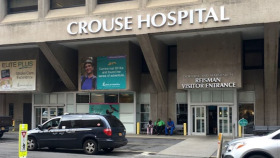
Major health systems and long-standing community providers anchor treatment in the area. Crouse Health runs chemical dependency treatment and a withdrawal management unit on Irving Avenue.
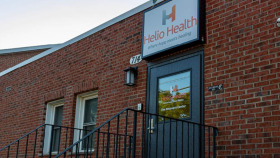
St. Joseph’s Health provides hospital-based services, and Helio Health operates outpatient and recovery programs from North Salina Street.
These providers, along with the region’s SUNY Upstate addiction care resources, give Syracuse a concentration of clinical expertise that smaller Central New York communities lack. If you are weighing where to begin, our overview of addiction treatment options explains how the levels of care fit together.
The county’s substance use picture has shifted in recent years. Onondaga County reported one of its worst stretches during the height of the overdose crisis, but preliminary county data for 2024 showed opioid-involved deaths falling to 90 from 156 the year before, which local officials attribute to expanded harm reduction and outreach.
Fentanyl remains the dominant driver of overdose deaths, and county programs continue to prioritize opioid use disorder treatment and naloxone access.
The Onondaga County Health Department’s Substance Use Initiatives program coordinates much of this work, connecting residents to treatment, recovery, and harm reduction services and distributing naloxone and fentanyl test strips at no cost.
The county has also directed millions from opioid settlement funds toward medication-assisted treatment, street outreach, and a planned recovery drop-in center developed with Catholic Charities and AccessCNY.
Cost of Rehab in Syracuse
Treatment costs in Syracuse follow New York’s statewide averages, with upstate programs generally running closer to the state’s regional baseline than the higher private-pay rates seen in New York City and Long Island.
The figures below reflect the full cost of care without insurance and cover a mix of program lengths and settings. In practice, most people pay far less once insurance, Medicaid, or sliding-scale pricing is applied.
These averages are pulled up by the most intensive levels of care, especially medically supervised detox and residential inpatient rehab.
Community-based outpatient programs and New York’s OASAS-funded clinics typically cost far less, and many Syracuse residents qualify for coverage that reduces out-of-pocket spending to little or nothing. Several factors influence the final price:




Because Syracuse sits in New York’s upstate cost region, local private-pay rates tend to land at or near the state average rather than above it. If cost is a concern, start by verifying your rehab benefits; the difference between the sticker prices above and what you actually pay is usually substantial.
How to Pay for Rehab in Syracuse
Across the 30 Syracuse-area facilities in our directory, programs accept a wide range of payment types, from private insurance and self-pay to Medicaid, Medicare, TRICARE, and sliding-scale fees.
New York has one of the largest publicly funded addiction treatment systems in the country, run through the state Office of Addiction Services and Supports (OASAS), which helps keep care accessible for residents without private coverage.






The right payment path depends on your coverage and situation. Here is how the most common options work for Syracuse residents.
Medicare
Seventeen Syracuse-area facilities accept Medicare, which covers medically necessary addiction treatment for adults 65 and older and for some younger people with disabilities.
Coverage generally includes inpatient hospital detox, outpatient services, and, since recent federal updates, services from Medicare-enrolled addiction counselors. You can learn more about how insurance covers addiction treatment and what to confirm before you enroll.
Medicaid
New York State Medicaid is accepted at 24 of the facilities in our Syracuse directory, making it one of the most widely used payment options locally.
Coverage is delivered through managed care plans such as Fidelis Care, Healthfirst, Molina, and UnitedHealthcare Community Plan, as well as through OASAS-certified providers billing the state directly.
New York Medicaid covers a full range of services, including detox, outpatient care, residential treatment, and medication-assisted treatment with methadone or buprenorphine.
Military Benefits
Twelve area programs accept TRICARE, the health program for active-duty service members, retirees, and their families. Coverage typically includes detox, inpatient and outpatient care, and medication-assisted treatment, though prior authorization rules vary by plan. Veterans in Central New York can also access care and benefits guidance through rehab resources for veterans and military.
Insurance and Private Pay
Twenty-two Syracuse facilities work with private health insurance, and 29 accept self-payment. Under a 2024 update to New York insurance law, plans must reimburse in-network OASAS-certified outpatient providers at rates at least equal to Medicaid, which has widened access to covered outpatient treatment across the state.
If you are paying out of pocket, ask about sliding-scale pricing and payment plans before assuming a program is out of reach.
Other Low-Cost Options
Seven area programs offer sliding-scale fees based on income, and 13 provide some form of financial assistance. These options, combined with OASAS-funded community clinics, mean cost does not have to be a barrier to starting treatment.
Free Treatment Programs
While none of the listed facilities advertise fully free treatment for all clients, New York’s publicly funded system and county harm reduction services fill much of that gap.
Residents who cannot afford care may also qualify for help through rehab scholarships or nonprofit and faith-based programs described in the resources section below. Major insurance carriers used by Syracuse-area programs include:
- Aetna
- Cigna
- Excellus BlueCross BlueShield
- Fidelis Care
- Healthfirst
- Molina Healthcare
- UnitedHealthcare
- Medicaid
- Medicare
Levels of Care Available in Syracuse
Syracuse offers a full continuum of addiction care, including 7 medical detox facilities, 10 inpatient rehab programs, 23 standard outpatient clinics, and 23 programs equipped for co-occurring mental health conditions. That range lets people step down from intensive care to community-based treatment as they progress.

Medical detox is usually the first step when the body has become dependent on alcohol, opioids, or benzodiazepines. Programs provide 24-hour monitoring and medication to manage withdrawal safely. Crouse Health’s withdrawal management unit on Irving Avenue is one local option for supervised detox.
Inpatient and residential rehab provides structured, live-in treatment away from daily triggers, typically over 30 to 90 days. This level suits people with more severe substance use or unstable home environments. Our guide to inpatient rehab explains what a residential stay involves.
Outpatient treatment lets people live at home while attending scheduled therapy and counseling, and it is the most common level of care in Syracuse. Programs range from weekly counseling to more structured schedules, and many local clinics such as Helio Health and Conifer Park offer outpatient and intensive outpatient programs.
Dual diagnosis programs treat addiction alongside conditions like co-occurring depression or anxiety. Because these conditions frequently occur together, integrated treatment tends to produce better outcomes than treating either alone.
Sober living homes offer substance-free transitional housing for people leaving residential treatment. They pair well with ongoing outpatient care and are an important part of rehab aftercare and long-term recovery.
Specialty Programs in Syracuse
Many Syracuse-area facilities tailor treatment to specific populations, recognizing that recovery needs differ by age, gender, background, and the substance involved. The counts below reflect programs in our directory that offer specialized tracks or services.





Gender-specific tracks are widely available, with 20 men’s and 17 women’s programs in the area. Twenty-nine programs serve young adults, a group that benefits from age-appropriate peer support and, in some cases, resources geared toward young adult and college student substance use given Syracuse’s large student population.
Twelve programs are oriented toward older adults, whose treatment needs often intersect with chronic health conditions and prescription medications. Seven programs provide LGBTQ+ affirming addiction care, and two offer dedicated services for veterans and military families, complementing the region’s VA resources.
Reflecting the substances most common locally, 21 programs focus on alcohol use disorder and 20 address opioid use disorder, the two conditions that drive the majority of treatment admissions in Onondaga County.
Free and Low-Cost Rehab Resources in Syracuse
Beyond formal treatment programs, Syracuse and Onondaga County offer crisis support, harm reduction, and community-based services that are free or low cost. The following resources can help you find immediate help, get connected to care, or access naloxone and other supplies.
If you or someone you know is in crisis, reach out to the resources below or explore crisis and suicide prevention resources.
Crisis Lines
- 988 Suicide and Crisis Lifeline
https://988lifeline.org/
Free, confidential support 24/7 for mental health and substance use crises. - NY State HOPEline (OASAS)
https://oasas.ny.gov/hopeline
Free, confidential, 24/7 information and referrals for addiction and problem gambling. - Contact Community Services Crisis Line
https://www.contactsyracuse.org/
Local crisis support for the Syracuse and Onondaga County area.
County Health Department
- Onondaga County Health Department, Substance Use Initiatives
onondaga.gov/health-opioids
Offers free naloxone training and distribution, fentanyl test strips, secondary syringe exchange, peer support, and linkages to treatment.
Community and Harm Reduction
- ACR Health
acrhealth.org
Provides syringe exchange and harm reduction services across Central New York. - Prevention Network CNY
preventionnetworkcny.org
Support and education for families and people living with substance use disorders, plus free naloxone training and fentanyl test strips. - Central Region Addiction Resource Center
cr-arc.org
Serves Cayuga, Cortland, Madison, Onondaga, and Oswego counties.
Faith-Based and Nonprofit
- Hope Connections (Catholic Charities of Onondaga County)
https://ccoc.us/
A peer-led recovery center supporting people affected by mental illness, substance use, or addiction.
Government and Medicaid
- NY State Office of Addiction Services and Supports (OASAS)
https://oasas.ny.gov/
Maintains a statewide provider and program search plus a treatment availability dashboard. Website: oasas.ny.gov - SAMHSA National Helpline
https://www.samhsa.gov/national-helpline
Free, confidential, 24/7 treatment referral and information service.
Drug and Alcohol Use Statistics in Syracuse
After several of its deadliest years on record, Onondaga County has seen encouraging movement: opioid-involved deaths fell to 90 in 2024 from 156 in 2023, a decline county officials credit to expanded harm reduction and community outreach.
Fentanyl continues to drive the majority of overdose deaths, and demand for treatment across the county remains high, underscoring the need for accessible opioid use disorder care.
The single-year drop in opioid deaths represents a roughly 40 percent decline in unattended opioid-related deaths, according to county officials, though public health staff caution that fentanyl’s presence in the local drug supply keeps the risk of a reversal high.
Compared with national trends, the decline mirrors a broader easing in overdose deaths seen across the United States, which you can view in context with our national substance use statistics.
Resources
- WAER. (2025). Opioid overdose deaths decline in Onondaga County. https://www.waer.org/news/2025-08-19/opioid-overdose-deaths-decline-in-onondaga-county
- WSYR / Nexstar. (2025). Drug overdose deaths decline in Onondaga County. https://wsyr.iheart.com/content/2025-03-25-overdose-deaths-decline-in-onondaga-county/
- Onondaga County Health Department. (2026). Opioid Use: Onondaga County Data Report, Substance Use Initiatives. https://onondaga.gov/health-opioids/onondaga-county-opioid-epidemic-data-report/
- New York State Office of Addiction Services and Supports. (2025). Provider and program search and treatment availability dashboard. https://oasas.ny.gov/
- In Good Health, Central New York. (2024). Resource Directory: Addiction and Substance Abuse. https://www.cnyhealth.com/resource-directory-addiction-substance-abuse/
- SUNY Upstate Medical University. (2025). Treatment Support and Resources, Addiction Care. https://www.upstate.edu/addiction-care/resouces/treatment.php
- Addictions.com. (2026). Alcohol and Drug Rehabs in New York. https://www.addictions.com/rehabs/new-york/