




Expert Insights
Good news for the people of Honolulu who are in need of medication-assisted treatment (MAT) using buprenorphine (sold under the brand name Suboxone). On January 12th, 2023, the U.S. Drug Enforcement Administration (DEA) publicly announced that it supports changes enacted by Congress that would eliminate the requirement that health care providers must receive a waiver in order to prescribe Suboxone (as it is a controlled substance).
Right now, there are fewer than 25 medical providers on the Big Island that can legally prescribe Suboxone or similar MAT medications. Now that federal lawmakers have thrown out the waiver requirement, that means any medical provider currently authorized to prescribe medications and controlled substances is now eligible to prescribe Suboxone for patients with opioid addiction. With the stroke of a pen, the number of providers in Honolulu that can legally prescribe Suboxone goes from 25 to 500 – and that means more residents can access treatment and begin recovery.
Rehab in Honolulu: What to Know
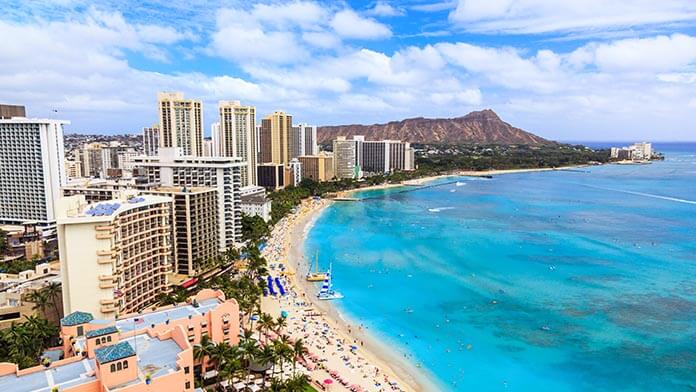
Honolulu is the capital and most populous city in Hawaii, located on the island of Oahu and encompassing all of Honolulu County. With 45 addiction treatment facilities in the directory, it holds the greatest concentration of treatment resources in the state — a meaningful advantage for people seeking specialized care, public insurance options, or a level of care that smaller communities cannot support.
Hawaii’s broader substance use profile shapes the treatment landscape. Methamphetamine is the dominant driver of drug-related deaths statewide, and Honolulu County is no exception. The county recorded 220 fatal overdoses in 2023, matching the prior year’s total, while fentanyl-related deaths climbed 35% statewide during the same period.
Fentanyl is increasingly found alongside methamphetamine, creating a more complex overdose risk than either substance alone. People seeking methamphetamine addiction treatment will find a full range of options in Honolulu, from medically supervised detox and short-term residential programs to long-term outpatient care with medication support.
The state’s Alcohol and Drug Abuse Division (ADAD), part of the Hawaii Department of Health, coordinates publicly funded addiction treatment options across Oahu through the Hawaii CARES system. CARES provides assessment, care coordination, and referrals to state-contracted providers, and is the primary access point for people relying on Med-QUEST or state funding. The ADAD also maintains a directory of licensed treatment providers, updated for the 2024-2026 contract cycle.
Honolulu’s military community adds a distinct dimension to the treatment picture. Joint Base Pearl Harbor-Hickam and Tripler Army Medical Center serve a large active-duty and veteran population on Oahu, and 11 facilities in the directory accept TRICARE. Families navigating treatment for a service member or veteran will find dedicated program options here. For a full view of treatment resources across the state, browse the Hawaii rehab directory.
Cost of Rehab in Honolulu
Hawaii’s geographic isolation, higher cost of living, and smaller provider network push treatment costs above the national average across most levels of care. The figures below reflect Hawaii state averages, which serve as a reasonable benchmark for Honolulu, where operating costs track similarly. Verifying your rehab benefits before committing to a program is the most effective first step toward reducing what you pay out of pocket.
The spread between inpatient and outpatient costs is substantial. For people who can safely manage their recovery outside a residential setting, outpatient care offers a much lower price point while still providing structured therapy and clinical oversight. The factors below most commonly determine where a person falls within the range for any given level of care.






How to Pay for Rehab in Honolulu
Honolulu’s 45 treatment facilities accept a broad range of payment options. Many programs work with both public insurance and private coverage, and several offer free or reduced-cost care for people who qualify. The payment options available across the directory are summarized below.







Medicare
Seventeen facilities in Honolulu accept Medicare. Medicare covers a range of addiction treatment services, including medically supervised detox, inpatient and outpatient behavioral health care, and certain prescriptions for opioid use disorder under Part D.
People enrolled in both Medicare and Med-QUEST (dual eligibles) may find that combined coverage significantly reduces their share of costs. Call a facility’s billing department before enrollment to confirm Medicare participation and get a written estimate of your cost-sharing responsibility.
Med-QUEST (Hawaii Medicaid)
Twenty-one facilities in Honolulu accept Med-QUEST, Hawaii’s Medicaid program. Med-QUEST covers residential treatment, outpatient counseling, partial hospitalization, and medication-assisted treatment for opioid and alcohol use disorders, including buprenorphine, methadone, and naltrexone. Coverage is delivered through five managed care plans, each with its own provider network. Call your plan or reach Hawaii CARES at 808-832-3100 to confirm which facilities participate under your specific plan before scheduling an intake appointment.
Military Benefits
Eleven facilities in Honolulu accept TRICARE. Active-duty service members and their dependents can access behavioral health services through TRICARE, including outpatient counseling, intensive outpatient programs, and inpatient treatment when medically necessary.
Tripler Army Medical Center provides on-base treatment services to TRICARE-eligible patients on Oahu. For veterans not on active duty, care through the VA Pacific Islands Health Care System is often the most appropriate starting point. Find rehab resources for veterans and service members tailored to the unique challenges of military service.
Insurance and Private Pay
Twenty-four facilities accept private health insurance. Under the Mental Health Parity and Addiction Equity Act, most commercial insurance plans are required to cover substance use disorder treatment at parity with other medical care. Hawaii’s primary carriers — HMSA (Hawaii Medical Service Association, the state’s Blue Cross affiliate), Kaiser Permanente Hawaii, UHA (University Health Alliance), and HMAA (Hawaii Management Alliance Association) — each maintain their own networks of participating facilities. Calling your carrier’s behavioral health line before selecting a program is the fastest way to confirm coverage and understand your cost-share before enrollment.
- HMSA
- Kaiser Permanente Hawaii
- UHA
- HMAA
- Aetna
- Cigna
- TRICARE
- Med-QUEST
- Medicare
Financial Assistance and Sliding-Scale Fees
Twenty-two facilities offer some form of financial assistance, and 9 offer sliding-scale fees based on income. These options are particularly valuable for people who earn too much to qualify for Med-QUEST but cannot afford full program costs out of pocket. Ask directly about financial aid options when you call to inquire about a program — many providers do not advertise the full extent of their assistance.
Free Treatment Programs
Sixteen facilities in Honolulu offer treatment at no charge to the client. These programs are typically funded through state contracts, federal block grants, or nonprofit sources, and access is usually coordinated through the Hawaii CARES system. Rehab scholarships through national and local sources are another avenue for people who need coverage but do not qualify for public assistance programs.
Levels of Care Available in Honolulu
Honolulu’s 45 facilities include 13 medical detox programs, 15 inpatient rehab programs, 40 outpatient clinics, and 33 programs equipped to treat co-occurring mental health conditions alongside substance use disorder.



Medical Detox
Medical detox provides around-the-clock clinical monitoring for people who need supervised withdrawal before beginning a longer treatment program. In Hawaii, people with severe alcohol dependence or long-term methamphetamine use often require this first step. Thirteen facilities in Honolulu offer this level of care. Learn more about medical detox and what the process typically involves.
Inpatient Rehab
Residential programs offer 24-hour care in a structured environment, typically for 28 to 90 days. People with a history of relapse, a severe substance use disorder, or an unstable home environment often benefit most from this level of care. Fifteen inpatient rehab programs are available in the Honolulu directory.
Partial Hospitalization (PHP)
PHP involves multiple hours of structured treatment per day, usually five days a week, while the person lives at home or in a sober living environment. Two facilities in Honolulu offer this level of care, which sits between residential and standard outpatient treatment and is well suited for people stepping down from inpatient care. Read more about partial hospitalization programs.
Intensive and Standard Outpatient
With 40 outpatient clinics in Honolulu, standard outpatient care is by far the most accessible level of treatment in the directory. These programs allow people to continue living at home while attending therapy sessions several times a week. One intensive outpatient program (IOP) is also listed, offering a more structured schedule for people who need more support than standard outpatient care but do not require residential placement. Learn more about outpatient rehab.
Dual Diagnosis Programs
Thirty-three facilities in Honolulu treat co-occurring mental health conditions alongside substance use disorder. Conditions like depression, anxiety, and PTSD are common in people seeking addiction treatment, and integrated care produces better outcomes than treating each condition separately. When you call to inquire about a program, ask specifically whether their dual diagnosis track addresses both conditions in the same treatment setting or refers out for mental health services.
Sober Living Homes
Seven sober living residences in Honolulu provide a structured, substance-free environment for people transitioning out of residential treatment. They work best when paired with ongoing outpatient counseling and peer support. Learn more about aftercare and continuing care options that support long-term recovery.
Specialty Programs in Honolulu
Honolulu’s treatment facilities include programs designed for specific populations. Whether you are looking for gender-specific care, services tailored to older adults, or programs that address the experiences of veterans or young adults, there are options designed to meet those needs.






Free and Low-Cost Rehab Resources in Honolulu
For people facing financial barriers or without insurance, several organizations in Honolulu and across Oahu provide free or reduced-cost addiction treatment. Calling Hawaii CARES at 988 or 808-832-3100 is also a good starting point for crisis support and suicide prevention resources, treatment referrals, and care coordination. Specialists are available around the clock.
Crisis Lines
- 988 / Hawaii CARES
Phone: 988 or 808-832-3100
Operated by the Hawaii Department of Health and CARE Hawaii, Hawaii CARES provides 24/7 crisis support, substance use referrals, and mobile outreach for Honolulu and Oahu residents. health.hawaii.gov/substance-abuse/cares - SAMHSA National Helpline
Phone: 1-800-662-4357
Free, confidential treatment referrals and information available 24/7 in English and Spanish, for individuals and families facing substance use disorders. https://www.samhsa.gov/find-help/helplines/national-helpline
County and Government Resources
- 211 Hawaii / Aloha United Way
Phone: 211
Connects callers statewide to social services including mental health and substance use treatment, housing support, food assistance, and transportation. https://auw211.org/ - Hawaii Alcohol and Drug Abuse Division (ADAD)
The state agency that funds and oversees publicly licensed treatment providers. The ADAD website hosts a current directory of state-contracted programs and information about the Hawaii CARES access system. https://health.hawaii.gov/substance-abuse/
Community and Nonprofit Programs
- The Salvation Army Addiction Treatment Services (ATS)
State-funded 66-bed residential program in Honolulu offering free treatment for adults. Funded by the Hawaii Legislature through ADAD and accredited by CARF; access is coordinated through the Hawaii CARES system. ats.salvationarmy.org
Veterans
- VA Pacific Islands Health Care System
Phone: 1-800-214-1306
The Spark M. Matsunaga VA Medical Center at 459 Patterson Road in Honolulu provides outpatient substance use treatment, medication-assisted treatment, behavioral health counseling, and referrals to residential care for eligible veterans. va.gov/pacific-islands-health-care
Drug and Alcohol Use Statistics in Honolulu
Methamphetamine drives the majority of drug-related deaths in Honolulu County, a pattern that has held even as fentanyl’s presence in the local drug supply grows. The data below reflects the most current available figures at the county and state level.
The 80% national treatment gap reflects a problem that is especially pronounced in an island state with limited provider capacity and higher-than-average treatment costs. If you or someone you know is struggling with drug or alcohol use, the facilities listed on this page can help you take the next step.
Resources
- Hawaii High Intensity Drug Trafficking Areas (HIDTA). (2024). Fatal overdose data — Hawaii 2023. As reported by Hawaii News Now, May 14, 2024. https://www.hawaiinewsnow.com/2024/05/14/drug-overdose-deaths-up-maui-county-kauai-fentanyl-use-grows/
- Hawaii Opioid Settlement Program. (2026). Hawaiʻi Overdose Initiative. State of Hawaii. https://osp.hawaii.gov/hoi/
- Substance Abuse and Mental Health Services Administration. (2025). 2024 National Survey on Drug Use and Health: Key Findings. U.S. Department of Health and Human Services. https://www.samhsa.gov/blog/release-2024-nsduh-leveraging-latest-substance-use-mental-health-data-make-america-healthy-again
- Addictions.com. (2024). Drug and Alcohol Rehab in Hawaii — State cost averages. https://www.addictions.com/rehabs/hawaii/
- Hawaii Department of Health, Alcohol and Drug Abuse Division. (2024). Hawaii CARES. https://health.hawaii.gov/substance-abuse/cares/