




How We Rank Listings
The rehab centers listed on this page are organized to help you compare real options in and around Albany, not to promote any single facility. We prioritize licensed and accredited programs, treatment centers that publish clear information about their levels of care and payment options, and facilities that serve the local Capital Region community.
Our listings draw on facility-reported data, state licensing records, and national treatment locators. We do not accept payment in exchange for a higher ranking, and inclusion in this directory is not an endorsement or a guarantee of outcomes.
Every person’s needs are different, so we encourage you to verify licensing, confirm insurance coverage, and contact a facility directly before making a decision.
Rehab in Albany: What to Know
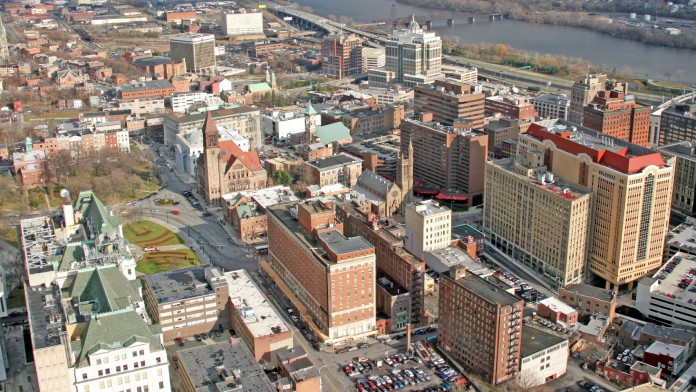
Albany is the capital of New York and the anchor of the Capital Region, a metro area of roughly a million people that also includes Troy, Schenectady, and the surrounding counties. Our directory currently lists 28 drug and alcohol treatment facilities in and around the city, spanning medical detox, inpatient and residential care, outpatient programs, and dual diagnosis treatment.
If you want to see how Albany fits into treatment availability across the rest of the state, you can browse the full New York rehab directory.
Two large hospital systems shape care in Albany. Albany Medical Center is the only academic medical center within about 150 miles and anchors the region’s most complex care. Additionally, St. Peter’s Health Partners operates St. Peter’s Addiction Recovery Center (SPARC), a hospital-based program offering inpatient detox, residential treatment, and outpatient services, with sites across Albany County.
Between the hospital systems, community clinics, and programs certified by the New York State Office of Addiction Services and Supports (OASAS), the city offers a fuller range of addiction treatment options than most cities its size.
Albany County has been at the center of the region’s response to the opioid crisis. County overdose deaths fell to 83 in 2024, down 33 percent from 126 in 2023, the first sustained downturn after years of increases. Local officials credit a coordinated push that includes the county Opiate Task Force, the Mobile Outreach Treatment Overdose Response Unit (MOTOR), and a large naloxone distribution effort.
Fentanyl and other synthetic opioids remain the substances most often involved in fatal overdoses, which keeps opioid use disorder at the front of local treatment planning.
Most facilities cluster in and around the city center and the western suburbs near the hospital campuses, and many programs are accessible by CDTA public transit. If you are weighing your options, it helps to know which level of care fits the situation before you start calling, since that determines both cost and how quickly you can get in.
Cost of Rehab in Albany
There is no single price for rehab in Albany, because cost depends on the level of care, the length of the program, and whether you use insurance.
The figures below are statewide New York averages for the full cost of care without insurance. They are useful as a reference point, but most people pay far less once insurance, Medicaid, or a sliding-scale fee is applied. As a general rule, private-pay rates downstate in New York City run higher than the state average, while upstate programs in the Albany area tend to sit closer to the middle of the range.
These averages combine many program lengths and settings, and medical detox and residential inpatient care pull the numbers upward. It’s important to keep in mind that several factors move an individual’s cost up or down from these figures:





How to Pay for Rehab in Albany
Across the 28 facilities in the Albany directory, most accept more than one form of payment, and many work with several. The breakdown below shows how many local programs accept each payment type, so you can gauge which options are realistically available before you call.





Knowing which of these applies to you is the fastest way to narrow the list. The sections below walk through the most common ways people in Albany cover treatment.
Medicare
Ten Albany-area programs accept Medicare, which covers medically necessary addiction treatment including inpatient detox, outpatient counseling, and medication for opioid use disorder for people 65 and older or those who qualify through disability. Coverage details, copays and prior-authorization rules vary by plan, so it is worth confirming with the facility and your plan before admission.
Medicaid
Twenty-three Albany programs accept New York Medicaid, making it one of the most widely accepted forms of coverage in the area. In New York, Medicaid is delivered mainly through managed care plans, and OASAS-certified programs bill for a full range of services including outpatient treatment, opioid treatment, and inpatient withdrawal treatment. For many members, medication-assisted treatment such as buprenorphine or methadone is covered with little or no out-of-pocket cost.
If you are not sure whether you qualify, hospital-based programs like SPARC can help you check eligibility.
Insurance and Private Pay
Twenty-five Albany facilities accept private health insurance, and 27 accept self-payment. Federal and New York state parity laws require most plans to cover substance use treatment on the same terms as other medical care, though network status and authorization rules still vary.
Major carriers active in the Capital Region include:
- Aetna
- CDPHP
- Cigna
- Empire BCBS
- Fidelis Care
- MVP Health Care
- UnitedHealthcare
Other Low-Cost Options
Fourteen Albany programs offer sliding-scale fees that adjust the cost of care to your income, and 15 offer some form of financial assistance. Hospital-based programs in the area, including St. Peter’s, run financial-assistance and sliding-scale benefits for uninsured people who qualify. These options can make treatment affordable even without full insurance coverage, so ask about them directly when you call.
Free Treatment Programs
None of the Albany facilities in our directory are listed as fully free, but low-cost and no-cost options exist through OASAS-funded clinics, county programs, and community organizations covered in the resources section below. Some people also cover treatment through rehab scholarships when other funding falls short.
Levels of Care Available in Albany
Albany offers a full continuum of care, with 15 programs providing medical detox, 16 offering inpatient or residential treatment, and 18 providing outpatient services. Nineteen programs treat co-occurring mental health and substance use disorders, and seven offer sober living. Choosing the right level usually starts with determining how severe the substance use is and whether medically supervised withdrawal is needed.






Medical detox provides supervised withdrawal management, which is often the first step for people dependent on alcohol, opioids, or benzodiazepines. Albany’s hospital-based detox units offer around-the-clock medical monitoring. Learn more about what to expect in medical detox.
Inpatient and residential rehab means living at the facility during treatment, which removes outside triggers and allows a full focus on recovery. This level suits more severe cases or people who have relapsed after outpatient care. Read more about inpatient rehab and residential treatment.
Outpatient treatment lets you live at home and keep working or caring for family while attending scheduled sessions. Options range from standard weekly counseling to more structured intensive outpatient schedules. See how outpatient rehab and intensive outpatient programs compare.
Dual diagnosis care treats addiction alongside conditions such as co-occurring depression or anxiety at the same time, which improves outcomes when both substance use and mental health disorders are present. Nineteen Albany programs offer this integrated approach.
Sober living homes and aftercare give people a structured, substance-free environment as they transition back to daily life. Planning for this stage is part of rehab aftercare and continuing care. Where opioid dependence is involved, many Albany programs pair these levels with medication-assisted treatment such as buprenorphine or methadone.
Specialty Programs in Albany
Beyond level of care, many Albany facilities tailor treatment to specific populations. The counts below reflect programs in our directory that report each specialty focus, which can matter when you want care from people who understand a particular set of needs.







Alcohol remains one of the most common reasons people seek help in Albany, and 24 programs offer dedicated treatment for alcohol use disorder. Given the county’s overdose picture, 21 programs focus on opioid use disorder. For LGBTQ+ residents, three programs offer LGBTQ+ affirming addiction care and two provide rehab resources for veterans and military members.
Free and Low-Cost Rehab Resources in Albany
If cost is a barrier, Albany and Albany County offer a network of free and low-cost services, from crisis support to harm reduction and county-run behavioral health care. The organizations below serve the city directly and can connect you to treatment, naloxone access, or peer support at little or no cost.
Crisis and Helplines
- 988 Suicide and Crisis Lifeline
https://988lifeline.org/
Call or text 988
Free, 24/7 support during a mental health or substance use crisis.
See our crisis and suicide prevention resources for more. - SAMHSA National Helpline
https://www.samhsa.gov/find-help/helplines/national-helpline
Free, confidential, 24/7 treatment referral and information service. - Catholic Charities / Project Safe Point
https://www.projectsafepointcc.org/
Overdose prevention, referral and harm reduction support across the Capital Region.
County Behavioral Health
- Albany County Department of Mental Health
albanycountyny.gov/departments/mental-health
Offers outpatient mental health and substance use treatment, an integrated clinic, and 24-hour crisis support. Accepts Medicaid, Medicare and private insurance.
Harm Reduction
- Project Safe Point (Catholic Charities)
projectsafepointcc.org
Mobile syringe services, overdose prevention, naloxone, testing, and treatment referral across counties around Albany - Anyone Can Narcan Program
albanycountyny.gov/departments/health/it-s-possible
Albany County’s community naloxone initiative, distributing free NARCAN and fentanyl and xylazine test strips through local businesses and county sites
Peer and Recovery Support
- Friends of Recovery-New York
for-ny.org/
Statewide recovery advocacy and peer support based in Albany - Free naloxone by mail
oasas.ny.gov/harm-reduction-delivered
New York State residents can order fentanyl and xylazine test strips and naloxone at no cost through the OASAS online portal.
Drug and Alcohol Use Statistics in Albany
The clearest recent signal in Albany County is a sharp drop in fatal overdoses. County overdose deaths fell to 83 in 2024, a 33 percent decline from the year before, the first sustained decrease after years of rising numbers. Officials attribute the shift to expanded harm reduction, naloxone distribution and better access to treatment and medication for opioid use disorder.
The county’s decline mirrored a statewide trend. Across New York, an estimated 4,567 people died of drug overdoses in 2024, down 32 percent from 6,688 in 2023, with about 77 percent of deaths involving an opioid such as fentanyl or heroin. Compared with national substance use statistics, New York’s 2024 drop was one of the steeper declines in the country, though public health officials caution that fentanyl in the drug supply keeps the risk high.
Resources
- Albany County. (2024). County Executive Announces Additional Opioid Settlement Fund Investments. https://www.albanycountyny.gov/Home/Components/News/News/2532/
- Albany County. (2024). Department of Mental Health. https://www.albanycountyny.gov/departments/mental-health
- Centers for Disease Control and Prevention / New York State. (2025). Governor Hochul Announces Dramatic Decline in Overdose Deaths in New York State. https://www.governor.ny.gov/news/governor-hochul-announces-dramatic-decline-overdose-deaths-new-york-state
- New York State Office of Addiction Services and Supports. (2025). NYS Overdose Death Dashboard. https://oasas.ny.gov/overdose-death-dashboard