





Expert Insights
Although medications like buprenorphine and methadone are safe and effective at treating addiction and preventing overdose and death, regulatory hurdles have prevented these treatments from being widely utilized. A recent national study estimated that 87 percent of people with opioid use disorder never receive any medication treatment.
Those who do receive treatment often have to manage long-distance travel, inconvenient hours, stigma and strict rules that can seem impossible to follow. Joan had lost hope that she would get the care she deserved.
She was able to get help at a neighborhood pharmacy because of a study we conducted in which pharmacists in Rhode Island received special training to directly provide patients with buprenorphine. That meant patients could walk in and ask to start treatment and the pharmacist could initiate the process. The pharmacist did this in consultation with a physician, but the patient did not have to see the physician first. We wrote about this research, known as the MATPharm Study, this week in the New England Journal of Medicine.
We found that pharmacies offer a safe and accessible starting point for treatment and keep patients engaged better than is typical. Of 100 people who started buprenorphine treatment at a pharmacy, 58 stabilized and were randomly split into two groups. Twenty-eight of them continued to receive their addiction care at a pharmacy, while the other 30 had the usual follow-up care with a doctor or an opioid treatment program. One month later, 25 of the 28 patients in the pharmacy group were still proceeding with their assigned treatment. Only five of the 30 patients in the doctor-treatment group were doing so.
A third of the patients in our study identified as Black, Indigenous or persons of color; almost half were homeless.
How We Rank Listings
Every facility on Addictions.com is reviewed against a consistent set of quality and transparency signals before it appears in our Boston directory. We prioritize programs that hold current state licensure through the Massachusetts Bureau of Substance Addiction Services (BSAS) and independent accreditation from The Joint Commission or CARF, since these credentials reflect outside verification of clinical standards.
Our listings also weigh the range of care a program offers, the levels of care available on site, accepted forms of payment and whether the facility provides evidence-based services such as medically supervised detox and medication-assisted treatment. We use publicly available data, information reported by facilities and direct verification where possible. Rankings are never influenced by payment. When details cannot be confirmed, we note the gap rather than fill it, so families comparing options in Boston can make decisions based on verified information.
Rehab in Boston: What to Know
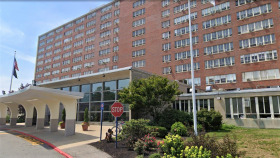
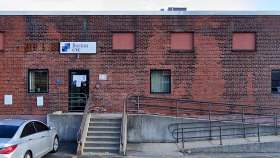
Boston, the seat of Suffolk County and the largest city in Massachusetts, anchors a metropolitan region of roughly 4.9 million people and holds one of the densest concentrations of addiction treatment in New England. Our directory tracks 52 rehab facilities in and around the city, spanning medical detox, residential care and outpatient services. Families comparing options across the wider region can also browse the full Massachusetts rehab directory for programs in nearby cities such as Cambridge, Quincy and Brockton.
The city’s treatment landscape is shaped in large part by the Boston Public Health Commission (BPHC), whose Recovery Services Bureau operates a continuum of outreach, harm reduction and treatment navigation. Major teaching hospitals and health systems, including Boston Medical Center, add clinical depth that few cities can match, and BSAS licenses more than 500 treatment programs statewide, many of them clustered in the Boston area. This concentration means someone seeking care can often find several addiction treatment options within a short distance.
One notable local initiative is PAATHS (Providing Access to Addiction Treatment, Hope and Support), a BPHC-run one-stop program that offers walk-in assessments, phone support, and help arranging transportation to detox. It reflects Boston’s broader approach of treating substance use as a public health issue and creating low-barrier entry points to care.
Boston’s substance use picture has shifted meaningfully in recent years. After fatal opioid overdoses in the city peaked at 272 in 2023, the Boston Public Health Commission reported 169 deaths in 2024 and 120 in 2025, the lowest count in a decade. Fentanyl remains the dominant driver of overdose risk, and cocaine mixed with fentanyl has been a persistent concern, so many local programs emphasize opioid use disorder treatment alongside care for alcohol and stimulants. Officials caution that the illicit drug supply is volatile and that Black and Latinx residents continue to carry a disproportionate share of overdose deaths.
Cost of Rehab in Boston
There is no single price for rehab in Boston. Cost depends on the level of care, the length of the program and the coverage a person brings to it. The figures below reflect statewide Massachusetts averages for uninsured, self-pay treatment and are best understood as a ceiling rather than what most people actually pay, since insurance, MassHealth and sliding-scale options reduce out-of-pocket costs substantially.
Boston sits at the higher end of the state’s cost range. The overall cost of living in the city runs well above the national average, which raises the operating expenses of local facilities, and private-pay residential rates in the Boston metro tend to reflect that. For most families, though, the more useful question is not the sticker price but how coverage applies. Verifying your rehab benefits before admission is the single most protective step, since cost surprises usually come from prior-authorization gaps rather than the treatment itself.






How to Pay for Rehab in Boston
Across the 52 facilities in our Boston directory, programs accept a wide mix of payment types, and the absence of commercial insurance is a complication rather than a closed door. Massachusetts pairs strong public coverage through MassHealth with a state-funded safety net administered by BSAS, and state law requires commercial insurers to cover up to 14 days of acute addiction treatment without prior authorization. The counts below reflect how many local facilities accept each payment method.






Understanding which of these applies to your situation is the first step toward an affordable plan. The subsections below outline the most common paths Boston residents use to pay for care.
Medicare
More than 1.4 million Massachusetts residents are enrolled in Medicare, and 24 facilities in our Boston directory accept it. Medicare Part A covers inpatient hospitalization and addiction treatment, while Part B covers outpatient care and Opioid Treatment Program services, including methadone, buprenorphine and naltrexone. Copays and deductibles vary by plan and treatment setting. If you are comparing Medicare Advantage plans, it is worth confirming how each covers addiction treatment before you enroll or seek care; our guide to using insurance for rehab explains what to check.
Medicaid (MassHealth)
MassHealth, the state’s Medicaid and CHIP program, provides some of the most comprehensive addiction coverage available, and 33 Boston facilities accept it. Coverage runs across the full continuum: medical detox, residential treatment, partial hospitalization, intensive outpatient, standard outpatient counseling and medication-assisted treatment when medically necessary. As of 2026, MassHealth members generally pay no copay for substance use disorder medications such as Suboxone and Vivitrol, which makes medication-assisted treatment effectively free for many enrollees. Behavioral health services are coordinated through the Massachusetts Behavioral Health Partnership and its network of more than 1,200 providers.
Military Benefits
Eleven facilities in our directory accept TRICARE, the health program for active-duty and retired service members and their families, which covers detox, inpatient rehab and outpatient services much like a PPO. Veterans in the Boston area can also access fully funded care through the VA Boston Healthcare System, with campuses in Jamaica Plain and West Roxbury and a related medical center in Brockton. Veterans benefits and VA eligibility can be complex, so it helps to confirm coverage with the facility before admission.
Insurance and Private Pay
Forty Boston facilities accept private health insurance, and 47 accept self-payment. Blue Cross Blue Shield of Massachusetts is the largest insurer in the state, covering roughly 3 million members, and most major national carriers operate here as well. Because Massachusetts parity law and the state’s 14-day acute-treatment rule limit some of the usual administrative hurdles, private coverage often reaches further here than in other states. Common carriers accepted at Boston-area programs include:
- Aetna
- Blue Cross Blue Shield of Massachusetts
- Cigna
- Harvard Pilgrim
- Humana
- Tufts Health Plan
- UnitedHealthcare
- WellSense
Other Low-Cost Options
Twenty-two Boston facilities offer sliding-scale fees and 22 offer financing, spreading costs based on income or over time. Federally Qualified Health Centers and community clinics such as The Dimock Center in Roxbury and Fenway Health provide services on an income-based scale, and BSAS funds a pool of uncompensated care so uninsured residents can still access state-licensed acute treatment and clinical stabilization.
Free Treatment Programs
Two facilities in our directory offer fully free treatment, and 28 provide some form of financial assistance. Nonprofit and community organizations, including Victory Programs and the Pine Street Inn, offer care and transitional support regardless of ability to pay, with particular attention to residents experiencing homelessness. If cost is the primary barrier, our guide to rehab scholarships outlines additional ways to reduce or eliminate your out-of-pocket costs.
Levels of Care Available in Boston
Boston’s 52 facilities cover the full continuum of addiction care, including 29 medical detox programs, 32 inpatient rehabs and 42 outpatient clinics, along with strong dual-diagnosis and sober-living capacity. The cards below show how many local programs offer each level.





Medical detox is usually the first step for anyone with significant physical dependence. Under 24-hour supervision, clinical staff manage withdrawal safely, which matters especially for alcohol and opioids. Because detox stabilizes the body but does not treat the underlying disorder, it is followed by further care. Learn more about the medical detox process and what to expect.
Inpatient and residential rehab provides structured, live-in care with around-the-clock support and intensive therapy, well suited to moderate-to-severe substance use disorders or unstable home environments. Our guide to inpatient rehab covers program length and daily structure in more detail.
Outpatient rehab lets people live at home while attending scheduled treatment, and it ranges from standard weekly counseling to more intensive programming. It often serves as a step-down from residential care or an entry point for those with a stable support system. See our overview of outpatient rehab and intensive outpatient programs.
Dual-diagnosis programs treat substance use and co-occurring mental health conditions together, which is essential when untreated co-occurring depression or anxiety would otherwise undermine recovery. Sober living homes and other continuing care options support the transition back to independent life after a program ends.
Specialty Programs in Boston
Beyond standard levels of care, many Boston facilities tailor treatment to specific populations and substances. Given the city’s large student population, aging residents and diverse communities, these specialty tracks help match care to people who need it.







The 47 alcohol-focused programs address the region’s persistent drinking problem, where alcohol remains the leading substance in admissions to state-licensed treatment; our guide to alcohol use disorder explains the health risks and treatment approaches. The 38 opioid programs reflect the continued weight of the fentanyl crisis, with care for opioid use disorder frequently paired with medication-assisted treatment. Boston’s dense concentration of colleges makes the 43 young adult programs especially relevant, and several coordinate with campus health services around young adult and college student substance use. The 10 LGBTQ+ friendly programs offer LGBTQ+ affirming addiction care, and the 5 veterans programs connect service members to specialized military and VA care.
Free and Low-Cost Rehab Resources in Boston
Boston has one of the most developed public and nonprofit support networks in the country for people who use drugs or are seeking treatment. The resources below are free or low-cost and can help you find care, reduce overdose risk or connect with immediate crisis support. Many are reachable by phone at any hour.
Crisis and Treatment Access Lines
- 988 Suicide and Crisis Lifeline: Call or text 988 for free, confidential support 24/7 during any mental health or substance use crisis. See our crisis support resources for more.
- Massachusetts Substance Use Helpline: Call 1-800-327-5050 or text “HOPE” to 800-327-5050 for statewide help finding treatment, harm reduction and recovery programs.
- Massachusetts Behavioral Health Helpline: Call or text 833-773-2445 for immediate behavioral health support and connection to care.
- SAMHSA National Helpline: Call 1-800-662-HELP (4357) for free, confidential 24/7 treatment referral and information.
- Mass 211: Dial 211 to connect with a resource specialist for treatment, housing and other social services.
City of Boston Recovery Services
- PAATHS (Providing Access to Addictions Treatment, Hope and Support): Call 1-855-494-4057 or dial 3-1-1 from within Boston. Walk-in assessments and treatment placement at 774 Albany Street, with help arranging transportation to detox. Serves anyone in Greater Boston regardless of insurance status; Spanish-speaking staff available. https://www.boston.gov/government/cabinets/boston-public-health-commission/recovery-services/find-your-path-recovery
- AHOPE (Access to Harm Reduction, Overdose Prevention and Education): Call 617-534-3976. Boston’s needle exchange and harm reduction program at 774 Albany Street, offering syringe services, drug checking for fentanyl and xylazine, naloxone distribution and infectious disease testing, plus mobile sites in Nubian Square and Downtown Boston. https://www.boston.gov/government/cabinets/boston-public-health-commission/recovery-services/services-active-users
Community and Harm Reduction Organizations
- RIZE Massachusetts: A Boston nonprofit working to end the overdose epidemic, with resources on low-barrier housing, harm reduction, and a “Your Rights in Recovery” toolkit. Visit rizema.org
- The Dimock Center: A Roxbury Federally Qualified Health Center offering income-based substance use and behavioral health services. Visit dimock.org
- Boston Health Care for the Homeless Program: Operates a medical clinic within BPHC’s Recovery Services building providing medication for opioid use disorder and related care. Visit bhchp.org.
Veterans and Military
- VA Boston Healthcare System: Fully funded addiction and mental health services for eligible veterans, with campuses in Jamaica Plain and West Roxbury. Visit va.gov/boston-health-care or call 1-800-865-3384. Additional details are in our resources for veterans and military.
Government and Medicaid
- MassHealth: The state’s Medicaid program covers a full range of addiction treatment for eligible residents. Apply online at mass.gov/masshealth or call 1-800-841-2900.
- Bureau of Substance Addiction Services (BSAS): Oversees the statewide network of licensed treatment and funds uncompensated care for uninsured residents. Visit mass.gov and search “BSAS.”
Drug and Alcohol Use Statistics in Boston
Boston’s overdose numbers have fallen sharply over the past two years, one of the steepest declines of any major U.S. city, even as the illicit drug supply stays volatile and racial disparities persist. The figures below draw on the Boston Public Health Commission, the Massachusetts Department of Public Health and independent research on the region.
The decline has been especially pronounced among groups long hit hardest by the crisis: fatal overdoses among Black residents fell by an average of 65% across 2024 and 2025 compared with 2023. Even so, inequities remain stark. Black and Latinx residents make up roughly 37% of Boston’s population but accounted for about 48% of overdose deaths in 2025, which is why the city continues to target prevention resources toward the most affected neighborhoods, including Roxbury and Dorchester.
Alcohol remains a heavy and sometimes overlooked burden in the region. Statewide, excessive alcohol use causes an average of about 2,760 deaths a year, and in the Greater Boston area alcohol is the leading substance in admissions to state-licensed treatment programs, accounting for over half of substance-related cases. Roughly one in four Massachusetts adults reports binge drinking in a given month, a rate above the national average, underscoring why the city’s substance use picture extends well beyond opioids. Fentanyl mixed with cocaine has been a growing driver of overdose deaths, so much of Boston’s opioid response also addresses stimulant use.
Resources
- Boston Public Health Commission. (2026). New Data Show Fewest Opioid Overdose Deaths in Boston in a Decade. https://www.boston.gov/news/new-data-show-fewest-opioid-overdose-deaths-boston-decade
- Boston Public Health Commission. (2025). New Data Show 38% Decline In Opioid-Related Deaths In Boston In 2024. https://www.boston.gov/news/new-data-show-38-decline-opioid-related-deaths-boston-2024-following-national-trend
- Massachusetts Department of Public Health. (2024). DPH Report: Massachusetts Opioid-Related Overdose Deaths Decreased 10 Percent in 2023. https://www.mass.gov/news/dph-report-massachusetts-opioid-related-overdose-deaths-decreased-10-percent-in-2023
- City of Boston. (2025). Recovery Services and PAATHS Program. https://www.boston.gov/government/cabinets/boston-public-health-commission/recovery-services
- Massachusetts Substance Use Helpline. (2025). Helplinema.org. https://helplinema.org/
- Boston University School of Public Health. (2022). Alcohol Causes 1 in 20 Deaths in Massachusetts. https://www.bu.edu/sph/news/articles/2022/alcohol-causes-1-in-20-deaths-in-massachusetts/
- Centers for Disease Control and Prevention. (2025). Explore Excessive Drinking in Massachusetts, America’s Health Rankings. https://www.americashealthrankings.org/explore/measures/ExcessDrink/MA
- Massachusetts Executive Office of Health and Human Services. (2025). MassHealth. https://www.mass.gov/masshealth