







Expert Insights
Back in 2017, Kentucky was one of many states to file suit against several giant pharmaceutical manufacturers and companies for their role in creating and contributing to the opioid epidemic. Those pharmaceutical companies, McKesson Corp. and Johnson and Johnson, AmerisourceBergen Corp, and Cardinal Health Inc., ultimately agreed to a national settlement worth over $26 billion dollars. Louisville will receive over $30 million dollars of that settlement. So, what does the city plan on doing with that money?
The settlement funds in Louisville will be used to create desperately needed treatment and prevention efforts. The first $2.6 million is set to be used in the promotion of long-term recovery by funding transportation and housing for people who are recovering from various addictions. Additionally, funds will be put towards programs that help incarcerated inmates get off (and stay off) drugs. Another $744,000 has been earmarked for the expansion of free Naloxone, known as the anti-overdose drug, overdose prevention programs, and funding prevention programs for Kentucky’s children.
How We Rank Listings
Every facility on this page is verified against the Substance Abuse and Mental Health Services Administration (SAMHSA) National Directory of Drug and Alcohol Abuse Treatment Facilities and certified by the Kentucky Department for Behavioral Health, Developmental and Intellectual Disabilities (DBHDID). We do not accept payment for placement.
Our ranking gives weight to independent accreditation, range of services, and access:
- Accreditation by the Joint Commission, CARF or NAATP membership
- Breadth of levels of care offered (detox, inpatient, PHP, outpatient, aftercare)
- Acceptance of Kentucky Medicaid, Medicare, TRICARE and major private insurance plans
- Availability of medication-assisted treatment and co-occurring mental health care
- Specialized programming for women, men, veterans, young adults and LGBTQ+ clients
- Transparent published information on cost, length of stay and clinical approach
Listings are reviewed and updated regularly. If you represent a facility and need to correct your information, contact our editorial team.
Rehab in Louisville: What to Know
Louisville is the largest city in Kentucky and the seat of Jefferson County. The consolidated Louisville Metro government serves roughly 780,000 residents across Jefferson County, within a metro area of about 1.3 million. Our directory lists 63 licensed alcohol and drug treatment facilities in Louisville, spanning levels of care from medical detox through long-term aftercare. For options outside Jefferson County, browse the full Kentucky rehab directory.
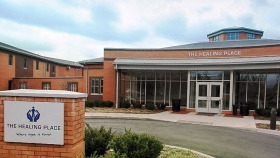
The local treatment system combines a regional community behavioral health provider, hospital-based programs, a large no-cost recovery community and veterans’ services. Seven Counties Services, the region’s Certified Community Behavioral Health Clinic, delivers no-barrier substance use and mental health care with a 24/7 crisis line. The Healing Place operates one of the country’s largest peer-based recovery programs, offering non-medical detox and long-term residential recovery at no cost to the client. UofL Health, Norton Healthcare and Baptist Health run hospital-based behavioral health and addiction services across the city, and the Robley Rex VA Medical Center provides a dedicated substance use disorder program for enrolled veterans.
Kentucky’s DBHDID certifies providers and funds community-based treatment statewide. For a general overview of how the levels of care fit together, see our guide to addiction treatment options.
Jefferson County has been among the hardest-hit communities in Kentucky during the fentanyl era, but the most recent data points in the right direction. The Jefferson County Coroner’s Office recorded 493 overdose deaths in 2023, the highest annual total on record, followed by a 33 percent drop in 2024 and a further decline in 2025, a cumulative fall of roughly half. Even with this improvement, Jefferson County still records the highest rate of fentanyl-related deaths of any county in Kentucky. Read our overview of opioid use disorder for more on treatment options and what to expect.
Geographically, treatment access is densest in and around the downtown medical district near the UofL Health and Jewish Hospital campuses, with additional clinics distributed along the Interstate 264 and Interstate 265 corridors and in the South and West End neighborhoods. Public transit runs through the Transit Authority of River City (TARC), which can affect outpatient program selection for clients without a vehicle.
Cost of Rehab in Louisville
The cost of addiction treatment in Louisville tracks closely with statewide averages in Kentucky. Because the metro area hosts a deep mix of public, nonprofit and private programs, families generally have more affordable options here than in markets dominated by private facilities.
Medical detox is the most expensive level of care, with an average cost in Kentucky of $145,000 per episode.
Outpatient addiction treatment in Kentucky costs an average of $8,600 per episode of care.
Outpatient methadone treatment is the most affordable structured option, with an average cost of $7,000.
Treatment costs in the metro area sit at or near state averages, with hospital-based programs generally on the higher end and community providers, DBHDID-funded clinics and federally qualified health centers on the lower end. Most clients pay only a portion of the published cost, since insurance, Medicaid and sliding-scale fees absorb the bulk of the expense. Several factors move the final number up or down:







If cost is the primary barrier, Louisville has strong no-cost and low-cost options. The Healing Place provides detox and long-term residential recovery free of charge and Seven Counties Services delivers care regardless of insurance or ability to pay as a Certified Community Behavioral Health Clinic.
Community providers funded through DBHDID and outpatient care through Kentucky Medicaid are also among the most accessible routes. People paying out of pocket can compare a 30-day stay at a community provider against a comparable private program and request an itemized estimate from each.
How to Pay for Rehab in Louisville
Of the 63 drug and alcohol treatment facilities in our Louisville directory, 48 accept private health insurance and 27 accept Kentucky Medicaid. Most also offer at least one form of financial assistance, such as sliding-scale fees or payment plans for clients who pay out of pocket.







The right payment path depends on which coverage you already have, how much treatment you need, and how quickly you need to start. The sections below break down the major options.
Medicare
Medicare Part A covers inpatient rehabilitation when treatment is delivered in a Medicare-certified hospital or facility, and Part B covers outpatient counseling, psychiatric services and medication management. Methadone, buprenorphine and naltrexone for opioid use disorder are covered under Part B when delivered through a certified opioid treatment program. Copays and out-of-pocket costs depend on the setting and on whether the client has a supplemental plan. Our guide to verifying your rehab benefits walks through what to ask before admission.
Kentucky Medicaid
Kentucky Medicaid covers a full continuum of substance use disorder services, including withdrawal management, residential treatment, partial hospitalization, intensive outpatient, standard outpatient, peer recovery support and medication-assisted treatment.
Coverage is delivered through managed care organizations including Aetna Better Health of Kentucky, Anthem Blue Cross and Blue Shield Medicaid, Humana Healthy Horizons in Kentucky, Passport Health Plan by Molina Healthcare, UnitedHealthcare Community Plan and WellCare of Kentucky. Applications and plan selection run through the state’s kynect portal (kynect.ky.gov). Kentucky’s Section 1115 substance use disorder waiver expanded Medicaid coverage for short-term residential treatment beyond the previous 16-bed limit, which widened inpatient access for adults with opioid and other substance use disorders.
Many Medicaid-covered facilities in Louisville offer same-day or next-day medication-assisted treatment starts for opioid use disorder.
Military Benefits
TRICARE covers active-duty service members, retirees and eligible family members at accredited facilities in Louisville. Veterans enrolled with the Department of Veterans Affairs can access substance use treatment through the Robley Rex VA Medical Center on Zorn Avenue. It operates a dedicated Substance Use Disorder Treatment Program offering residential care, intensive outpatient and standard outpatient services, along with medication-assisted treatment, often at no cost to the veteran depending on service-connected status and income.
Insurance and Private Pay
Most major commercial carriers contract with at least one Louisville rehab. You should confirm in-network status, prior authorization requirements and any limits on length of stay before admission. Insurance verification is free at every accredited facility, and a good admissions team will walk you through the estimate before you commit.
If you pay privately, ask for an itemized cost sheet that separates room and board, medical care, therapy and ancillary fees.
- Aetna
- Anthem Blue Cross Blue Shield
- Cigna
- Humana
- Optum
- UnitedHealthcare
- WellCare
Other Low-Cost Options
Many Louisville facilities offer sliding-scale fees or some form of financial assistance for qualifying clients, and a few offer financing through a third-party medical lender or accept Employee Assistance Program (EAP) referrals. Asking the admissions counselor about an income-based fee or hardship application is the most direct route to a discount. Many DBHDID-certified providers will admit clients without insurance and bill on a sliding scale based on income.
Free Treatment Programs
Louisville is home to one of the largest no-cost recovery programs in the country. The Healing Place offers detox and long-term residential recovery free of charge for men and women, funded through donations and grants rather than client fees. Other free programs are typically faith-based, grant-funded or operated by mutual-aid recovery communities and serve clients who cannot pay and do not qualify for Medicaid. Application processes vary, and waiting lists are common.
Rehab scholarships from private facilities are another way to cover your treatment costs and are worth asking about during your initial calls.
Levels of Care Available in Louisville
Louisville offers a deep continuum of care, from medically supervised detox through long-term aftercare. The grid below shows what the local system offers at each level.



Medical detox is the medically supervised process of clearing alcohol or drugs from the body while managing withdrawal symptoms with medications and clinical monitoring. It is the first step for clients with physical dependence on alcohol, opioids or benzodiazepines, and it usually runs three to seven days. Learn more about what to expect in medical detox.
Inpatient and residential rehab means living at the treatment facility, typically for 28, 60, or 90 days, with structured daily therapy, medical care and peer support. Inpatient care is recommended for clients with severe substance use disorders, repeated relapse, unstable home environments or co-occurring mental health conditions. Most Louisville inpatient programs include detox on the front end and aftercare planning on the back end.
Partial hospitalization programs (PHP) deliver hospital-level treatment intensity, typically five to six hours per day, five days per week, while clients live at home or in sober housing. PHP is a common step-down from inpatient care for clients who still need significant clinical support. Read more about PHP treatment and when it is the right fit.
Outpatient programs allow clients to keep working, attending school or caring for family while in treatment. Standard outpatient is flexible, usually one to three hours weekly, while intensive outpatient delivers nine to 15 hours per week across multiple sessions. Most clients eventually step down to standard outpatient as a long-term maintenance phase. See our overview of outpatient rehab.
Dual diagnosis programs treat substance use disorders alongside co-occurring mental health conditions, most often depression, anxiety disorders, PTSD or bipolar disorder. Integrated dual-diagnosis care reflects how common co-occurring conditions are in the population seeking treatment. For many individuals, medication-assisted treatment is frequently part of the plan.
Sober living and aftercare. Sober living homes offer structured, substance-free housing for people transitioning out of residential treatment or building stability in early recovery. Continuing care after a primary treatment episode, including alumni groups, outpatient counseling and 12-step or other peer support, is among the strongest predictors of long-term recovery. Our overview of addiction therapy covers the behavioral approaches used across every level of care.
Specialty Programs in Louisville
Many Louisville facilities tailor their programming to specific populations or substances. Specialty programming generally means group composition, clinical focus and outreach are aligned with shared experience, which can make engagement and retention easier for clients who feel marginalized in mixed groups.





Young adult and college-focused options are well represented in Louisville, in part because the metro area hosts the University of Louisville, Bellarmine University, Spalding University and Jefferson Community and Technical College, giving local providers experience working around academic schedules and student health systems.
Programming for older adults matters as overdose and alcohol-related deaths among adults in their fifties and sixties continue to rise nationally.
Free and Low-Cost Rehab Resources in Louisville
If you or someone you love is in crisis, the resources below offer immediate help. Many are free, confidential and available around the clock. The 988 Suicide and Crisis Lifeline is the fastest connection point for an active mental health or substance use crisis.
Crisis Lines
- 988 Suicide and Crisis Lifeline. Call or text 988. Free, 24/7, confidential. Connects to trained counselors who can help with substance use crises, suicidal thoughts and emotional distress.
- SAMHSA National Helpline. 1-800-662-HELP (4357). Free, 24/7, confidential treatment referral and information service in English and Spanish.
- Seven Counties Services Crisis Line. 502-589-4313 (or 988). Twenty-four-hour crisis counseling for mental health and substance use in the Louisville metro region.
- Kentucky Harm Reduction Coalition. 502-537-6061. Naloxone access and harm reduction support.
Public Health and Harm Reduction
- Louisville Metro Department of Public Health and Wellness, Harm Reduction Outreach Services. 400 East Gray Street, Louisville, KY 40202. 502-574-8800. Free naloxone (Narcan), syringe services, overdose prevention education, HIV and hepatitis C testing and linkage to treatment. Outreach operates at rotating community sites; check louisvilleky.gov for current locations and hours.
- Kentucky Office of Drug Control Policy, FindHelpNow Kentucky. findhelpnowky.org. Real-time locator for open treatment openings and naloxone pickup sites across the state.
Community Treatment Providers
- Seven Counties Services, Addiction Recovery Center. 600 South Preston Street, Louisville, KY 40202. Appointments: 502-589-1100. A Certified Community Behavioral Health Clinic offering detox, residential, outpatient, medication-assisted treatment and co-occurring care regardless of insurance or ability to pay. sevencounties.org
- The Healing Place (Men’s Campus). 1020 West Market Street, Louisville, KY 40202. 502-585-4848. Free non-medical detox, long-term residential recovery and overnight shelter. thehealingplace.org
- The Healing Place (Women’s Campus). 1503 South 15th Street, Louisville, KY 40210. 502-585-4848. Free detox, residential recovery, outpatient services and sober housing for women. thehealingplace.org
- The Healing Place Outpatient Services. 1017 West Market Street, Louisville, KY 40202. 502-357-1972. Intensive outpatient services; accepts Kentucky Medicaid and private pay. thehealingplace.org
Veterans and Military
- Robley Rex VA Medical Center, Substance Use Disorder Treatment Program. 800 Zorn Avenue, Louisville, KY 40206. Main: 502-287-4000. SUD program: 502-287-5960. Residential, intensive outpatient and standard outpatient care for enrolled veterans. www.va.gov/louisville
- Veterans Crisis Line. Call 988 then press 1, or text 838255. Free, 24/7, for veterans, service members and their families. www.veteranscrisisline.net
Government and Medicaid Assistance
- Kentucky Department for Behavioral Health, Developmental and Intellectual Disabilities (DBHDID). 502-564-4527. Information on certified providers and community substance use services, including support for uninsured Kentuckians. dbhdid.ky.gov
- Kentucky Medicaid / kynect. kynect.ky.gov or 1-855-459-6328. Help selecting a managed care plan, finding in-network providers and resolving coverage questions.
Faith-Based and Mutual Aid
- The Salvation Army Adult Rehabilitation Center, Louisville. Free residential work-therapy recovery program supported by donations. Contact the local Salvation Army for current intake details. salvationarmyusa.org/recovery
- Alcoholics Anonymous, Louisville Central Office. 502-582-1849. Meeting schedules and a 24-hour answering service. Website: louisvilleaa.org.
- Narcotics Anonymous, Louisville Area. Helpline: 502-583-1050. Meeting schedules and support. Website: louisvillena.org.
University and Student Services
- University of Louisville Counseling Center. 502-852-6585. Mental health and substance use counseling for UofL students. student.louisville.edu/counseling
- Bellarmine University Counseling Center. 502-272-8480. Counseling and referral for Bellarmine students. bellarmine.edu/counseling-center
Drug and Alcohol Use Statistics in Louisville
Jefferson County has been among the hardest-hit communities in Kentucky during the fentanyl era, though the most recent local data points in the right direction. The Jefferson County Coroner’s Office recorded 493 overdose deaths in 2023, an all-time high, followed by a 33 percent decline in 2024 and a further drop in 2025, a cumulative fall of roughly half. The statistics below put the local picture in context. For background on the substance most reflected in the data, see our overview of fentanyl addiction and overdose risk.
Decline in Jefferson County drug-related deaths in 2024, the start of a multiyear downward trend. Jefferson County Coroner’s Office, 2026.
Preliminary Jefferson County drug-related deaths in 2025, the lowest annual count in years. Jefferson County Coroner’s Office (unofficial), 2026.
Of Kentucky overdose deaths in 2025 involved fentanyl, one of the two most common substances identified in toxicology. Source: Kentucky Office of Drug Control Policy, 2025 Drug Overdose Fatality Report
Statewide, 1,110 Kentuckians died from a drug overdose in 2025, down from 1,410 in 2024 and 1,984 in 2023, a four-year downward trend. Most people with a substance use disorder still do not receive treatment in any given year. In fact, SAMHSA’s National Survey on Drug Use and Health consistently finds that fewer than one in five adults with a past-year substance use disorder accessed any form of specialty treatment, and Kentucky’s numbers mirror that national pattern.
For broader national context, browse our page on national substance use statistics.
Resources
- Substance Abuse and Mental Health Services Administration. (2024). National Directory of Drug and Alcohol Abuse Treatment Facilities. findtreatment.gov.
- Jefferson County Coroner’s Office, via WBRC and WAVE reporting. (2026). Jefferson County overdose deaths decline after 2023 record high.
- Kentucky Office of Drug Control Policy. (2026). 2025 Drug Overdose Fatality Report. odcp.ky.gov.
- Kentucky Office of Drug Control Policy. (2025). 2024 Drug Overdose Fatality Report. odcp.ky.gov.
- Kentucky Lantern. (2026). Kentucky overdose deaths declined in 2025 in four-year downward trend.
- Kentucky Cabinet for Health and Family Services, Department for Medicaid Services. (2026). Behavioral Health and Substance Use Disorder and Managed Care Organizations. chfs.ky.gov.
- Kentucky Cabinet for Health and Family Services. (2018). Substance Use Disorder (SUD) 1115 Demonstration Implementation Plan. chfs.ky.gov.
- U.S. Department of Veterans Affairs. (2026). Robley Rex VA Medical Center: Substance Use Disorder Treatment Program. va.gov/louisville-health-care.
- Louisville Metro Department of Public Health and Wellness. (2026). Harm Reduction Outreach Services. louisvilleky.gov.
- Seven Counties Services. (2026). Addiction Recovery Center and Crisis Services. sevencounties.org.
- The Healing Place. (2026). Programs and Campuses. thehealingplace.org.
- U.S. Census Bureau. (2020). QuickFacts: Louisville/Jefferson County metro government (balance), Kentucky. census.gov.