


How We Rank Listings
Every rehab center in the Towson directory is a licensed or accredited provider, and listings are organized to help you compare real options rather than to promote one facility over another. We prioritize programs licensed by the Maryland Behavioral Health Administration (BHA) and independently accredited by the Joint Commission or CARF, and we label any sponsored placement clearly so you always know what you are looking at.
Listing details reflect the levels of care, specialty tracks, and payment types each facility reports, drawn from public licensing records and facility information. Because openings and insurance participation change, confirm current availability and program specifics directly with a center when you reach out. The aim is to give you an accurate starting point for finding care close to home.
Rehab in Towson: What to Know
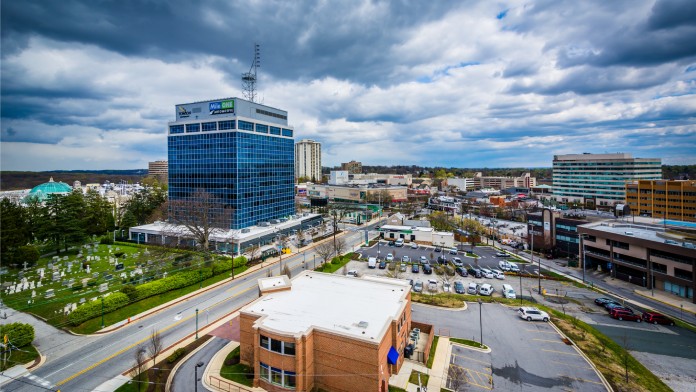
Towson is the seat of Baltimore County and a busy inner suburb just north of Baltimore, home to Towson University and a strong base of outpatient addiction treatment. The area has 10 rehab centers, weighted toward outpatient care, and you can compare every nearby option through the Maryland rehab directory.
The Baltimore County Department of Health runs a Bureau of Behavioral Health that arranges treatment and can subsidize care for uninsured residents. Its REACH warm line connects people to a Peer Recovery Specialist six days a week, and Baltimore County Crisis Response provides mobile and walk-in crisis help. Naloxone is stocked in public health vending machines and all county library branches. Maryland Medicaid coverage for addiction care runs through the Public Behavioral Health System.
Baltimore County has seen overdoses fall sharply, from 286 deaths in 2023 to 200 in 2024, as harm reduction and fentanyl test strips reached more residents. Statewide, Maryland overdose deaths have fallen for four straight years to a 10-year low.
Cost of Rehab in Towson
The cost of rehab in Towson depends on the level of care, program length, and whether you use insurance. Maryland sits near the middle of the regional range, with a statewide residential average of roughly $56,783 without insurance, though most people pay a fraction of that once insurance benefits are applied. The figures below reflect Maryland averages by care type.
Medical detox is the most expensive level of care, at an average of $139,991 statewide (National Center for Drug Abuse Statistics, 2022).
Long-term inpatient rehab in Maryland averages $50,107 (National Center for Drug Abuse Statistics, 2022).
Outpatient addiction treatment averages $8,326, far less than residential care (National Center for Drug Abuse Statistics, 2022).
Outpatient methadone treatment is the most affordable option, averaging $7,398 (National Center for Drug Abuse Statistics, 2022).
Actual costs vary with setting, amenities, and length of stay. Outpatient programs cost far less than residential care and make up most of the local directory, while medical detox and inpatient stays carry the highest price tags. As a Baltimore metro suburb, Towson costs track close to the state average, and Maryland Medicaid plus county subsidies anchor affordability.


How to Pay for Rehab in Towson
Across the 10 rehab centers serving Towson, most accept self-payment and private insurance, and several work with Maryland Medicaid, Medicare, and TRICARE. The counts below show how many local facilities report accepting each payment type.
9 accept self-payment or cash
8 accept private health insurance
3 accept Maryland Medicaid
3 accept Medicare
3 accept TRICARE

2 offer sliding-scale fees
Which option makes the most sense depends on your coverage and income. The subsections below outline how the main payment paths work for Towson residents.
Maryland Medicaid
Maryland Medicaid covers the full continuum of substance use care through the Public Behavioral Health System, from detox to outpatient counseling and medication for addiction treatment, including all three FDA-approved opioid use disorder medications. Specialty behavioral health benefits are administered by Carelon Behavioral Health for HealthChoice members. Three Towson facilities report accepting Maryland Medicaid, and the county Bureau of Behavioral Health can help arrange care.
Medicare
Medicare covers substance use treatment that is medically necessary, including inpatient care under Part A and outpatient services and counseling under Part B, with Medicare Advantage plans offering the same benefits. Three Towson area centers accept Medicare.
Military and TRICARE
Veterans and active-duty families have several routes to care. Three area facilities accept TRICARE, and the VA Maryland Health Care System operates the Baltimore VA Medical Center nearby. See more rehab resources for veterans and military families.
Insurance and Private Pay
Most Towson centers accept private insurance or self-payment, and Maryland parity laws require commercial plans to cover substance use treatment. Coverage varies by plan and network status, so verify benefits before you commit. Major carriers active in Maryland include:
- CareFirst BlueCross BlueShield
- UnitedHealthcare
- Kaiser Permanente
- Cigna
- Aetna
Other Low-Cost Options
For those without full coverage, two Towson centers offer sliding-scale fees, and the Baltimore County Department of Health can subsidize community treatment for eligible uninsured residents through state behavioral health funding. Treatment scholarships can help close the gap.
Accreditation
Accreditation signals that a program meets independent quality standards. Among Towson area facilities, two hold CARF accreditation, one holds Joint Commission accreditation, and one holds NAATP membership. Accreditation is separate from BHA licensing, which every legitimate Maryland substance use provider must maintain.
Levels of Care Available in Towson
Towson leans heavily toward outpatient care, with 10 outpatient clinics reported locally alongside single detox, inpatient, and partial hospitalization options. Most facilities also treat co-occurring mental health conditions.
10 standard outpatient clinics
8 dual diagnosis programs
1 medical detox facility
1 inpatient rehab program
1 partial hospitalization program
Outpatient treatment lets people live at home while attending scheduled sessions, and it defines the local landscape, with 10 clinics reported. It suits people balancing work, school, or family, and pairs well with Towson’s transit and campus community. Compare outpatient rehab options carefully.
Dual diagnosis care treats addiction alongside conditions like depression or anxiety. Eight reporting facilities address co-occurring disorders, which matters given how often mental health and substance use overlap.
Medical detox provides 24-hour supervision to manage withdrawal safely. One area program offers medically supervised detox, with more available across the Baltimore metro.
Inpatient and partial hospitalization provide higher-intensity care. One local inpatient program and one PHP serve people who need structure beyond standard outpatient sessions.
Specialty Programs in Towson
Many Towson facilities tailor treatment to specific groups and substances. The counts below reflect programs that report each specialty focus.

10 young adult programs

9 women’s programs

9 men’s programs

9 alcohol rehab programs
9 opioid rehab programs

1 LGBTQ+ friendly program
1 veterans and military program
Every local center reports serving young adults, fitting a university town, and nine each address alcohol use disorder and opioid use disorder. Facilities also serve women and men, with LGBTQ+ affirming addiction care and veteran-focused support available.
Free and Low-Cost Rehab Resources in Towson
Cost should not keep anyone from help. Towson residents can reach crisis support, treatment access lines, and harm-reduction resources at no charge, including crisis and suicide-prevention support around the clock.
Crisis and Helplines
- 988 Suicide & Crisis Lifeline: Call or text 988 any time for a mental health or substance use crisis.
- Baltimore County REACH warm line: 410-887-3224, Monday through Saturday, to speak with a Peer Recovery Specialist.
- Baltimore County Crisis Response: Mobile and walk-in behavioral health crisis care at no cost to residents.
Local Treatment and Recovery
- Baltimore County Department of Health, Bureau of Behavioral Health: Treatment arrangement and subsidized care at 410-887-3828 (baltimorecountymd.gov).
- Towson Health Center: County health services at 1046 Taylor Avenue, Towson.
Government and Harm Reduction
- Naloxone vending machines and libraries: Free naloxone and fentanyl and xylazine test strips across Baltimore County health sites and all library branches.
- Free naloxone: Also available at Maryland pharmacies without a prescription and through StopOverdose.maryland.gov.
- SAMHSA National Helpline: 1-800-662-4357, free and confidential treatment referrals, 24/7.
Drug and Alcohol Use Statistics in Towson
Towson sits in Baltimore County, which has recorded one of the region’s sharper overdose declines as harm reduction and treatment access expanded. Maryland overall logged one of the nation’s steepest drops in overdose deaths, and overdose data show a fourth straight year of improvement driven by naloxone saturation and expanded medication for opioid use disorder.
Baltimore County fatal overdoses in 2024, down from 286 in 2023 (Baltimore County Department of Health, 2025).
Drug overdose deaths statewide in Maryland in 2025, a 10-year low, down from 2,800 in 2021 (Maryland Department of Health, 2026).
Decline in Maryland drug overdose deaths from the 2021 peak to 2025, the lowest total in a decade (Maryland Department of Health, 2026).
Resources
- Maryland Department of Health, Behavioral Health Administration. (2026). Overdose data dashboard and treatment resources. health.maryland.gov.
- Baltimore County Department of Health. (2025). Overdose data, REACH warm line, and harm reduction services. baltimorecountymd.gov.
- Office of Governor Wes Moore. (2026). Maryland overdose deaths falling for fourth straight year, reaching 10-year low.
- Maryland Department of Health. (2025). Statewide naloxone standing order and StopOverdose.maryland.gov.
- National Center for Drug Abuse Statistics. (2022). Average Cost of Drug Rehab by Type, State and More.