


How We Rank Listings
Every rehab center listed on Addictions.com earns its place by meeting our standards for legitimate, licensed addiction care. Placement is never something a facility can buy. We give priority to centers that hold state licensure and national accreditation, offer a clearly defined level of care and are transparent about the services, insurance and payment types they accept.
Our listings draw on public treatment databases, state licensing records and facility-reported information, all of which we check for accuracy. When we order centers within a city, we consider accreditation, the breadth of services offered, accepted insurance and payment options and how completely a facility documents its programs.
The result is a directory built to show you real, verifiable options so you can weigh centers against the criteria that matter most to your situation.
- State licensure and national accreditation status
- Levels of care and specialty programs offered on site
- Accepted insurance, Medicaid and other payment options
- Completeness and accuracy of facility-reported information
Rehab in Greenville: What to Know
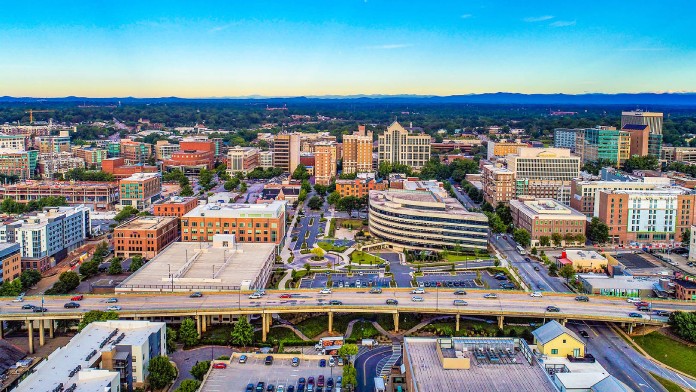
Greenville anchors the Upstate region of South Carolina and is one of the state’s fastest-growing metro areas, sitting along the I-85 corridor between Atlanta and Charlotte. Addictions.com lists 26 rehab facilities in Greenville, with unusually strong local capacity for the earliest and most intensive stages of care: 18 offer medical detox and 18 provide inpatient treatment, alongside 21 outpatient programs.
If you’d like to compare options elsewhere in the state, the South Carolina rehab directory lists programs statewide.
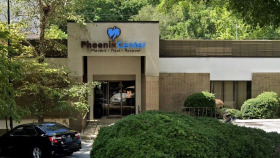
South Carolina organizes public substance use treatment through a network of county Alcohol and Drug Abuse Commissions overseen by the state Department of Alcohol and Other Drug Abuse Services (DAODAS). In Greenville County, that designated authority is the Phoenix Center, a nonprofit created under state law and run by the Greenville County Commission on Alcohol and Drug Abuse.
The Phoenix Center operates a 16-bed medical detox unit on Cleveland Street, provides medication-assisted treatment and uses a sliding fee scale so residents can access care regardless of ability to pay. It gives priority admission to pregnant women and people who inject drugs. This public backbone sits at the center of the local addiction treatment landscape.
Greenville has been one of the hardest-hit counties in South Carolina during the fentanyl era. It has repeatedly ranked at or near the top of the state for fentanyl-related deaths, and it recorded 215 overdose deaths in 2023. There is some encouraging news beneath that number: 2023 marked the largest single-county decline in the state, a 25% drop from the prior year, which local officials link to expanded naloxone access and treatment outreach. Demand for opioid use disorder care remains high, and law enforcement across the Upstate has pursued major fentanyl-trafficking cases tied to fatal overdoses.
Most of Greenville’s treatment capacity is concentrated in and around the city and along the Cleveland Street and downtown corridors, with additional Upstate options in nearby Spartanburg and Anderson counties. For people balancing work or family obligations, the city’s deep bench of outpatient programs offers flexibility that residential care can’t.
Cost of Rehab in Greenville
What you pay for treatment in Greenville depends on the level of care, the length of the program and whether you use insurance, Medicaid or pay out of pocket. South Carolina sits near the middle of the Southeast’s cost range, and the statewide averages below give you a realistic starting point.
The most effective step you can take to lower these numbers is to verify your rehab benefits before enrolling.
Greenville’s county authority helps keep costs accessible for residents who qualify, which pulls the effective local price below these private-market averages for many people. Several factors shape the final number:




How to Pay for Rehab in Greenville
Among the 26 facilities listed in Greenville, self-payment and private insurance are the most widely accepted, and public coverage is available at the county authority and other participating centers. The overview below shows how commonly each payment type is accepted across Greenville programs.





Coverage in Greenville skews toward private insurance and self-pay, so knowing your options up front matters. Here is how the main paths work.
Medicaid
South Carolina administers Medicaid as Healthy Connections, and 9 of the facilities listed in Greenville accept it. Healthy Connections covers outpatient counseling, detox and medication-assisted treatment with methadone, buprenorphine or naltrexone. The Phoenix Center works with Medicaid and can help uninsured residents understand their eligibility, often the fastest route to low-cost or no-cost care.
Medicare
Four Greenville programs accept Medicare, which covers medically necessary addiction treatment for eligible older adults and people with qualifying disabilities. Coverage includes inpatient care, outpatient services and screening, though your out-of-pocket costs depend on your specific plan and any supplemental coverage. Confirm the details with your plan before you enroll.
Military Benefits
Two facilities in Greenville accept TRICARE. Veterans and active-duty service members also have access to specialized care and dedicated benefits, and Upstate organizations can help connect them to the right programs, including the veteran services listed further down this page.
Insurance and Private Pay
Eighteen Greenville programs accept private health insurance and 24 accept self-payment. Under federal parity law, most private plans must cover substance use treatment on par with other medical care, though specific benefits and out-of-pocket costs vary by plan. If you’re paying privately, ask each center for the total program cost, what it includes and whether financing is available; five Greenville programs offer financing arrangements.
Other Low-Cost Options
Seven Greenville facilities offer sliding-scale fees and 7 offer some form of financial assistance, both of which adjust cost to income. As the county’s designated authority, the Phoenix Center uses a sliding fee scale based on family income and size. It requires an application with supporting financial documentation, making it a central entry point for residents without insurance.
Free Treatment Programs
One Greenville facility offers free treatment, and faith-based recovery programs in the Upstate provide no-cost options. For people who need another way to cover costs, our guide to rehab scholarships outlines additional funding options.
- Aetna
- BlueCross BlueShield of South Carolina
- Cigna
- Healthy Connections
- Humana
- Medicare
- TRICARE
- UnitedHealthcare
Levels of Care Available in Greenville
Greenville’s 26 facilities cover the full treatment continuum and are notably well equipped at the intensive end, with 18 offering medical detox and 18 providing inpatient rehab. Twenty-one deliver outpatient care, and 8 treat co-occurring mental health and substance use conditions together.



Medical detox is the supervised first step for people with significant physical dependence, managing withdrawal safely under medical care. Greenville’s detox capacity is a local strength, including the Phoenix Center’s 24-hour medical detox unit. You can read more about what to expect from supervised detox.
Inpatient rehab provides 24-hour residential care with structured therapy, medical support and a substance-free setting. It suits more severe substance use disorders or situations where the home environment isn’t stable for recovery. Learn more about residential treatment.
Outpatient care, available at 21 Greenville programs, lets people attend treatment while living at home and keeping up with work or family. It often follows an inpatient stay or serves as a starting point for milder cases. Our overview of outpatient and intensive outpatient programs explains how these levels fit into a plan.
Dual diagnosis programs at 8 Greenville facilities treat substance use alongside conditions such as co-occurring anxiety disorders or depression, addressing both together for stronger long-term results.
For people stepping down from a higher level of care, the city’s four sober living homes and continuing care options help protect early recovery and reduce the risk of returning to use.
Specialty Programs in Greenville
Many Greenville facilities tailor treatment to specific groups, making care more relevant and effective. The programs below are well represented across the city’s listings.






Alcohol treatment is the most common focus in Greenville, offered by 24 facilities, reflecting how frequently alcohol use disorder drives people to seek help locally. Fourteen programs address opioid use disorder, the county’s most urgent overdose risk. Young adult programming is also widely available at 14 facilities, and resources on young adult and college student substance use speak to that group. Two facilities provide LGBTQ+ affirming addiction care, and two offer programming built around the experiences of veterans and service members.
Free and Low-Cost Rehab Resources in Greenville
Greenville and the wider Upstate have a well-connected network of free and low-cost services, from 24-hour crisis lines to harm-reduction supplies and the county’s public treatment authority. The resources below are verified local and statewide options. If you or someone you love is in immediate danger, call 911.
Crisis Lines
These lines are free, confidential and available around the clock. For anyone in crisis, they are the fastest way to reach help; our crisis support resources offer more guidance.
- 988 Suicide and Crisis Lifeline
Call or text 988
24/7. In South Carolina, Mental Health America of Greenville County answers some calls - SC Department of Mental Health CCRI Line
1-833-364-2274 (1-833-DMH-CCRI)
24/7, staffed by on-call therapists for mental health crises. - Greenville CRISISline
864-271-8888
Local behavioral health resource and crisis line. - SAMHSA National Helpline
1-800-662-HELP (4357)
Free 24/7 treatment referral and information.
County Health and Treatment
- The Phoenix Center
phoenixcenter.org.
Greenville County’s designated substance use authority, offering medical detox, inpatient and outpatient treatment, MAT and a sliding fee scale. - 211 (United Way Association of South Carolina)
Dial 211 or visit sc211.org
24/7 Connection to local health, housing and social services.
Harm Reduction
- NEXT Distro
nextdistro.org.
Free, mail-based naloxone (Narcan) and harm-reduction supplies for people who can’t easily reach in-person services, available to Greenville-area residents at risk of overdose. - DAODAS Overdose Prevention
daodas.sc.gov.
State program distributing naloxone and training first responders and community members to recognize and reverse overdoses.
Faith-Based Recovery
- Miracle Hill Ministries
miraclehill.org
Upstate nonprofit offering a no-cost, faith-based residential recovery program and emergency shelter, including the Greenville Rescue Mission at 575 W. Washington St., Greenville, SC 29601.
Veterans and Military
- Veterans Crisis Line
Dial 988 then press 1, or text 838255, 24/7.
Enrollment in VA benefits is not required. - Upstate Warrior Solution
https://upstatewarriorsolution.org/
Greenville-based nonprofit that helps veterans and their families navigate benefits and connect to care; see our rehab resources for veterans and military members
Drug and Alcohol Use Statistics in Greenville
Greenville County saw the largest single-county drop in overdose deaths in South Carolina in 2023, though its totals remain among the state’s highest, and fentanyl continues to drive the crisis. The figures below place Greenville in its county and statewide context. For national comparison, see our overview of national substance use statistics.
Greenville County has been named among the top counties in South Carolina for fentanyl-related deaths in multiple annual reports, and Upstate prosecutors have pursued trafficking cases directly tied to fatal overdoses.
That local reality is why detox and fentanyl overdose risk awareness remain central to the community’s response.
Resources
- South Carolina Public Radio. (2025). Overdose deaths in South Carolina dropped in 2023, but deaths from drug cocktails are rising. https://www.southcarolinapublicradio.org/sc-news/2025-04-01/overdose-deaths-in-south-carolina-dropped-in-2023
- South Carolina Department of Public Health. (2025). Drug Overdose Deaths, South Carolina, 2023. https://dph.sc.gov/sites/scdph/files/2025-03/Drug-Overdose-Report-2023.pdf
- The Phoenix Center. (2025). How We Serve. https://phoenixcenter.org/how-we-serve/
- South Carolina Department of Alcohol and Other Drug Abuse Services. (2026). The Phoenix Center provider profile. https://www.daodas.sc.gov/treatment-provider/the-phoenix-center
- DAODAS. (2026). Overdose Death Prevention. https://www.daodas.sc.gov/services/prevention/overdose-death-prevention/
- 988 South Carolina. (2025). 988 Suicide and Crisis Lifeline in South Carolina. https://988sc.org/
- Miracle Hill Ministries. (2026). Greenville Rescue Mission and Recovery Program. https://miraclehill.org/
- Addictions.com. (2026). Alcohol and Drug Rehabs in South Carolina. https://www.addictions.com/rehabs/south-carolina/
- WSPA Channel 7 News (2026). Upstate coroners say many 2025 deaths were preventable, hope 2026 numbers decline. https://www.wspa.com/news/local-news/upstate-coroners-say-many-2025-deaths-were-preventable-hope-2026-numbers-decline/