




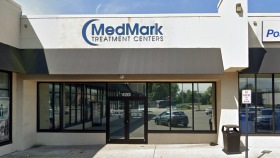
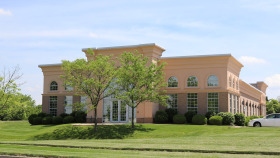
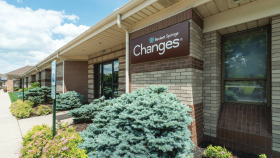
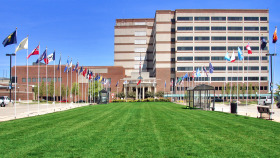
How We Rank Listings
Our directory brings together licensed and accredited drug and alcohol treatment providers serving Dayton and the surrounding Montgomery County area. Listings are compiled from public licensing records, accreditation databases, and facility-reported information, then reviewed by our editorial team for accuracy.
When we present treatment options, we prioritize programs that demonstrate the signals that matter most to people choosing care:
- Current state licensure and recognized third-party accreditation, such as CARF or Joint Commission
- A clear range of levels of care, from medical detox through outpatient and aftercare
- Acceptance of Ohio Medicaid, Medicare, TRICARE, and major private insurance plans
- Availability of medication-assisted treatment and co-occurring mental health care
- Specialized programming for populations such as women, men, veterans, young adults, and LGBTQ+ clients
- Transparent information about cost, length of stay, and clinical approach
Listings are reviewed and updated regularly. If you represent a facility and need to correct your information, contact our editorial team.
Rehab in Dayton: What to Know
Dayton is the seat of Montgomery County and the sixth-largest city in Ohio, with roughly 136,000 residents inside the city and about 540,000 across the county. It anchors the Dayton metropolitan area in the Miami Valley region, home to around 814,000 people across Montgomery, Greene, and Miami counties.
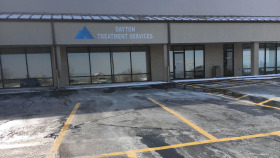
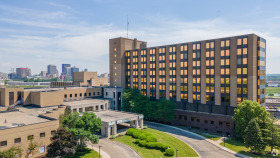
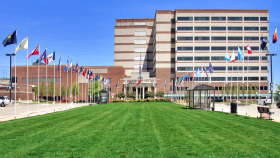
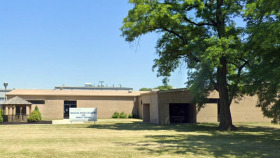
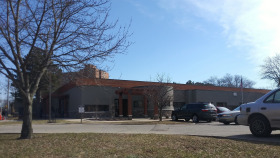
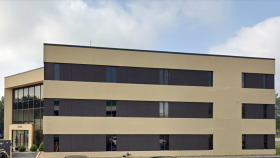
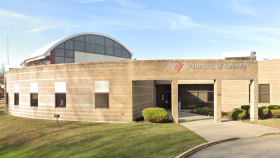
Our directory lists 34 drug and alcohol treatment facilities in the Dayton area, spanning medical detox, residential care, outpatient services, and dual diagnosis programming. People comparing options here can also browse the full Ohio rehab directory to see programs in nearby cities such as Kettering, Springfield, and Cincinnati.
Public behavioral health in Montgomery County is coordinated by the Alcohol, Drug Addiction, and Mental Health Services (ADAMHS) Board of Montgomery County, one of 50 county boards that plan, fund, and monitor Ohio’s public addiction and mental health system.
The ADAMHS Board contracts with local provider agencies and operates a free app and directory, LocalHelpNow, that helps residents find addiction treatment options and mental health services across the county.
Samaritan Behavioral Health, a CARF-accredited provider affiliated with Premier Health, runs the county’s CrisisCare line and a substance use services program that includes medication-assisted treatment.
Dayton was one of the hardest-hit communities during the height of the opioid crisis, and Montgomery County has since built one of Ohio’s more coordinated local responses through its Community Overdose Action Team (COAT), a data-driven collaboration among public health, law enforcement, treatment providers, and community groups.
Fentanyl remains the substance most often involved in fatal overdoses locally, which makes access to opioid use disorder treatment and medication-assisted care a central part of the treatment picture in the area.
Overdose deaths in Montgomery County have declined sharply in recent years, though the county’s overdose death rate has historically run above the statewide average. That combination, high need alongside a maturing treatment and harm-reduction network, shapes what people encounter when they search for help in Dayton.
Cost of Rehab in Dayton
The cost of addiction treatment in Dayton depends on the level of care, program length, and whether you use insurance. Specific Dayton figures are not separately published, so the most reliable anchor is the set of Ohio statewide averages below.
Costs in the Dayton area generally track close to these state figures, with hospital-based programs on the higher end and community and ADAMHS-funded providers on the lower end. Most clients pay only a portion of the published cost, because insurance, Ohio Medicaid, and sliding-scale fees absorb much of the expense. Verifying your benefits before admission is the single most useful step for understanding what you will actually owe.
Several factors move the final number up or down for any given program:



If cost is the main barrier, outpatient care through Ohio Medicaid and residential care at community-funded providers will generally be the most accessible starting points. People paying out of pocket can request an itemized estimate from each program and compare it against a comparable stay elsewhere.
How to Pay for Rehab in Dayton
Across the 34 Dayton-area facilities in our directory, most accept more than one form of payment, which gives people several ways to cover treatment. The counts below reflect how many local programs accept each payment type.



The right payment path depends on your coverage and circumstances. The breakdown below walks through the most common options among Dayton programs.
Medicare
Ten Dayton-area facilities accept Medicare. Medicare Part A helps cover inpatient rehabilitation in a Medicare-certified hospital or facility, while Part B covers outpatient counseling, psychiatric services, and medication management.
Methadone, buprenorphine, and naltrexone for opioid use disorder are covered under Part B when delivered through a certified opioid treatment program. Your copays and out-of-pocket costs depend on the setting and whether you carry a supplemental plan. Our guide to verifying your rehab benefits covers what to ask before admission.
Medicaid
Twenty-one Dayton-area programs accept Ohio Medicaid, making it one of the most widely accepted payment types locally. Ohio Medicaid covers a full continuum of substance use disorder services, from withdrawal management and residential care through intensive outpatient, standard outpatient, peer recovery support, and medication-assisted treatment.
Community providers funded through the Montgomery County ADAMHS Board frequently serve Medicaid enrollees, and CarePoint and other outreach programs offer on-site Medicaid enrollment assistance for people who are not yet covered.
Military Benefits
Six Dayton-area facilities accept TRICARE. Given the presence of Wright-Patterson Air Force Base in the metro area, veterans and active-duty service members and their families make up a meaningful share of people seeking care locally.
Coverage and referral pathways vary by plan and duty status, and additional rehab resources for veterans and military families are available beyond what standard benefits cover.
Insurance and Private Pay
Twenty-one Dayton programs accept private health insurance, and 31 accept self-payment or cash. In-network care is almost always less expensive than out-of-network care, so confirming which local programs are in your plan’s network is worth doing early. Major carriers active in Ohio are listed below.
- Aetna
- Anthem Blue Cross Blue Shield
- Cigna
- Humana
- Medical Mutual of Ohio
- UnitedHealthcare
Other Low-Cost Options
For people without robust coverage, nine Dayton-area facilities offer some form of financial assistance, seven offer sliding-scale fees tied to income, and five offer financing. These options can bring the effective cost of care down substantially, especially at community-based providers.
Free Treatment Programs
Three Dayton-area facilities offer free treatment for eligible clients. Free and low-cost care often comes with eligibility requirements or waitlists, so it helps to apply early and to have more than one option in mind. People who cannot cover care through insurance or public programs may also qualify for rehab scholarships that offset the cost of a program.
Levels of Care Available in Dayton
Dayton-area programs cover the core levels of addiction care, including 9 medical detox facilities, 16 inpatient rehab programs, 32 outpatient clinics, and 22 dual diagnosis programs for people managing addiction alongside a mental health condition.

Medical detox provides supervised withdrawal management, which matters for anyone withdrawing from alcohol, opioids, or benzodiazepines, where symptoms can be dangerous without medical support. Programs offering medical detox stabilize clients before they move into ongoing treatment.
Inpatient and residential rehab offers structured, live-in care with continuous clinical support, typically over a 30- to 90-day stay. This level suits people who need to step away from their environment or who have more severe or long-standing substance use. Learn more about residential treatment and what to expect.
Outpatient care lets people receive counseling, group therapy, and medication management while continuing to work or care for family. Dayton has a deep bench of outpatient options, including intensive outpatient programs for those stepping down from residential care or needing more than weekly sessions.
Dual diagnosis programs treat substance use and a co-occurring mental health condition together, which produces better outcomes than treating either alone. Given how often addiction overlaps with conditions like co-occurring depression and anxiety, integrated care is a common need locally.
Sober living and aftercare support the transition back to daily life. Two sober living homes appear in our Dayton directory, and most residential programs coordinate rehab aftercare to help maintain progress after discharge.
Medication-assisted treatment is also widely available locally, including buprenorphine and naltrexone through providers such as Samaritan Behavioral Health.
Specialty Programs in Dayton
Many Dayton-area facilities tailor treatment to specific populations and substances. The counts below reflect how many local programs offer each specialty, helping people find care matched to their circumstances.






Alcohol remains one of the most common reasons people enter treatment locally, and 22 Dayton programs offer care focused on alcohol use disorder.
Eighteen programs provide dedicated care for opioid use disorder, reflecting the county’s long-running struggle with fentanyl and other opioids. For younger clients, 26 programs offer young adult services, a category that overlaps with resources for young adult and college student substance use.
Four programs offer LGBTQ+ friendly care with LGBTQ+ affirming addiction care, and four provide services geared toward veterans and active-duty members through programs offering rehab resources for veterans and military families.
Free and Low-Cost Rehab Resources in Dayton
Beyond licensed treatment facilities, Dayton and Montgomery County offer a network of free and low-cost resources for crisis support, harm reduction, and connection to care.
Many of these are coordinated through the county’s Community Overdose Action Team and the ADAMHS Board. If you or someone you love is in immediate danger, crisis support is available around the clock through the numbers below.
Crisis and Help Lines
- 988 Suicide and Crisis Lifeline
https://988lifeline.org/
Call or text 988, available 24/7 for mental health and substance use crises. - SAMHSA National Helpline
https://www.samhsa.gov/find-help/
Free, confidential, 24/7 treatment referral and information in English and Spanish. - Get Help Now Montgomery County / LocalHelpNow
https://mc.localhelpnow.org/
A free ADAMHS Board app and directory that connects residents to local addiction, mental health, and recovery services.
Public Health and Harm Reduction
- Public Health – Dayton & Montgomery County
https://www.phdmc.org/
Directs the county’s addiction and harm-reduction programs. - CarePoint Syringe Services Program
phdmc.org
A one-to-one syringe exchange with naloxone distribution, HIV and hepatitis C testing, and linkage to treatment, operating at fixed and mobile sites in Dayton, including 6175 W. Third St. - Project DAWN Montgomery County
https://odh.ohio.gov/
Free naloxone (Narcan) education and distribution every Wednesday at noon at 601 Edwin C. Moses Blvd., Door F (CrisisCare entrance), Dayton. Group training available.
Community and Recovery Organizations
- Families of Addicts (FOA)
https://foafamilies.org/
A Dayton grassroots group offering peer support and outreach for people affected by substance use disorder and their families, with a focus on reducing stigma. - East End Community Services
https://westcare.com/places/ohio/
An East Dayton nonprofit that hosts Conversations for Change events connecting residents to treatment resources and naloxone training. - Life Enrichment Center
https://daytonworkforce.com/life-enrichment-center/
A faith-based nonprofit serving Dayton-area residents that hosts recovery support meetings and community services.
Public Coverage
- Ohio Medicaid
benefits.ohio.gov
Covers a full range of substance use disorder services for eligible residents. - ADAMHS Board of Montgomery County
mcadamhs.org
Plans and funds public behavioral health services and provides referrals.
Drug and Alcohol Use Statistics in Dayton
Montgomery County saw a dramatic decline in overdose deaths in 2024, with 176 fatal overdoses recorded, a 39% drop from the prior year, according to the county’s Community Overdose Action Team.
The county has been among the harder-hit in Ohio: its unintentional overdose death rate of 57.8 per 100,000 residents outpaced the statewide rate of 43.5 per 100,000 in the most recent state overdose report. The figures below capture the local picture and the outsized role of fentanyl in it.
The recent decline is encouraging, but stimulants are a growing factor: in 2024, roughly one in five people who died of an overdose in Montgomery County had a stimulant in their system with no opioid present.
Local officials credit wider naloxone distribution and a coordinated community response for much of the improvement, while cautioning that the number of families affected remains high. For national context, see our overview of substance use statistics.
Resources
- Montgomery County Community Overdose Action Team. (2025). 2024 Data Unit Annual Report. https://www.mccoat.org/data-reports
- Ohio Department of Health. (2024). 2023 Ohio Unintentional Drug Overdose Report. https://odh.ohio.gov/
- Dayton Daily News. (2024). How $100M in federal grants will address drug overdose deaths in Ohio. https://www.daytondailynews.com/
- Alcohol, Drug Addiction, and Mental Health Services (ADAMHS) Board of Montgomery County. (2026). About Us. https://www.mcadamhs.org/
- Public Health – Dayton & Montgomery County. (2026). CarePoint Syringe Services Program. https://www.phdmc.org/programs-a-to-z/carepoint-syringe-services-program
- Samaritan Behavioral Health, Premier Health. (2026). CrisisCare Program. https://www.premierhealth.com/locations/samaritan-behavioral-health
- U.S. Census Bureau. (2024). QuickFacts: Dayton city and Montgomery County, Ohio. https://www.census.gov/quickfacts/fact/table/daytoncityohio/PST045225
- Addictions.com. (2026). Alcohol & Drug Rehabs in Ohio. https://www.addictions.com/rehabs/ohio/