



How We Rank Listings
Every rehab center in the Hagerstown directory is a licensed or accredited provider, and listings are organized to help you compare real options rather than to promote one facility over another. We prioritize programs licensed by the Maryland Behavioral Health Administration (BHA) and independently accredited by the Joint Commission or CARF, and we label any sponsored placement clearly so you always know what you are looking at.
Listing details reflect the levels of care, specialty tracks, and payment types each facility reports, drawn from public licensing records and facility information. Because openings and insurance participation change, confirm current availability and program specifics directly with a center when you reach out. The aim is to give you an accurate starting point for finding care close to home.
Rehab in Hagerstown: What to Know
Hagerstown is the seat of Washington County and the hub of Western Maryland, near the West Virginia and Pennsylvania borders, with a solid base of addiction treatment. The area has 16 rehab centers offering detox, inpatient, and outpatient care, and you can compare every nearby option through the Maryland rehab directory.
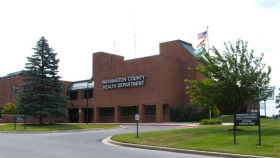
The Washington County Health Department Division of Behavioral Health, based at 925 North Burhans Boulevard, serves as the county’s Local Addictions Authority, coordinating treatment referrals, a Syringe Services Program, peer recovery support, and an overdose response team. Meritus Medical Center added crisis stabilization beds in 2024 to give people in acute overdose or withdrawal a low-barrier place to start. Maryland Medicaid coverage for addiction care runs through the Public Behavioral Health System.
Washington County has carried an overdose burden above many comparable Maryland counties, driven by fentanyl, but an aggressive local treatment push helped opioid overdose deaths fall by roughly 18% heading into 2024. Statewide, Maryland overdose deaths have dropped for four straight years to a 10-year low.
Cost of Rehab in Hagerstown
The cost of rehab in Hagerstown depends on the level of care, program length, and whether you use insurance. Maryland sits near the middle of the regional range, with a statewide residential average of roughly $56,783 without insurance, though most people pay a fraction of that once insurance benefits are applied. The figures below reflect Maryland averages by care type.
Medical detox is the most expensive level of care, at an average of $139,991 statewide (National Center for Drug Abuse Statistics, 2022).
Long-term inpatient rehab in Maryland averages $50,107 (National Center for Drug Abuse Statistics, 2022).
Outpatient addiction treatment averages $8,326, far less than residential care (National Center for Drug Abuse Statistics, 2022).
Outpatient methadone treatment is the most affordable option, averaging $7,398 (National Center for Drug Abuse Statistics, 2022).
Actual costs vary with setting, amenities, and length of stay. Outpatient programs cost far less than residential care and are the most common local format, while medical detox and inpatient stays carry the highest price tags. Western Maryland treatment tends to run at or below the state average, and Maryland Medicaid, public behavioral health funding, and financial assistance can lower what you pay out of pocket.



How to Pay for Rehab in Hagerstown
Across the 16 rehab centers serving Hagerstown, all accept self-payment, and most work with Maryland Medicaid, financial assistance, and private insurance. The counts below show how many local facilities report accepting each payment type.

16 accept self-payment or cash
12 accept Maryland Medicaid
10 offer financial assistance
10 accept private health insurance
7 accept Medicare
5 accept TRICARE

4 offer sliding-scale fees
Which option makes the most sense depends on your coverage and income. The subsections below outline how the main payment paths work for Hagerstown residents.
Maryland Medicaid
Maryland Medicaid covers the full continuum of substance use care through the Public Behavioral Health System, from detox to outpatient counseling and medication for addiction treatment, including all three FDA-approved opioid use disorder medications. Specialty behavioral health benefits are administered by Carelon Behavioral Health for HealthChoice members. Twelve Hagerstown facilities report accepting Maryland Medicaid.
Medicare
Medicare covers substance use treatment that is medically necessary, including inpatient care under Part A and outpatient services and counseling under Part B, with Medicare Advantage plans offering the same benefits. Seven Hagerstown area centers accept Medicare.
Military and TRICARE
Veterans and active-duty families have several routes to care. Five area facilities accept TRICARE, and the VA Maryland Health Care System operates the Martinsburg VA Medical Center just across the West Virginia line. See more rehab resources for veterans and military families.
Insurance and Private Pay
Most Hagerstown centers accept private insurance or self-payment, and Maryland parity laws require commercial plans to cover substance use treatment. Coverage varies by plan and network status, so verify benefits before you commit. Major carriers active in Maryland include:
- CareFirst BlueCross BlueShield
- UnitedHealthcare
- Kaiser Permanente
- Cigna
- Aetna
Other Low-Cost Options
For those without full coverage, 10 Hagerstown centers offer financial assistance and four offer sliding-scale fees. Public behavioral health funding serves residents regardless of ability to pay, and treatment scholarships can help close the gap.
Accreditation
Accreditation signals that a program meets independent quality standards. Among Hagerstown area facilities, three hold CARF accreditation and one holds Joint Commission accreditation. Accreditation is separate from BHA licensing, which every legitimate Maryland substance use provider must maintain.
Levels of Care Available in Hagerstown
Hagerstown offers care across the continuum, with 9 detox programs, 8 inpatient programs, and 14 outpatient clinics reported locally, plus partial hospitalization and sober living. Most facilities also treat co-occurring mental health conditions.
9 medical detox facilities
8 inpatient rehab programs
1 partial hospitalization program
14 standard outpatient clinics

12 dual diagnosis programs
4 sober living homes
Medical detox provides 24-hour supervision to manage withdrawal safely and is the usual first step for opioid or alcohol dependence. Nine area programs offer medically supervised detox.
Inpatient and residential rehab provides structured, live-in treatment. Eight local inpatient rehab programs serve people who need to step away from daily triggers to focus on early recovery.
Partial hospitalization offers intensive daytime treatment while a person returns home in the evening. One area program provides PHP, bridging residential and standard outpatient care.
Outpatient treatment lets people live at home while attending scheduled sessions, and it is the most common local format, with 14 clinics reported. It suits people balancing work or family.
Dual diagnosis care treats addiction alongside conditions like depression or anxiety. Twelve reporting facilities address co-occurring disorders, which matters given how often mental health and substance use overlap.
Sober living offers substance-free housing that supports the transition back to independent life. Four local homes provide this option, paired with aftercare planning.
Specialty Programs in Hagerstown
Many Hagerstown facilities tailor treatment to specific groups and substances. The counts below reflect programs that report each specialty focus.

15 young adult programs

12 women’s programs

12 men’s programs

12 alcohol rehab programs
10 opioid rehab programs

6 programs for older adults

4 LGBTQ+ friendly programs
2 veterans and military programs
Programs for young adults are the most widely reported specialty locally, and 12 programs address alcohol use disorder while 10 treat opioid use disorder. Facilities also serve women, men, older adults, and veterans, and offer LGBTQ+ affirming addiction care.
Free and Low-Cost Rehab Resources in Hagerstown
Cost should not keep anyone from help. Hagerstown residents can reach crisis support, treatment access lines, and harm-reduction resources at no charge, including crisis and suicide-prevention support around the clock.
Crisis and Helplines
- 988 Suicide & Crisis Lifeline: Call or text 988 any time for a mental health or substance use crisis.
- Washington County Health Department, Behavioral Health: 240-313-3310 for treatment navigation, peer support, and overdose response.
- MDHope: Text MDHope to 898-211 for local opioid resources, treatment options, and recovery support.
Local Treatment and Recovery
- Washington County Health Department, Division of Behavioral Health: The county Local Addictions Authority, coordinating treatment and harm reduction at 925 North Burhans Boulevard (washcohealth.org).
- Meritus Medical Center: Crisis stabilization beds and hospital-based care for acute overdose or withdrawal in Hagerstown (meritushealth.com).
Government and Harm Reduction
- Syringe Services Program: Sterile supplies, HIV and hepatitis C testing, naloxone, and fentanyl test strips through the county health department.
- Free naloxone: Available at Maryland pharmacies without a prescription and through StopOverdose.maryland.gov.
- SAMHSA National Helpline: 1-800-662-4357, free and confidential treatment referrals, 24/7.
Drug and Alcohol Use Statistics in Hagerstown
Hagerstown sits in Washington County, where fentanyl drives most overdose deaths but an aggressive treatment and harm-reduction push has begun to turn the tide. Maryland recorded one of the nation’s steepest declines in overdose deaths, and overdose data show a fourth straight year of improvement driven by naloxone saturation and expanded medication for opioid use disorder.
Drug overdose deaths statewide in Maryland in 2025, a 10-year low, down from 2,800 in 2021 (Maryland Department of Health, 2026).
Fentanyl-related overdose deaths in Maryland in 2025, down 31% from 1,314 in 2024 (Maryland Department of Health, 2026).
Decline in Maryland drug overdose deaths from the 2021 peak to 2025, the lowest total in a decade (Maryland Department of Health, 2026).
Resources
- Maryland Department of Health, Behavioral Health Administration. (2026). Overdose data dashboard and treatment resources. health.maryland.gov.
- Office of Governor Wes Moore. (2026). Maryland overdose deaths falling for fourth straight year, reaching 10-year low.
- Washington County Health Department, Division of Behavioral Health. (2025). Local Addictions Authority services and harm reduction. washcohealth.org.
- Maryland Department of Health. (2025). Statewide naloxone standing order and StopOverdose.maryland.gov.
- National Center for Drug Abuse Statistics. (2022). Average Cost of Drug Rehab by Type, State and More.