



How We Rank Listings
Our directory is built to help you compare real treatment options, not to sell placements. We list licensed and accredited drug and alcohol rehab centers serving San Juan Capistrano and the surrounding south Orange County area, drawing on verified facility data, accreditation records, and the services each program reports offering.
When we order listings, we weigh factors that matter to someone choosing care:
- Current state licensing and third-party accreditation, such as Joint Commission or CARF
- Levels of care offered, from medical detox through outpatient and aftercare
- Accepted forms of payment, including private insurance, self-pay, and public coverage
- Specialized programming for specific populations and substances
- Completeness and accuracy of the program’s verified information
A listing’s position is never for sale. If a program’s details cannot be verified, we leave them off rather than guess.
Rehab in San Juan Capistrano: What to Know
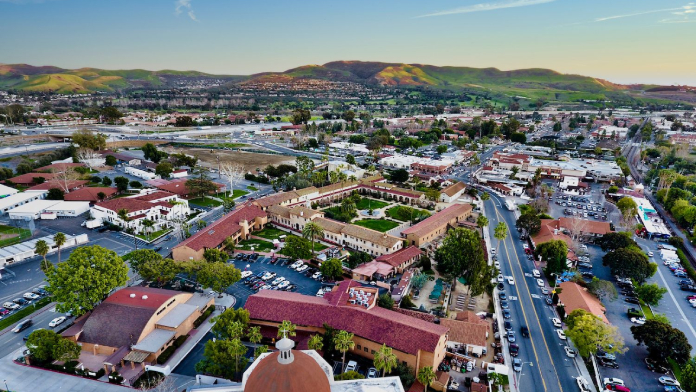
San Juan Capistrano sits along the south Orange County coast, home to roughly 35,600 residents and bordered by San Clemente, Dana Point, and Laguna Niguel.
People searching here have access to 29 rehab facilities in and around the city, a larger concentration than the population alone would suggest, reflecting south Orange County’s role as a regional hub for addiction treatment options.
You can browse the full listing of programs across the state through the California rehab directory. Publicly funded and safety-net care in the area is coordinated by the Orange County Health Care Agency’s Behavioral Health Services division.
Its OC Links line connects residents to county mental health and substance use programs, and CalOptima administers Drug Medi-Cal benefits for eligible county residents.
Private programs in the coastal cities south of Irvine round out the local landscape, giving people options across detox, residential, and outpatient care.
Opioids remain the sharpest concern countywide. Orange County recorded 613 fentanyl-related deaths in 2023 before falling to 407 in 2024, the first sustained decline in years, according to the OC Sheriff-Coroner Division.
Even with that improvement, illicitly manufactured fentanyl overdose risk continues to drive local prevention and naloxone-distribution efforts. Alcohol remains the other substance most often involved in local overdose deaths.
Geographically, San Juan Capistrano is bisected by Interstate 5, which makes programs in neighboring Mission Viejo, San Clemente, and Laguna Niguel reachable within a short drive. That access matters for outpatient care, where a person attends sessions several times a week and needs a practical commute.




Cost of Rehab in San Juan Capistrano
There is no single price for rehab, and costs in San Juan Capistrano vary with the level of care, program length, and whether insurance covers part of the bill.
National figures give a useful baseline. The average cost of a 30-to-60-day rehab stay is roughly $50,469, with outpatient programs averaging closer to $8,000 per person.
Programs in higher cost-of-living areas like coastal Orange County tend to be at or above these averages, especially at private residential facilities. Verifying your rehab benefits before admission is the single most reliable way to know what you will actually pay.
Several factors move an individual’s cost up or down:





Because residential care bundles housing, meals, and clinical services, it is usually the most expensive level, while intensive outpatient programs cost considerably less.
Public coverage and sliding-scale options, covered below, can lower out-of-pocket costs substantially for those who qualify.
How to Pay for Rehab in San Juan Capistrano
Of the 29 facilities serving San Juan Capistrano, all 29 accept private health insurance and 28 accept self-payment, giving most people more than one way to cover care.
A smaller number of treatment facilities offer financing, sliding-scale fees, or financial assistance for those who need help bridging the gap. The cards below summarize the payment options reported by local programs.






Which option fits depends on your coverage and eligibility. The subsections below explain how the major payment paths work locally.
Medicare
None of the San Juan Capistrano facilities in our directory currently report accepting Medicare, though coverage exists at other programs across Orange County.
Medicare Part A can cover inpatient hospital-based treatment and Part B can cover outpatient services, subject to deductibles and coinsurance. If you rely on Medicare, call programs directly to confirm participation and ask what your plan covers before admission.
Medicaid
In California, Medicaid is called Medi-Cal, and substance use treatment for eligible residents is delivered through Drug Medi-Cal and the Drug Medi-Cal Organized Delivery System. In Orange County, CalOptima administers these benefits and operates a 24-hour Beneficiary Access Line for screening and referral.
Covered services can include detox, outpatient counseling, residential treatment, and medication-assisted treatment for opioid use disorder. None of the directory facilities report accepting Medi-Cal directly, so residents with Medi-Cal coverage should start with CalOptima or OC Links to find a participating provider.
Military Benefits
One local facility reports accepting TRICARE, the health program for active-duty service members, retirees, and their families. Veterans enrolled with the VA can also access substance use treatment through VA facilities and community-care referrals. Our rehab resources for veterans outline how military and veteran benefits apply to addiction care.
Insurance and Private Pay
Private insurance is the most widely accepted form of payment locally, taken by all 29 facilities, and 28 accept self-payment. Under federal parity rules, most plans must cover substance use treatment comparably to other medical care, though specific benefits, in-network status, and prior-authorization requirements vary. Verifying your benefits before admission tells you your deductible, copays, and any limits on covered days.
Other Low-Cost Options
Six local programs offer financing, three offer sliding-scale fees tied to income, and two offer financial assistance. These options can make private care workable for people who are uninsured or underinsured. Ask each program what documentation it needs to set up a payment plan or reduced fee.
Free Treatment Programs
No facility in our San Juan Capistrano listings reports offering fully free treatment, but county-funded and public options exist for those who qualify through Medi-Cal or county behavioral health programs.
People without the means to pay may also be eligible for help through rehab scholarships offered by some treatment organizations. Major insurance carriers accepted across Orange County programs include:
- Aetna
- Anthem Blue Cross
- Blue Shield of California
- Cigna
- Health Net
- Kaiser Permanente
- UnitedHealthcare
- TRICARE
Levels of Care Available in San Juan Capistrano
Programs serving San Juan Capistrano span the full continuum of care, with 27 offering medical detox, 26 offering inpatient rehab, 26 offering standard outpatient care, and 22 offering dual-diagnosis treatment for co-occurring mental health conditions. The cards below show how many local facilities offer each level.






Medical detox is the supervised process of clearing substances from the body while managing withdrawal safely. It is often the first step for people dependent on alcohol, opioids, or benzodiazepines. Learn more about supervised detox and what to expect.
Inpatient rehab provides 24-hour care in a residential setting, combining therapy, medical support, and structure away from daily triggers. It suits people with more severe use or unstable home environments. Read more about residential treatment.
Partial hospitalization and outpatient care let a person live at home while attending treatment on a set schedule. With five partial hospitalization programs and 26 outpatient clinics locally, there is meaningful flexibility for those stepping down from residential care or balancing work and family. Our guide to intensive outpatient programs explains how these schedules work.
Dual-diagnosis programs treat addiction alongside a co-occurring condition such as depression or anxiety, which frequently appear together. Twenty-two local programs offer this integrated approach; our resource on co-occurring depression covers why treating both at once improves outcomes.
Sober living and aftercare support the transition back to daily life. Eleven sober living homes serve the area, offering substance-free housing during early recovery. See our guidance on rehab aftercare for planning the months after a program ends.
Specialty Programs in San Juan Capistrano
Many local facilities tailor treatment to specific populations and substances. Programs for men and women are widely available, and most facilities offer dedicated tracks for alcohol and opioid use disorders, the two substances most involved in local overdose deaths. Young-adult programming is also common across the area.





Alcohol remains one of the substances most often involved in Orange County overdose deaths, and the 27 local programs treating alcohol use disorder reflect that demand.
The 23 programs addressing opioid use disorder respond to the county’s fentanyl crisis, often pairing counseling with medication-assisted treatment. For LGBTQ+ residents, eight programs offer LGBTQ+ affirming addiction care, and five programs provide rehab resources for veterans and military members.
This is a meaningful option given the region’s proximity to the Camp Pendleton community. Young-adult tracks are available at 23 facilities, supporting young adult and college student substance use needs.
Free and Low-Cost Rehab Resources in San Juan Capistrano
Cost should not be the reason someone goes without help. Orange County residents, including those in San Juan Capistrano, can reach the county’s behavioral health system and a network of nonprofits and public programs at little or no cost.
The resources below are free to contact and can connect you to care or overdose-prevention supplies. For 24/7 emotional support and connection to crisis support, start with the crisis lines listed first.
Crisis and Support Lines
- 988 Suicide & Crisis Lifeline
https://988lifeline.org/
Free, confidential, 24/7 support for mental health or substance use crises. - OC Links Behavioral Health Line
https://www.ochealthinfo.com/services-programs/mental-health-crisis-recovery/navigation-help-resources/oc-links
The Orange County Health Care Agency’s 24/7 information, referral, and crisis line connecting residents to county mental health and substance use programs. - SAMHSA National Helpline
https://www.samhsa.gov/find-help/helplines/national-helpline
Free, confidential, 24/7 treatment referral and information service. - NAMI Orange County WarmLine
https://www.namioc.org/oc-warmline
Free, confidential emotional support for county residents, available 24/7. - 2-1-1 Orange County
https://211oc.org/
Free 24-hour referral line linking residents to local health and human-service programs.
County Behavioral Health and Medi-Cal
- OC Health Care Agency, Behavioral Health Services
ochealthinfo.com
County-operated mental health and substance use programs, including prevention, treatment, and crisis response. - CalOptima Behavioral Health Line
https://www.caloptima.org/en/health-insurance-plans/medi-cal/behavioral-health-services
Screening and referral to substance use and mental health services for Orange County Medi-Cal (Drug Medi-Cal) beneficiaries, 24/7. - Be Well OC System Navigation
https://bewelloc.org/
Connects residents to mental health and substance use resources; mobile crisis response available through OC Links.
Harm Reduction
- Solace Foundation of Orange County
solacefoundationofoc.org
Orange County’s naloxone distribution program, providing free Narcan, fentanyl test strips, and overdose recognition and response training. - Orange County Needle Exchange Program (OCNEP)
ocnep.org
Volunteer-run, state-certified syringe services and naloxone distribution serving Orange County residents.
Government Naloxone Access
- California DHCS Naloxone Distribution Program
dhcs.ca.gov
Provides free naloxone to qualifying organizations such as schools, shelters, and community groups. Applications are available through the Department of Health Care Services.
If you administer naloxone or seek help during an overdose, California’s Good Samaritan protections are designed to reduce the legal risk of calling for help.
Drug and Alcohol Use Statistics in San Juan Capistrano
Orange County’s opioid crisis shapes the local treatment environment. Fentanyl-related deaths climbed for years before beginning to fall, and the county still records hundreds of overdose deaths annually. The figures below place San Juan Capistrano’s treatment landscape in county and state context.
The trend line matters as much as any single year. Orange County fentanyl-related deaths rose from 20 in 2015 to a peak of 717 in 2021, then eased to 676 in 2022, 613 in 2023, and 407 in 2024, according to the OC Health Care Agency and Sheriff-Coroner Division.
County officials credit expanded naloxone distribution, jail-based medication-assisted treatment, and public-awareness campaigns for the recent decline.
Alcohol and opioids are the substances most frequently present in local overdose deaths, and opioid-involved deaths jumped 45% countywide between 2019 and 2020 as fentanyl spread.
For national context on how these patterns compare, see our overview of national substance use statistics. Understanding opioid use disorder and the risk fentanyl poses is a starting point for anyone weighing treatment for themselves or a loved one.
Resources
- United States Census Bureau. (2020). QuickFacts: San Juan Capistrano city, California. https://www.census.gov/quickfacts/fact/table/sanjuancapistranocitycalifornia
- Orange County Sheriff-Coroner Division. (2025). Fentanyl-Related Deaths in Orange County See Five-Year Low. Orange County Health Care Agency. https://www.ochealthinfo.com/press/fentanyl-related-deaths-orange-county-see-five-year-low
- Orange County Health Care Agency. (2025). Drug & Alcohol Overdose Hospitalization & Death in Orange County. https://www.ochealthinfo.com/page/drug-alcohol-overdose-hospitalization-death-orange-county
- Orange County Health Care Agency. (2024). OC Links: Behavioral Health Information, Referrals, Crisis Response. https://www.ochealthinfo.com/services-programs/mental-health-crisis-recovery/navigation-help-resources/oc-links
- National Center for Drug Abuse Statistics. (2024). Average Cost of Drug Rehab: By Type, State & More. https://drugabusestatistics.org/cost-of-rehab/
- Solace Foundation of Orange County. (2025). Naloxone Distribution and Overdose Response Training. https://www.solacefoundationofoc.org
- NAMI Orange County. (2025). Crisis Resources and WarmLine. https://www.namioc.org/crisis-we-can-help
- California Department of Health Care Services. (2025). Naloxone Distribution Project. https://www.dhcs.ca.gov