


Expert Insights
I read that addiction recovery advocates in Savannah, Georgia, are asking lawmakers to budget more funding for peer support programs, and I think it’s a great idea.
Having witnessed the potential of peer support in friends’ and family’s lives, I know all too well how a peer support program can help someone turn their life around. What’s unique about peers is their lived experiences of addiction – they know how hard it is to overcome addiction, but they have successfully achieved recovery and are here to tell their stories. Not only should that be applauded, in my opinion, but I think it is a critical element in helping people sustain recovery.
Think about 12-step programs: they work because of peer support. What’s different about peer specialists, however, is that they are fully trained and registered with the state, offering quality support and safety that someone you meet in a church basement can’t. I truly hope that lawmakers in Georgia follow other states and provide this much-needed funding.
Compare drug and alcohol rehab in Savannah, Georgia, where 22 Chatham County providers offer detox, inpatient and outpatient care. Sort local options by level of care, insurance, and cost, so you can find the right fit and take the next step.
How We Rank Listings
Every facility in our Savannah directory is included based on verifiable, objective information, not paid placement.
We give weight to licensing and accreditation first, confirming that a provider is authorized to operate in Georgia and, where it applies, accredited by an independent body such as the Joint Commission or CARF. In this directory, 4 Savannah-area facilities hold Joint Commission accreditation and 6 are accredited by CARF.
We then look at the levels of care a center offers, from medical detox through outpatient treatment, and the payment options it accepts, including Georgia Medicaid, Medicare, TRICARE and private insurance.
Listings are reviewed for accuracy and updated as facility details change. We aim to give people and families in Chatham County an honest starting point for comparing care, so the decision about where to seek help stays with you.
Rehab in Savannah: What to Know
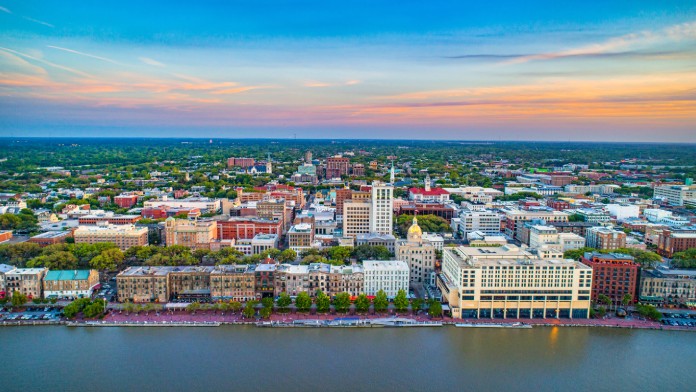
Savannah sits in Chatham County on Georgia’s coast, and this directory lists 22 treatment providers in and around the city. If you want to weigh options beyond the metro, you can browse the full Georgia state rehab directory for programs in nearby counties and larger cities.
Much of Savannah’s public and safety-net care runs through Gateway Behavioral Health Services, the Community Service Board for Chatham County. Gateway operates a 24/7 behavioral health crisis center and provides state-funded detox and stabilization for uninsured and low-income residents. Private clinics and hospital-based programs fill out the local addiction treatment options, giving the area a mix of no-cost public services and fee-based private care.
Local substance use patterns follow the wider opioid trend across coastal Georgia. In response, the Coastal Health District, the regional arm of the Georgia Department of Public Health that serves Chatham and seven neighboring counties, tracks overdose data through a local drug surveillance program so it can flag spikes and dangerous drug batches early.
Furthermore, the Savannah Police Behavioral Health Unit works with treatment providers to connect people who have repeated overdose or arrest histories to care instead of jail and the Savannah-Chatham County Drug Court offers a supervised treatment track as an alternative to incarceration.
Geographically, many of Savannah’s detox and residential programs cluster along the DeRenne Avenue and Abercorn Street corridors on the midtown and southside, with several outpatient and methadone clinics nearby, which is important for keeping care reachable for residents who rely on local transit.




Cost of Rehab in Savannah
Savannah does not publish its own treatment price index, so the most reliable anchor is the statewide average. Georgia ranks among the more affordable states for residential care, and treatment costs in Savannah generally track those state figures. What you actually pay depends far more on the level of care, the length of stay and your insurance than on the city itself.
The figures below are statewide averages across full programs, so a short medically supervised detox will cost a fraction of the detox average shown, while a long residential stay sits near the inpatient figure.
Because residential inpatient care carries round-the-clock staffing and lodging, it lands at the top of the range, while outpatient programs let people live at home and cost far less. Several factors move the final number up or down:




How to Pay for Rehab in Savannah
Across Savannah’s 22 listed providers, most accept some combination of cash, private insurance and public coverage, and a smaller number offer sliding-scale fees, financing or free care. The grid below shows how many local centers accept each payment type.








Medicare
Seven Savannah providers accept Medicare, which covers medically necessary addiction treatment for adults 65 and older and for some younger people with qualifying disabilities. Coverage typically includes inpatient care, outpatient counseling and medications for withdrawal and maintenance. Individuals on Medicare should keep in mind that copays and prior authorization rules vary by plan.
Understanding how insurance covers addiction treatment before you call a center can save time at intake.
Medicaid
Eight local centers accept Georgia Medicaid, delivered through Georgia Families managed-care plans such as CareSource, Peach State Health Plan and Amerigroup. Georgia Medicaid covers substance use treatment for eligible low-income adults and children, including counseling and, at licensed clinics, medication-assisted treatment for opioid use disorder.
You can check eligibility or enroll through the Georgia Gateway portal.
Military Benefits
Nine Savannah-area programs accept TRICARE, a meaningful figure given the region’s military footprint around Hunter Army Airfield and nearby Fort Stewart. TRICARE covers detox, inpatient rehab and outpatient care for active-duty members, retirees and their families, usually with referral requirements that depend on the specific plan.
Insurance and Private Pay
Fifteen centers take private insurance and 18 accept self-payment. Most major carriers active in Georgia cover at least part of addiction treatment under federal parity rules, though the amount depends on your plan, deductible and whether the center is in network. Verifying your benefits ahead of admission is the single best way to avoid a surprise bill.
- Aetna
- Ambetter
- Anthem Blue Cross Blue Shield of Georgia
- CareSource
- Cigna
- Humana
- Peach State Health Plan
- UnitedHealthcare
Other Low-Cost Options
For people without robust coverage, four Savannah centers offer sliding-scale fees tied to income, six provide financial assistance, four offer financing plans and two accept Employee Assistance Program referrals through an employer. Gateway Behavioral Health Services, as the county’s Community Service Board, is often the most direct route to low-cost or no-cost care for uninsured residents.
Free Treatment Programs
Two providers in the directory offer free treatment, and public programs through Gateway extend no-cost crisis and detox services to those who qualify. If cost is the main barrier, it is worth asking each center about scholarships or charity beds and reviewing options for free rehab through scholarships that some private facilities set aside each year.
Levels of Care Available in Savannah
Savannah offers a fairly complete continuum of care, with 11 detox and 11 inpatient programs anchoring the higher-acuity end and 19 outpatient clinics providing the most widely available option. Dual diagnosis care is well represented at 13 programs, and a small number of sober living homes support the transition back to daily life.





Medical detox is the supervised first step for people withdrawing from alcohol, opioids or benzodiazepines, where clinicians manage symptoms and reduce medical risk. Savannah’s 11 detox programs include Gateway’s state-funded stabilization services. Learn what to expect from supervised detox before you go in.
Inpatient rehab provides 24-hour residential care and structured therapy, typically for 30- to 90-day periods, and suits people with severe use or unstable home environments. Outpatient programs, the most common format locally, let people attend treatment while living at home and working.
Dual diagnosis programs treat a substance use disorder alongside a mental health condition such as co-occurring depression or anxiety, which is essential when both drive each other. Whatever the setting, behavioral therapy forms the core of treatment.
Sober living homes offer a substance-free residence for people stepping down from inpatient care, and pairing one with strong rehab aftercare improves the odds of staying in recovery.
Specialty Programs in Savannah
Many Savannah centers tailor care to specific groups, which can make treatment feel more relevant and easier to stay with. Programs for young adults, women and men are the most common locally, and several centers serve veterans, older adults and LGBTQ+ clients.






Seventeen programs focus on young adult and college student substance use, a strong fit for a city with a large student population at Savannah State, SCAD and Georgia Southern’s Armstrong campus. Fifteen centers offer dedicated women’s programs and 15 offer men’s programs, and eight tailor care to older adults, whose treatment often has to account for other medications and health conditions.
Fifteen Savannah programs treat alcohol use disorder and 12 treat opioid use disorder, the two conditions that account for most local admissions. Five programs are set up for veterans and active-duty service members, drawing on rehab resources for veterans and military families, and three offer LGBTQ+ affirming addiction care.
Free and Low-Cost Rehab Resources in Savannah
Cost and insurance should not keep anyone from getting help. The public and nonprofit resources below serve the Savannah and Chatham County area. Several are available 24 hours a day regardless of ability to pay.
Crisis and Helplines
- 988 Suicide and Crisis Lifeline
Call or text 988
Free, confidential support 24/7 during a mental health or overdose crisis. See more crisis and suicide prevention resources. - Georgia Crisis and Access Line (GCAL)
1-800-715-4225. Text GA to 741741 or visit mygcal.com.
Staffed 24/7 by the Georgia Department of Behavioral Health and Developmental Disabilities to connect callers with local treatment and crisis services. - SAMHSA National Helpline
1-800-662-HELP (4357)
Free, confidential 24/7 treatment referral and information line.
Local Public and Nonprofit Treatment
- Gateway Behavioral Health Crisis Center
https://www.gatewaycsb.org
The county Community Service Board, offering a 24/7 crisis center, state-funded detox, same-day access and naloxone with overdose education. No insurance is required for crisis services. - Recovery Place, Inc.
https://www.recoveryplace.org/
Trauma-informed outpatient substance use treatment with a sliding fee scale and naloxone distribution.
Medication for Opioid Use Disorder
- MedMark Treatment Centers Savannah
https://medmark.com/locations/georgia/savannah
Opioid treatment program offering methadone and buprenorphine. - New Season Treatment Center, Savannah
https://www.newseason.com/treatment-center-locations/georgia/savannah-treatment-center/
Licensed narcotic treatment program for opioid use disorder.
Harm Reduction
- Naloxone access
https://www.gatewaycsb.org
Gateway Behavioral Health Services distributes naloxone kits and overdose-response training as part of discharge planning and the Coastal Health District coordinates local overdose prevention. Naloxone is also available without a prescription at most Georgia pharmacies.
Insurance and Navigation
- Georgia Medicaid and Georgia Families
https://gateway.ga.gov/access/
Apply or check eligibility through the Georgia Gateway portal - 2-1-1 (United Way)
https://www.211.org/
Dial 211 for help finding local treatment, housing and support services. - Chatham County Safety Net Planning Council
https://dcs.georgia.gov/locations/chatham-county-safety-net-planning-council
Helps uninsured residents connect with health and behavioral health care.
Drug and Alcohol Use Statistics in Savannah
Savannah’s overdose picture tracks Georgia’s, where fentanyl now drives most fatal overdoses. Statewide, fentanyl or other synthetic opioids were involved in 54% of overdose deaths in 2024, and Georgia’s overdose death rate has climbed 38% since 2019, even though the most recent 12-month period showed a decline.
County-level counts for Chatham are frequently suppressed to protect privacy in small numbers, so the figures below reflect the state and national substance use statistics that the Coastal Health District uses as its baseline for the Savannah area.
The Coastal Health District monitors these trends across Chatham and seven neighboring counties, using local public health analysts to detect overdose clusters in near real time. That surveillance, paired with wider naloxone distribution and the growth of medication-assisted treatment, helped push Georgia’s recent numbers down after years of increase.
Resources
- USAFacts. (2026). How many drug overdose deaths happen every year in Georgia? (analysis of Centers for Disease Control and Prevention data). https://usafacts.org/answers/how-many-drug-overdose-deaths-happen-every-year-in-the-us/state/georgia/
- Office of the Georgia Attorney General. (2025). Opioid Abuse. https://law.georgia.gov/key-issues/opioid-abuse
- Georgia Coastal Health District. (2025). Addiction Recovery and Treatment; Opioid Surveillance and Coordination. https://coastalhealthdistrict.org/programs-services/opioids/
- Georgia Department of Public Health, Drug Surveillance Unit. Drug Surveillance. https://dph.georgia.gov/epidemiology/drug-surveillance
- Savannah Police Department. Behavioral Health Unit. https://savannahpd.org/bhu/
- Chatham County Safety Net Planning Council. Mental Health Care and Substance Use Treatment. https://www.chathamsafetynet.org/mental-health-care/
- Addictions.com. (2025). Alcohol and Drug Rehabs in Georgia (statewide cost averages). https://www.addictions.com/rehabs/georgia/
- Substance Abuse and Mental Health Services Administration. National Helpline. https://www.samhsa.gov/find-help/national-helpline