


Compare drug and alcohol rehab centers in Fort Myers, Florida, with details on levels of care, insurance, and cost across Lee County. Whether you need medical detox, residential treatment, or an outpatient program you can attend while living at home, this directory helps you weigh your local options and take the next step.
How We Rank Listings
Our Fort Myers listings are organized to help you find appropriate care quickly, not to reward facilities that pay for placement. We prioritize centers that hold current state licensure and independent accreditation, publish clear information about their levels of care and payment options, and serve the specific populations they claim to treat.
Each profile draws on verifiable details: the treatment settings offered, accepted insurance and payment types, accreditation status, and any specialty programs. We give added weight to facilities accredited by nationally recognized organizations and to programs that make cost and financial-assistance information transparent.
Listings are a starting point for your own research; we encourage you to contact any center directly to confirm current availability, verify your benefits, and ask the questions that matter most to your situation.
Rehab in Fort Myers: What to Know
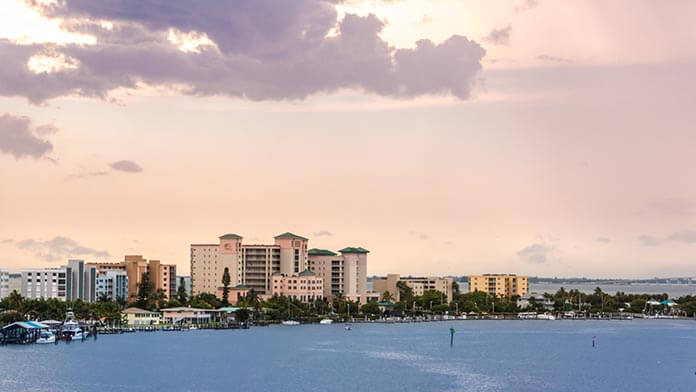
Fort Myers is the county seat of Lee County in Southwest Florida, part of the Cape Coral-Fort Myers metropolitan area along the Caloosahatchee River. The Florida rehab directory lists 21 treatment facilities in Fort Myers, spanning medical detox, residential care, and outpatient services, which gives residents a reasonable range of local options without needing to travel to Tampa or the east coast.
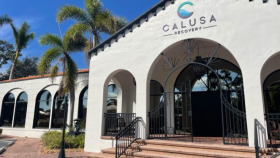
The largest safety-net behavioral health provider in the area is SalusCare, a CARF-accredited nonprofit that operates several campuses across Fort Myers and provides substance use and mental health treatment on a sliding scale, with a stated policy that no client is turned away for inability to pay.
Lee Health, the region’s public hospital system, and a number of private programs round out the local addiction treatment landscape, so people seeking help can find care whether they are insured, on Medicaid, or paying out of pocket.
Opioids remain the central concern for local officials. Lee County falls under the District 21 Medical Examiner’s Office, which also covers Hendry and Glades counties, and the Fort Myers district recorded one of the sharper declines in fentanyl deaths in the state between 2022 and 2023, a drop of more than 27%.
That progress tracks a broader statewide decrease, but fentanyl and other synthetic opioids still drive the majority of overdose deaths in Florida, which keeps opioid use disorder at the front of local prevention and treatment efforts.



Cost of Rehab in Fort Myers
The cost of treatment in Fort Myers depends most on the level of care you need, how long you stay, and whether you use insurance. Statewide averages give a useful planning benchmark, and because Southwest Florida’s cost of living sits close to the state median, Fort Myers pricing generally runs at or near these Florida figures rather than at the premium levels seen in some coastal South Florida markets.
Most people do not pay these full amounts out of pocket. Insurance, Medicaid, sliding-scale fees, and financial assistance can substantially lower costs, and it is worth verifying your rehab benefits before you commit to a program. Several factors influence the final price of care in Fort Myers.




How to Pay for Rehab in Fort Myers
Across the 21 facilities in Fort Myers, payment options are broad enough that cost does not have to be a barrier to starting treatment. Most centers accept self-payment and private insurance, and a majority work with Medicaid, Medicare, sliding-scale fees, or financial assistance.





Understanding how each payment path works can help you narrow your options before you call a facility.
Medicare
Six Fort Myers facilities accept Medicare, which covers medically necessary addiction treatment for eligible adults 65 and older and for some younger people with disabilities. Coverage typically includes inpatient care, outpatient services, and prescriptions used in treatment. If you are new to using this benefit, it helps to confirm with a facility how your coverage will be applied before you begin.
Medicaid
Seven facilities accept Florida Medicaid, administered through the state’s Statewide Medicaid Managed Care (SMMC) program under the Agency for Health Care Administration. Community behavioral health services, including substance use treatment and medication-assisted treatment, are covered benefits for enrolled members. SalusCare and other community providers routinely serve Medicaid recipients in Lee County.
Military Benefits
Two Fort Myers centers accept TRICARE, the health program for active-duty service members, retirees, and their families. Southwest Florida has a sizable veteran population, and additional support is available through the VA and community programs described in our rehab resources for veterans.
Insurance and Private Pay
All 21 facilities accept self-payment, and 17 work with private insurance carriers. If you carry private coverage, confirming your in-network options and out-of-pocket responsibility ahead of time is the single most useful step you can take to control cost.
Other Low-Cost Options
Six facilities offer sliding-scale fees, five provide financial assistance, and two offer financing plans. SalusCare’s policy of not turning anyone away for inability to pay is an important local resource for people who are uninsured or underinsured.
Free Treatment Programs
While the directory does not list facilities providing fully free treatment in Fort Myers, community and faith-based programs across Florida offer no-cost or low-cost care, and some centers reduce or eliminate fees through charity care. Our overview of rehab scholarships explains how these programs work and how to apply.
Many Fort Myers facilities work with major national insurance carriers, including the following.
- Aetna
- Blue Cross Blue Shield
- Cigna
- Humana
- TRICARE
- UnitedHealthcare
- Medicaid
- Medicare
Levels of Care Available in Fort Myers
Fort Myers facilities cover the core continuum of addiction care, with 13 offering medical detox, 15 offering inpatient rehab, and 19 offering standard outpatient services, plus partial hospitalization, dual diagnosis, and sober living options.




Medical detox is often the first step when the body has become physically dependent on alcohol or other drugs, providing supervised withdrawal management that keeps you safe and comfortable during the earliest and riskiest phase of recovery.
Inpatient rehab, also called residential treatment, provides structured, live-in care with 24-hour clinical support, which suits people who need to step away from a home environment tied to their substance use or who have more severe or long-standing addiction.
Partial hospitalization programs deliver a high level of daytime clinical care while allowing you to return home in the evenings, a middle ground between residential and outpatient treatment.
Outpatient rehab lets you live at home and keep up work or family commitments while attending scheduled therapy and counseling, and it is often used as a step down after detox or residential care.
Twelve facilities offer dual diagnosis care for people managing addiction alongside conditions such as co-occurring depression or anxiety, treating both together rather than in isolation.
Five sober living homes provide substance-free housing for people transitioning out of treatment, an option that pairs naturally with strong rehab aftercare to support long-term recovery.
Specialty Programs in Fort Myers
Beyond general treatment, many Fort Myers facilities tailor care to specific populations and substances, which can make a meaningful difference in how comfortable and understood a person feels in treatment.






Nineteen facilities provide alcohol use disorder treatment, the most common specialty locally, while 10 focus on opioid use disorder, reflecting the ongoing regional impact of fentanyl and other opioids.
Gender-specific tracks are widely available, with 11 women’s programs and 12 men’s programs. Two centers offer LGBTQ+ affirming addiction care, one provides a dedicated veterans and military track, and 13 offer young adult tracks. Four programs serve older adults, whose treatment needs often intersect with chronic health conditions and prescription medication use.
Free and Low-Cost Rehab Resources in Fort Myers
If cost, insurance, or an immediate crisis is standing between you and help, the following Lee County and Florida resources can connect you with support at little or no cost. In any emergency, call 911.
Crisis and Helplines
These lines are free, confidential, and available around the clock. If you or someone you love is in immediate danger, our crisis support resources offer additional guidance.
- 988 Suicide and Crisis Lifeline
https://988lifeline.org/
Call or text 988 for free, 24/7 crisis support. - SAMHSA National Helpline
https://www.samhsa.gov/national-helpline
Free, confidential, 24/7 treatment referral and information service. - United Way 211 of Lee County
https://www.unitedwaylee.org/211
Dial 211 from any phone in Lee County for a local directory of substance use and mental health resources. - SalusCare Emergency Services
https://www.saluscareflorida.org/contact/
The local behavioral health crisis line for Lee County.
Community Providers and Nonprofits
- SalusCare
https://www.saluscareflorida.org/
Lee County’s largest nonprofit behavioral health provider, offering detox, residential, and outpatient substance use treatment on a sliding scale, with no client turned away for inability to pay. saluscareflorida.org - Lee County Coalition for a Drug Free SWFL (Drug Free Lee)
https://drugfreelee.org/
Local prevention and education organization with a directory of area recovery resources. drugfreelee.org
Harm Reduction
- Florida Harm Reduction Collective
https://www.flhrc.org/
Manages Florida’s mail-based naloxone distribution program in partnership with NEXT Distro, providing free naloxone kits and overdose-response training to Lee County residents. flhrc.org
Government and Medicaid
- Florida Statewide Medicaid Managed Care (SMMC)
https://www.flmedicaidmanagedcare.com/
Administered by the Agency for Health Care Administration, covering community behavioral health and substance use treatment for enrolled members. ahca.myflorida.com - Florida Department of Health in Lee County
https://lee.floridahealth.gov/
Local public health services and referrals. lee.floridahealth.gov
Drug and Alcohol Use Statistics in Fort Myers
Overdose deaths in Florida have begun to decline after years of increases, and the Fort Myers area has shared in that progress, though fentanyl remains the leading driver of fatal overdoses statewide. The figures below place Lee County’s situation in a state context.
These trends are encouraging, but they describe deaths that have already occurred, not the number of people who still need care. For anyone in Lee County weighing treatment, the practical takeaway is that opioid addiction continues to carry serious overdose risk, and starting treatment or keeping naloxone on hand can be lifesaving. For national context, see our overview of substance use statistics.
Resources
- USAFacts. (2026). How many drug overdose deaths happen every year in Florida? https://usafacts.org/answers/how-many-drug-overdose-deaths-happen-every-year-in-the-us/state/florida/
- Florida Department of Health. (2026). Drug Overdose Surveillance and Epidemiology. https://www.floridahealth.gov/statistics-data/overdose-reporting/
- Florida Office of the Attorney General. (2025). AG Moody Announces Promising Progress in Fight to End Opioid Crisis in Florida. https://www.myfloridalegal.com/newsrelease/video-ag-moody-announces-promising-progress-fight-end-opioid-crisis-florida-and
- Office of the District 21 Medical Examiner. (2026). Serving Lee, Hendry, and Glades Counties. https://www.leegov.com/ME21
- SalusCare. (2026). Locations and Contact. https://www.saluscareflorida.org/locations/
- Lee County Coalition for a Drug Free SWFL. (2026). Resources and Info. https://drugfreelee.org/resources/
- Florida Harm Reduction Collective. (2025). Services. https://www.flhrc.org/services/
- Florida Agency for Health Care Administration. (2026). Statewide Medicaid Managed Care Program. https://ahca.myflorida.com/medicaid/statewide-medicaid-managed-care/current-smmc-program