




How We Rank Listings
Every facility on Addictions.com is reviewed against the same set of criteria so the directory reflects the realities of treatment, not paid placement. We verify state licensure, look for third-party accreditation through bodies such as The Joint Commission and CARF, and confirm that programs follow evidence-based clinical practices. We also weigh the breadth of services offered, including the levels of care available, support for co-occurring mental health conditions, and the populations a program is equipped to serve.
Beyond clinical fundamentals, we look at the practical details that shape access: insurance and payment options accepted, sliding-scale or financial assistance availability, and the transparency of admissions and pricing information. Listings are updated as we receive new licensing data, accreditation changes, and verified information from facilities and public records. Sponsored placements, when present, are clearly identified and never alter how we evaluate a program.
Rehab in Centre: What to Know
Centre is the seat of Cherokee County, set on Weiss Lake in the foothills of northeast Alabama near the Georgia line. The Alabama rehab directory lists residential, outpatient, and dual diagnosis programs in and around Centre, and for medical detox, most residents reach the larger provider network in Gadsden, about 35 miles west, where the region’s addiction treatment options are concentrated.
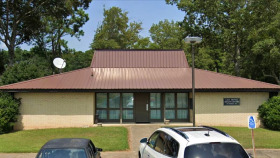
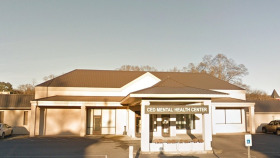
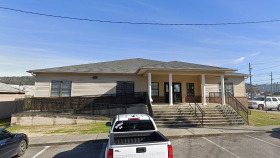
Publicly funded care runs through CED Mental Health Center, which has been the community mental health authority for Cherokee, Etowah, and DeKalb counties since 1974. CED’s Cherokee County office in Centre provides outpatient and residential substance use treatment, dual diagnosis care, and medication-assisted treatment on an income-based sliding scale, so cost is not a barrier for residents with low income or no insurance. A Certified Community Behavioral Health Clinic, CED also operates a 24-hour crisis line for the region.
Fentanyl now drives most drug deaths in Alabama, and northeast Alabama has felt the strain, though the state recorded an estimated 30 percent drop in overdose deaths between April 2024 and April 2025 based on provisional CDC data. Quick access to treatment and naloxone remains essential in Cherokee County.
Cost of Rehab in Centre
Cost depends on the level of care, how long treatment lasts, whether a program is public or private, and what your insurance covers. Outpatient counseling is the most affordable option, while residential care costs more because of round-the-clock support. Local figures track Alabama’s statewide averages, and many people pay far less than the sticker price once insurance, Medicaid, or a sliding-fee scale is applied.
Publicly funded programs are a big reason cost does not have to be a barrier here. CED Mental Health Center sets fees on a sliding scale based on income, which means low or no-cost care for residents who qualify, and pregnant women are admitted with no fee at any certified Alabama provider. Treatment scholarships and financial assistance can help close the gap for private programs.
Several factors influence the final cost of treatment, including:




How to Pay for Rehab in Centre
Across the treatment facilities listed for Centre, most accept self-payment and private insurance, and several offer sliding-scale fees or financial assistance. The cards below show how many Centre programs in our directory accept each payment type.


Medicaid
Alabama Medicaid covers substance use treatment for members who qualify. Alabama has not expanded Medicaid, so many low-income adults instead rely on CED’s state-funded sliding-scale services. Alabama Medicaid does cover medication-assisted treatment for opioid use disorder, which the local CED clinic provides.
Insurance, TRICARE, and Private Pay
Private plans sold in Alabama must cover substance use treatment, and the local clinic accepts TRICARE for military families. If you rely on Medicare, nearby Gadsden providers can be an option. Reviewing how insurance covers rehab before you start tells you what to expect out of pocket.
Several insurance providers are active in Alabama, including:
- Blue Cross Blue Shield of Alabama
- Aetna
- Cigna
- Humana
- UnitedHealthcare
- TRICARE
Levels of Care Available in Centre
The centers listed for Centre cover residential, outpatient, and dual diagnosis care, with detox available in nearby Gadsden. The cards below show how many programs in each category are available locally.


Residential and Outpatient Treatment
CED’s Cherokee County office offers both residential care and outpatient treatment, so people can start at the level of care that fits their needs and step down as they progress. For medically supervised detox, residents typically travel to Gadsden.
Dual Diagnosis and Aftercare
Local programs treat co-occurring conditions, addressing a substance use disorder alongside something like depression or anxiety at the same time. When treatment ends, staff help connect people to aftercare and continuing support.
Specialty Programs in Centre
Beyond general treatment, several Centre programs tailor care to specific groups and substances. The grid below shows the number of programs offering each specialty.





Free and Low-Cost Rehab Resources in Centre
Cost and insurance should never stop someone in northeast Alabama from getting help. Several local and statewide resources offer free or low-cost support, from 24-hour crisis lines to income-based treatment.
Crisis and Helplines
- 988 Suicide and Crisis Lifeline
https://988lifeline.org/
Call or text 988 for free, confidential support 24/7. See more crisis and suicide prevention resources. - SAMHSA National Helpline
https://www.samhsa.gov/find-help/helplines/national-helpline
A free, confidential 24/7 treatment referral line - Alabama 211
https://www.211connectsalabama.org/
Dial 211 to connect with local health, housing, and treatment resources. - CED Mental Health Center crisis line
https://cedmentalhealth.org/
A 24/7 crisis line for Cherokee, Etowah, and DeKalb counties.
Local Treatment and Recovery
- CED Mental Health Center, Cherokee County
https://cedmentalhealth.org/
Sliding-scale residential and outpatient treatment, dual diagnosis care, and medication-assisted treatment.
Government and Harm Reduction
- Cherokee County Health Department
https://cherokeecountyks.gov/main/departments/health-department
Part of the Alabama Department of Public Health, a source for referrals and free naloxone - Free naloxone
https://nextdistro.org/alnarcan
The overdose-reversal medication is available at no cost through ADPH’s standing order and a statewide mail program.
Drug and Alcohol Use Statistics in Centre
County-level overdose figures for rural Cherokee County are limited in public CDC data, but the statewide picture frames the local risk. Fentanyl drives most drug deaths in Alabama, though the state recorded an encouraging decline in 2024 and 2025. Seeing the local picture against national substance use statistics adds context.
Resources
-
- Alabama Opioid Overdose and Addiction Council. (2025). 2025 Annual Report. Alabama Department of Mental Health. https://mh.alabama.gov/wp-content/uploads/2026/01/Alabama-Opioid-Overdose-and-Addiction-Council-Report-2025.pdf
- Centers for Disease Control and Prevention, via USAFacts. (2025). How many drug overdose deaths happen every year in Alabama? https://usafacts.org/answers/how-many-drug-overdose-deaths-happen-every-year-in-the-us/state/alabama/