





How We Rank Listings
The rehab centers listed on this page are organized to make comparison straightforward for people searching for treatment in Woodland Hills. Listings are grouped so you can weigh what matters most: proximity, level of care, accreditation status, the insurance and payment types a center accepts, and whether it runs the specialty programs you need.
We prioritize centers that hold recognized accreditation or state certification and that publish clear information about their services. A listing here is not an endorsement of one center over another, and inclusion does not guarantee a specific outcome. Treatment decisions are best made with a licensed clinician who can assess your history and needs.
Rehab in Woodland Hills: What to Know
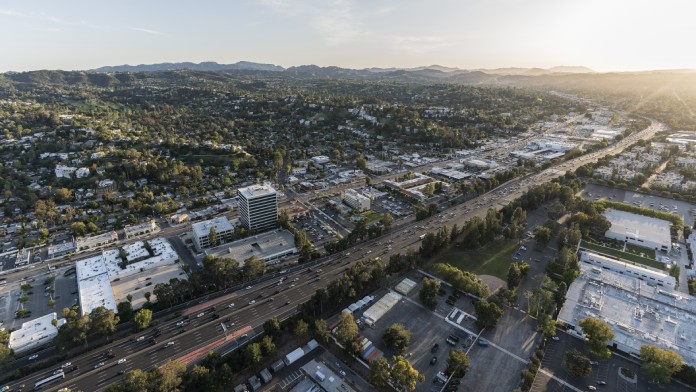
Woodland Hills is at the western end of the San Fernando Valley. It is a leafier, more suburban district of the City of Los Angeles bordering the Santa Monica Mountains and Warner Center’s business corridor.
The 16 addiction providers stand out for their credentials. Nine of these have Joint Commission accreditation and eight are LegitScript certified. These are among the highest concentrations of accredited programs in this batch. For families who weigh accreditation heavily, that makes the area worth a close look, and the full California rehab directory offers a wider comparison.
Los Angeles County substance use services run through the Department of Public Health’s Substance Abuse Prevention and Control division, which administers the San Fernando Valley as Service Planning Area 2.
Its Substance Abuse Service Helpline, available 24/7 at 1-844-804-7500, handles screening and referral to addiction treatment options across the Valley. Woodland Hills is also notable for its step-down capacity. Six programs offer partial hospitalization, the most of any city in this group, giving people a structured daytime option between residential and standard outpatient care.
Fentanyl remains the leading driver of overdose deaths countywide despite a sharp 2024 decline, so understanding fentanyl overdose risk stays relevant for West Valley families.
Cost of Rehab in Woodland Hills
City-level pricing is rarely published, so the figures below are statewide California averages, which give a useful baseline when planning for care in Woodland Hills.
Given the West Valley’s higher cost of living and the concentration of accredited programs, local pricing often sits at or above these numbers, though insurance, sliding-scale fees, and rehab scholarships usually bring the real cost down.
The price any one person pays comes down to a few factors more than the city itself.




How to Pay for Rehab in Woodland Hills
Woodland Hills leans toward insurance more than most cities in this group: 15 of its 16 centers accept private health insurance, slightly more than accept self-payment. Public coverage is thinner here, so residents relying on Medi-Cal or Medicare should confirm availability early. The grid below shows how local programs break down.





Medicare
One Woodland Hills program accepts Medicare, which covers medically necessary addiction treatment for adults 65 and older and for some younger people with qualifying disabilities. Because Medicare acceptance is limited here, older adults may want to widen their search to nearby Valley communities or confirm coverage before committing.
Medicaid (Medi-Cal)
Medi-Cal is California’s Medicaid program, and it funds substance use treatment through Drug Medi-Cal and the Los Angeles County delivery system. One Woodland Hills center accepts it directly. Residents who rely on Medi-Cal should call the Substance Abuse Service Helpline at 1-844-804-7500, which can point them to nearby Medi-Cal programs and covered medication-assisted treatment.
Insurance and Private Pay
Private insurance is the backbone of payment in Woodland Hills, accepted at 15 of 16 centers, with 13 also taking self-payment. If you carry a commercial plan, confirm which programs are in network and what preauthorization your plan requires, since network status will likely shape your out-of-pocket cost more than anything else.
Other Low-Cost Options
Reduced-cost routes are more limited here than in the rest of the batch. Three programs offer sliding-scale fees and two provide financing, and pairing either with a rehab scholarship can help. Residents who need public coverage may find more options a short distance east in the Central Valley.
- Aetna
- Anthem Blue Cross
- Blue Shield of California
- Cigna
- Health Net
- Kaiser Permanente
- UnitedHealthcare
Levels of Care Available in Woodland Hills
Woodland Hills covers the full continuum, and its standout is the middle of that range. Twelve programs offer inpatient rehab and 11 offer outpatient care, but the area is best known for its six partial hospitalization programs, the most in this group.






Medically supervised medical detox manages withdrawal safely and is often the first step for physical dependence. Inpatient rehab provides live-in structure, and Woodland Hills is unusually strong on partial hospitalization, an intensive daytime option that lets people return home in the evenings.
Outpatient rehab offers the lightest-touch step, and with nine dual diagnosis programs, the area also supports people managing addiction alongside co-occurring depression or anxiety.
Specialty Programs in Woodland Hills
Several Woodland Hills centers tailor care to specific groups and substances. The counts below show how many local programs offer each.






Gender-specific care is well covered, with 11 women’s and 11 men’s programs, and nine centers run young adult tracks. Two offer LGBTQ+ affirming addiction care.
On the substance side, 12 programs treat alcohol use disorder and nine address opioid use disorder, mirroring the substances behind most of the county’s overdose data.
Free and Low-Cost Rehab Resources in Woodland Hills
Cost should never be the reason someone goes without help. The resources below serve San Fernando Valley residents at no charge or low cost, from 24/7 crisis lines to county behavioral health and free naloxone. For immediate emotional support, the 988 crisis line is the fastest place to start.
- 988 Suicide and Crisis Lifeline
https://988lifeline.org/
Free, confidential support 24/7 for anyone in emotional distress or crisis. - SAMHSA National Helpline
https://www.samhsa.gov/find-help/helplines/national-helpline
Free, confidential treatment referral and information, available 24/7 in English and Spanish. - LA County Substance Abuse Service Helpline (SASH)
https://www.recoverla.org/resources/call-to-get-help-sash/
24/7 screening and referral to county treatment and Drug Medi-Cal services. - 211 LA County
https://211la.org/
Connects residents to local health, housing, and social-service resources at no cost. - DHCS Naloxone Distribution Project
https://www.dhcs.ca.gov/individuals/naloxone-distribution-project/
Provides free naloxone through eligible community organizations across California.
Drug and Alcohol Use Statistics in Woodland Hills
Woodland Hills’ overdose data is reported at the Los Angeles County level, which administers the San Fernando Valley as Service Planning Area 2. County drug overdose deaths peaked at 3,220 in 2022 and then fell to 2,438 in 2024, the lowest total since 2019, marking the first sustained decline in years.
Fentanyl still accounted for about half of overdose deaths in 2024, down from nearly two-thirds the year before. For national context, see the site’s national substance use statistics.
Resources
- Los Angeles County Department of Public Health, Substance Abuse Prevention and Control. (2025). Drug Overdoses in Los Angeles County. publichealth.lacounty.gov
- California Department of Health Care Services. (2025). Drug Medi-Cal Overview. dhcs.ca.gov
- Substance Abuse and Mental Health Services Administration, Center for Behavioral Health Statistics and Quality. (2022). Findtreatment.gov
- California Department of Public Health. (2024). California Overdose Surveillance Dashboard. cdph.ca.gov