



Ohio fentanyl test strip supplies are diminishing, and the reason is a change in federal grant rules rather than a change in demand.
Groups across the state that hand out the strips say they are cutting distribution sharply while they look for other money, according to reporting by The Ohio Newsroom.
Why Ohio Fentanyl Test Strips Are Harder to Get
In April, the federal Substance Abuse and Mental Health Services Administration sent a letter to health departments stating that SAMHSA grant funds can no longer be used to purchase or distribute substance use testing strips.
The letter described harm reduction efforts as incompatible with federal law and said they facilitate illicit drug use.
It also said that ending the addiction and overdose crisis remains a top priority and that federal funding should be aligned to strategies focused on prevention, treatment and long-term recovery.
SAMHSA did not respond to an interview request from The Ohio Newsroom. The shift reflects a broader change in priorities at the Department of Health and Human Services.
Speaking in Clinton Township, Michigan in June at an announcement of a federal drug addiction and homelessness program, HHS Secretary Robert F. Kennedy Jr. said, “Ignoring addiction doesn’t work. Harm reduction doesn’t work.”
For years the federal government explicitly allowed the purchase of testing strips with SAMHSA grants, including in guidance issued in July 2025.
Understanding Fentanyl and Test Strips
Fentanyl is a synthetic opioid that is far more potent than heroin, and a very small amount can cause a fatal overdose. It is often mixed into other drugs without the buyer’s knowledge.
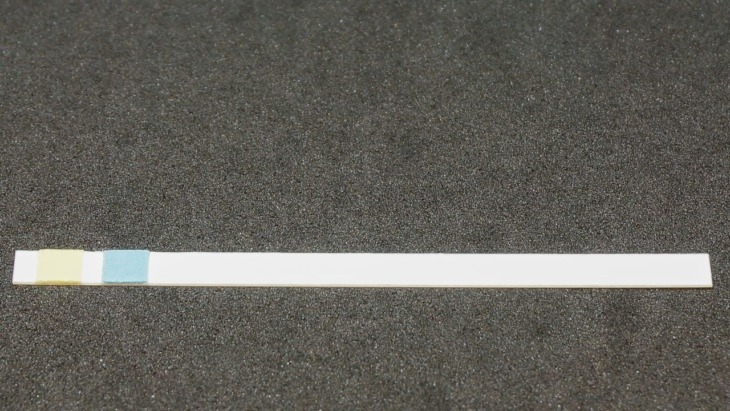
A fentanyl test strip is a low-cost paper strip that detects whether fentanyl is present in a sample. It does not measure how much is there, and it does not make a drug safe. It tells a person whether an opioid they did not expect is in what they are about to use.
Signs of fentanyl or other opioid addiction can include using more than intended, needing more to get the same effect, withdrawal symptoms such as nausea, sweating, chills and muscle aches when use stops, and continuing to use despite harm to health, work, or relationships.
Why This Matters in Ohio
Fentanyl was involved in more than three quarters of unintentional drug overdose deaths in Ohio in 2023, frequently in combination with other drugs, according to the Ohio Department of Health.
Ohio decriminalized testing strips three years ago, which led to wider distribution across the state. Suzanne Bachmeyer, director of prevention at Caracole, an HIV and AIDS prevention organization in Cincinnati, said their spread has helped bring overdose deaths down.
Caracole stocks the strips in a vending machine outside its building alongside other supplies. Janet Childerhose, an Ohio State researcher who has studied the link between fentanyl testing strips and risk reduction behavior, disagrees with the federal position.
She said she understands the assumption that removing supplies will discourage drug use, but that the evidence from this and other public health interventions does not support it.
Her concern is the drug supply itself, which she described as unregulated and adulterated in ways buyers cannot predict.
What Ohio Organizations Are Facing
The Ohio Department of Health’s Project DAWN had relied on SAMHSA funds to distribute testing strips at no cost.
The department declined an interview, but in a May email obtained by The Ohio Newsroom, Project DAWN told community groups it could no longer supply them and said it was reviewing the guidance with state and federal partners to identify alternative funding.
Tonja Catron, executive director of the statewide SOAR Initiative, called the change a devastating blow and said her organization has slowed distribution, now giving strips directly and only to people who use drugs.
Harm Reduction Ohio distributed more than a million drug testing strips last year. Executive director AmandaLynn Reese estimates the nonprofit will manage roughly a quarter of that this year, and questioned how a nonprofit sustains demand at about a dollar per strip.
Both organizations say they are distributing what remains and hoping community fundraising and private grants let them restock.
Finding Addiction Treatment in Ohio
Reduced access to testing strips does not change what is available for someone ready to seek care. If you or someone you love is using fentanyl or other opioids, addiction treatment centers in Ohio offer medical detox, medication for opioid use disorder, outpatient counseling, and residential programs.
Practical next steps:
- Search addiction treatment centers in Ohio by city, level of care, and insurance accepted
- Ask whether a program offers methadone or buprenorphine for opioid use disorder
- Call the SAMHSA National Helpline at 1-800-662-4357, free and confidential, 24 hours a day
- If someone is in crisis, call or text 988 for the Suicide and Crisis Lifeline
Addictions.com lists verified treatment centers across Ohio. Call
800-681-1058
( Sponsored)
for local options.
Sponsored)
for local options.