




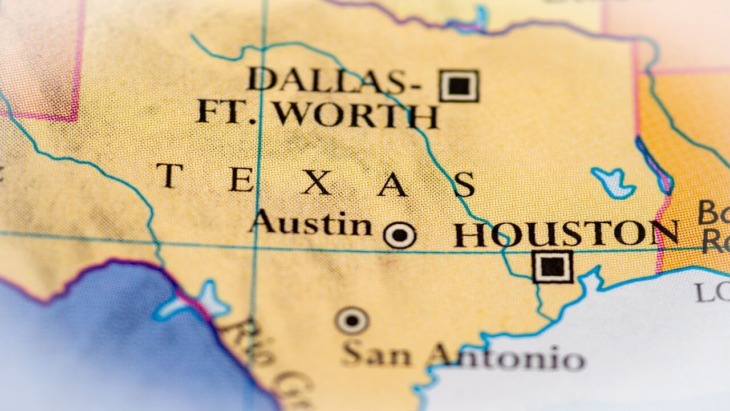
Texas has become the center of a national push to study ibogaine as an addiction treatment, and the money involved keeps growing.
For families searching for addiction treatment in Texas right now, the important thing to understand is that none of it is available yet, and no licensed provider in the United States can legally offer it.
Ibogaine is a psychedelic compound drawn from the root bark of a West African shrub. It remains a Schedule I substance, the most restrictive federal category, formally defined as having no accepted medical use.
How Texas Became the Center of Ibogaine Funding
In June 2025, Governor Greg Abbott signed Senate Bill 2308, committing $50 million in state matching funds toward FDA-supervised ibogaine trials.
It was the largest public investment in psychedelic research any state had made. The conditions were unusual.
To claim the money, a private partner had to show a credible path to FDA approval, set up a corporate presence in Texas, match the state dollar for dollar, and pledge a share of future revenue back to the state. No developer took the deal.
In December 2025, the state handed the work to its own institutions, UTHealth Houston and the Galveston campus of UTMB Health.
By March 2026, Lieutenant Governor Dan Patrick and House Speaker Dustin Burrows were discussing funding the effort directly, at up to $100 million.
There is an economic reason public money is doing this work. Ibogaine’s patent for treating opioid use disorder expired in 2003, so no company can expect to own the result. Private developers have little incentive to spend years and substantial capital producing a generic.
Other States and the Federal Order
Arizona committed $5 million. Legislators in Mississippi, West Virginia, Oklahoma, Tennessee, New Hampshire, and Vermont advanced ibogaine research or study bills through their 2026 sessions, many drawing on a template the American Legislative Exchange Council adopted in December 2025. Kentucky’s legislature moved an ibogaine measure over a governor’s veto.
On April 18, 2026, President Trump signed an executive order directing the FDA to prioritize psychedelic compounds in its review queue and setting aside $50 million to match state research dollars.
Six days later, the FDA allowed an early clinical study of noribogaine, a chemical relative of ibogaine, to proceed for alcohol use disorder.
It was the first time the agency had cleared an ibogaine derivative for study on American soil. The FDA noted that allowing a study is not a finding that a drug is safe or effective.
What the Evidence Actually Shows
The research base is thin. The most cited human data come from a 2024 Stanford study published in Nature Medicine that followed a small group of special operations veterans with traumatic brain injuries who received magnesium-paired ibogaine abroad. A month later, they showed marked drops in disability, PTSD, and depression scores.
Observational reports from clinics in Mexico describe opioid withdrawal resolving in most patients within a few days.
None of that is a randomized, placebo-controlled trial, which is the standard that turns a promising result into an approved medicine. Closing that gap is what the public money is meant to buy.
The safety picture is the other half. Ibogaine lengthens the QT interval, the electrical rhythm of the heartbeat, and has been linked to more than thirty deaths in the medical literature by the count of the Multidisciplinary Association for Psychedelic Studies. That cardiac risk is why no licensed American clinician can legally administer it.
Understanding Opioid Addiction and Its Warning Signs
Opioid use disorder is a medical condition, not a failure of will. It develops as the brain adapts to repeated opioid exposure, so that larger doses are needed for the same effect and stopping produces withdrawal.
Common signs include needing more of a substance over time, being unable to cut back despite wanting to, spending significant time obtaining or recovering from use, pulling away from work and family, and continuing use despite clear health or legal consequences.
Withdrawal from opioids is rarely life-threatening on its own, but it is difficult enough that people frequently return to use to stop it. That is precisely the gap medication is designed to close.
Finding Addiction Treatment in Texas Today
Ibogaine trials in Texas are not open to the public, and will not be for years. Buprenorphine and methadone remain the treatments with the strongest evidence for opioid use disorder, and both are available across Texas now.
If you are looking at options, ask whether a program starts medication on site or only at discharge, whether it treats co-occurring mental health conditions, and what it accepts for payment.
Anyone considering travel abroad for ibogaine should know that those clinics operate outside FDA oversight and that the cardiac risk is real.
Addictions.com lists verified addiction treatment centers across Texas. Call
800-681-1058
( Sponsored)
to learn more about your options.
Sponsored)
to learn more about your options.