
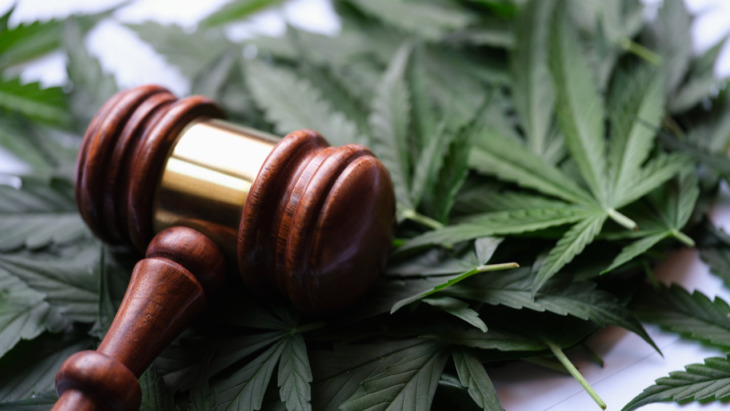
Most of Tennessee’s hemp retail market changes overnight on July 1, 2026. The shift is a useful moment to talk about marijuana addiction, higher-potency cannabis and where Tennesseans can find help.
That is the date THCA products, which have powered roughly three-quarters of hemp sales in the state, become illegal to sell.
What Changed in Tennessee
Under regulations the Tennessee Alcoholic Beverage Commission finalized this spring, high-THCA flower, pre-rolls, and vapes are now over the legal limit and banned.
Tennessee’s 2025 hemp law, signed by Gov. Bill Lee, treats THCA, a compound found in raw cannabis that converts to THC when heated, as functionally equivalent to delta-9 THC, the compound that produces marijuana’s high.
That means a high-THCA product delivers the same psychoactive effect as marijuana when smoked, even though it is sold as hemp.
The commission now measures total THC by combining delta-9 with converted THCA, which pushes most smokable hemp products over the threshold.
The law also bans other synthetic cannabinoids, ends online sales and home delivery, and requires age verification for anyone 21 and older.
Businesses that held state agriculture-department licenses at the end of 2025 were allowed to keep selling THCA products through June 30 under a settlement, and that window closes July 1.
What survives the ban is a narrower set of products: CBD oils and tinctures, CBG products, topicals and low-dose hemp edibles and beverages sold at 21-and-older establishments.
Understanding Marijuana Addiction
Cannabis is not harmless, and the myth that it cannot be addictive is exactly that. Cannabis use disorder is real, and the risk of psychological dependence rises with more frequent use and with higher-potency products.
Signs of a developing problem include using more than intended, unsuccessful attempts to cut back, strong cravings, needing more to feel the same effect, and continuing to use despite problems at work, school, or home.
Many people who stop after heavy use also experience withdrawal, including irritability, anxiety disorders, restlessness, sleep trouble and low appetite in the first days.
The concentrated products the new rules target deliver far more THC than the cannabis of past decades, and higher potency is associated with a greater chance of dependence and, in some people, anxiety or other mental health effects.
What This Means for Tennessee Residents
The end of legal high-THCA sales does not make cannabis dependence disappear. Some people who relied on these products may notice withdrawal symptoms or may look for stronger alternatives, and this is a good moment to check in on your own use or a loved one’s.
The good news is that marijuana addiction is treatable. Most people recover through outpatient care and behavioral therapies such as cognitive behavioral therapy and motivational approaches, without needing residential treatment.
Finding Addiction Treatment in Tennessee
If cannabis use has become hard to control for you or someone you care about, help is available across the state, from the Tri-Cities area near Johnson City and Kingsport to Knoxville, Nashville, and Memphis.
Search addiction treatment centers in Tennessee, compare outpatient and counseling options, and verify insurance coverage. Call
800-681-1058
( Sponsored)
for local options.
Sponsored)
for local options.