






Expert Insights
The use of fentanyl has skyrocketed in Glendale, with younger and younger people impacted by this deadly drug. I read in the news just last month that a 15-year-old tested positive for fentanyl in a drug test.
It’s happening right in our backyard and unless we wake up to that reality, I think it will be too late. That’s why I support law enforcement’s recent campaigns, sharing details of their drug busts on billboards. This information needs to be front and center to show everyone that these drugs will affect anyone and everyone. Drug use is not what we think it is – it isn’t limited to the stereotype of homeless people using drugs; our housed kids are taking drugs in school.
What’s worrying is that so many street drugs are laced with fentanyl and they’re unknowingly taking deadly amounts of the substance. In my opinion, we need to do more than the billboard campaigns; we need to be providing drug testing kits in schools and providing better education about the dangers of fentanyl before it’s too late.
How We Rank Listings
Our directory is built to help you compare real treatment options, not to sell placement. Every facility listed for Glendale is a licensed provider drawn from state and federal treatment records, and listings are organized so the programs most relevant to your search are easy to find and evaluate side by side.
We prioritize facilities based on level of care offered, accreditation status, the range of payment types accepted and the specialty populations served. Listings that carry independent accreditation or that accept public insurance such as AHCCCS are surfaced prominently so cost is not the only path to care.
- Verified state licensing and, where applicable, independent accreditation
- Levels of care available, from medical detox through outpatient
- Payment methods accepted, including Medicaid, Medicare and self-pay
- Specialty programs for populations such as veterans, women and young adults
Rehab in Glendale: What to Know
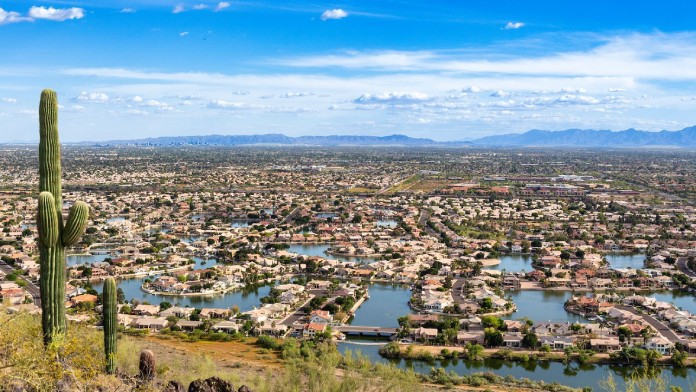
Glendale sits in the West Valley of the Phoenix metro area and is part of Maricopa County, the most populous county in Arizona and the hub of the state’s behavioral health system. Our directory lists 25 licensed rehab facilities serving Glendale, including 15 with medical detox, 13 with inpatient programs and 23 offering some form of outpatient care. Families comparing options across the region can also browse the full Arizona rehab directory for programs in nearby cities such as Peoria, Phoenix and Scottsdale.
Publicly funded behavioral health care in Glendale runs through AHCCCS, the Arizona Health Care Cost Containment System, with Mercy Care serving as the regional behavioral health authority for Maricopa County. Community Bridges, Inc. is one of the largest nonprofit providers operating across the metro, offering crisis stabilization, detox and outpatient services for people with or without insurance. These public and nonprofit systems mean that a person’s ability to pay is not the only route to addiction treatment options in the area.
Substance use patterns in Glendale mirror the wider Maricopa County crisis, where fentanyl and methamphetamine drive most fatal overdoses. Glendale is one of only six cities in the county large enough to warrant its own fatal-overdose surveillance dashboard from the Maricopa County Department of Public Health, a reflection of how heavily fentanyl addiction and overdose risk weigh on the community.
The city also has a dedicated local prevention infrastructure. The Rise Up! Glendale Coalition, launched in 2020 after organizers found the city had no localized prevention effort in place, works with schools, law enforcement and health care partners on naloxone distribution, drug take-back events and youth education. It is funded in part by the Maricopa County Department of Public Health.
Cost of Rehab in Glendale
There is no single price for rehab in Glendale. What a person pays depends far more on the level of care, program length and insurance status than on the city itself. As a benchmark, addiction treatment in Arizona costs an average of $56,789 without insurance, with wide variation across levels of care. The figures below reflect statewide averages and are a starting point for planning rather than a quote for any specific Glendale facility.
Because Glendale is part of the Phoenix metro, where the West Valley generally carries a lower cost of living than luxury-focused areas like Scottsdale and Paradise Valley, local pricing tends to sit at or near the state average rather than above it. Verifying benefits before admission is the single most effective way to reduce out-of-pocket cost and many people find their share is far smaller once using insurance for rehab is factored in.





How to Pay for Rehab in Glendale
The 25 facilities in our Glendale directory accept a mix of payment methods, so cost does not have to be a barrier to starting care. Public insurance, private plans, self-payment and reduced-fee options are all represented among local programs. The counts below reflect how many Glendale facilities accept each type.






Understanding which of these applies to your situation can narrow the list of Glendale facilities quickly. The subsections below outline how the most common payment routes work locally.
Medicare
Eight Glendale facilities accept Medicare, which can help cover addiction treatment for adults 65 and older and for some younger people with qualifying disabilities. Coverage typically includes inpatient care, outpatient services and medications used in treatment, though specific benefits vary by plan.
Reviewing your plan details before admission helps clarify what is covered, and our guide to verifying your rehab benefits walks through the questions to ask.
Medicaid
In Arizona, Medicaid is administered through AHCCCS, the Arizona Health Care Cost Containment System, with Mercy Care acting as the regional behavioral health plan for Maricopa County. Eight Glendale facilities accept AHCCCS, which covers a broad range of substance use services including medication-assisted treatment for opioid use disorder.
AHCCCS members can call 1-855-432-7587 to confirm coverage and locate participating providers.
Military Benefits
Four Glendale facilities accept TRICARE, the health program for active-duty service members, retirees and their families. Veterans in the West Valley can also access care through the Phoenix VA Health Care System and connect with state support through BeConnected.
Our rehab resources for veterans and military outline additional benefits and eligibility.
Insurance and Private Pay
Most Glendale facilities work with private insurance, and 17 accept commercial health plans. Even when a facility is out of network, many will help verify out-of-network benefits or arrange a payment plan. For people paying out of pocket, self-payment is accepted at 23 of the 25 local programs, sometimes at a reduced rate when paid up front.
Other Low-Cost Options
Six Glendale facilities offer sliding-scale fees based on income, and five offer some form of financial assistance. These options can substantially lower the cost of treatment for people who are uninsured or underinsured, and staff at intake can usually explain what documentation is needed to qualify.
Free Treatment Programs
Publicly funded and nonprofit providers such as Community Bridges, Inc. offer services regardless of a person’s ability to pay, and the Governor’s Office Substance Use Disorder Service Funds support treatment for uninsured Arizonans. People who cannot cover the cost of care on their own may also qualify for help through rehab scholarships.
Major insurance carriers accepted across Glendale-area facilities include:
- Aetna
- AHCCCS
- Blue Cross Blue Shield of Arizona
- Cigna
- Humana
- Mercy Care
- TRICARE
- UnitedHealthcare
Levels of Care Available in Glendale
Glendale facilities span the continuum of care, with 15 offering medical detox, 13 offering inpatient rehab and 23 offering outpatient services. Fifteen also provide dual diagnosis care for people managing a substance use disorder alongside a mental health condition. The right starting point depends on the severity of use, home environment and whether detox is needed first.


Medical detox provides supervised withdrawal management, which is important for substances like alcohol, benzodiazepines and opioids where withdrawal can be dangerous without medical support. Detox is a first step rather than a complete treatment, and it is usually followed by ongoing care. Learn more about medical detox and what to expect.
Inpatient rehab offers 24-hour residential care in a structured setting, which suits people with more severe use, unstable housing or prior relapse. Programs typically run 30, 60, or 90 days. Our overview of residential treatment explains how these programs are structured.
Outpatient rehab lets people live at home while attending scheduled treatment, ranging from standard weekly sessions to more intensive programming. It works well for people with stable support at home or as a step down from residential care. See our guide to outpatient rehab and intensive outpatient programs.
Dual diagnosis programs treat substance use and mental health conditions together, which improves outcomes when both are present. Because untreated co-occurring depression and anxiety often drive relapse, integrated care is a core part of many Glendale programs. Aftercare planning and continuing support help people maintain progress once a program ends; see rehab aftercare for what comes next.
Specialty Programs in Glendale
Many Glendale facilities tailor treatment to specific populations, recognizing that a veteran, a college student and an older adult often face very different circumstances on the path to recovery. The counts below reflect how many local programs offer each specialty focus.







Alcohol remains one of the most common reasons people enter treatment in Glendale, and 20 local programs address alcohol use disorder specifically. Given the county’s fentanyl and prescription-opioid crisis, 11 programs focus on opioid use disorder, often pairing counseling with medication-assisted treatment.
For younger residents, 14 young adult programs address the pressures that shape young adult and college student substance use, a focus that aligns with the prevention work Rise Up! Glendale does in local schools.
Four programs offer LGBTQ+ affirming care for people who benefit from LGBTQ+ affirming addiction care, and four serve veterans and service members through rehab resources for veterans. Gender-specific tracks are also widely available, with 10 women’s and 10 men’s programs.
Free and Low-Cost Rehab Resources in Glendale
Cost, insurance status, and immediate safety should never stand between a person and help. The resources below serve Glendale residents directly or cover the surrounding Maricopa County area, and most are free or low-cost. If you or someone you know is in immediate danger, call 911.
Crisis Lines
- 988 Suicide and Crisis Lifeline
Call or text 988
Free, 24/7 support during a mental health or substance use crisis. See our crisis support resources for more. - Central Arizona Crisis Line
602-222-9444 or 1-800-631-1314.
Around-the-clock crisis support and mobile crisis dispatch for Maricopa County. - Arizona Opioid Assistance and Referral (OAR) Line
1-888-688-4222.
Free help with opioid questions, resources and treatment referrals. - SAMHSA National Helpline
1-800-662-HELP (4357)
Free, confidential, 24/7 treatment referral and information service.
County and Community Resources
- 211 Arizona
Dial 2-1-1 or visit 211arizona.org
Referrals to mental health, substance use, housing and financial assistance programs. - Community Bridges, Inc.
communitybridgesaz.org.
A statewide nonprofit offering crisis stabilization, detox and outpatient treatment for people with or without insurance. - Rise Up! Glendale Coalition
https://riseupglendale.org/
Local prevention coalition offering naloxone and Deterra disposal kit distribution, drug take-back events and youth education.
Harm Reduction
- Sonoran Prevention Works
spwaz.org.
Statewide harm reduction organization providing free naloxone, overdose prevention education and support for people who use drugs.
Veterans and Military
- BeConnected Arizona
beconnectedaz.org.
Free support and resource navigation for service members, veterans and their families.
Government and Medicaid
- AHCCCS (Arizona Medicaid)
azahcccs.gov.
Enrollment and behavioral health coverage for eligible Arizona residents. - Mercy Care ACC-RBHA
www.mercycareaz.org
Regional behavioral health plan for Maricopa County AHCCCS members.
Drug and Alcohol Use Statistics in Glendale
Glendale is one of just six Maricopa County cities that averaged at least 50 fatal overdoses a year between 2020 and 2024, which is why the county health department maintains a dedicated fatal-overdose dashboard for the city. The figures below place Glendale’s situation within the broader county and state picture, where fentanyl and methamphetamine remain the leading drivers of overdose deaths.
Statewide, the trend reflects both the scale of the crisis and some recent progress. Arizona recorded 2,735 drug overdose deaths in 2024, a 9.5 percent decrease from the 3,023 reported in 2023, according to preliminary data from Arizona county medical examiner offices. Even so, fentanyl and other synthetic opioids were involved in roughly 60 percent of Arizona overdose deaths in 2024, underscoring why so many Glendale programs prioritize opioid use disorder treatment.
The gap between falling deaths and rising non-fatal overdoses points to the impact of naloxone. Wider distribution of the overdose-reversal medication, including through local efforts like Rise Up! Glendale and Sonoran Prevention Works, helps more people survive an overdose even as exposure to fentanyl remains high.
For national context on how these figures compare, see our overview of national substance use statistics.
Resources
- Addictions.com. (2024). Drug & Alcohol Rehabs in Arizona. https://www.addictions.com/rehabs/arizona/
- Maricopa County Department of Public Health. (2024). Overdose Data. https://www.maricopa.gov/6205/Overdose-Data
- Maricopa County. (2024). Focus on Fentanyl. https://www.maricopa.gov/5981/Focus-on-Fentanyl
- Arizona Department of Health Services. (2025). Arizona Methamphetamine-Related Overdose Deaths, preliminary 2024 data.
- USAFacts. (2026). How many drug overdose deaths happen every year in Arizona? https://usafacts.org/answers/how-many-drug-overdose-deaths-happen-every-year-in-the-us/state/arizona/
- Rise Up! Glendale Coalition. (2025). About Us. https://riseupglendale.org/about-us/
- Arizona Health Care Cost Containment System (AHCCCS). (2025). Accessing and Locating Treatment. https://www.azahcccs.gov/Members/BehavioralHealthServices/OpioidUseDisorderAndTreatment/Locating_Treatment.html
- Community Bridges, Inc. (2025). Crisis Stabilization and Treatment Services. https://communitybridgesaz.org