



Expert Insights
More than 3,000 people died of drug overdoses last year in New Jersey, and those numbers keep rising despite the state’s efforts to curb them. And there is a troubling new trend taking shape among those overdose statistics: opioids are now taking a deadly toll on African-Americans and overdose fatalities in the community have exploded.
In New Jersey, Black residents are now more likely to die of opioid-related overdoses than white residents. That’s a total reversal of the traditional “face of the opioid epidemic,” which has been disproportionately white until recently.
We must do more to understand why the African-American community is now the demographic at most risk, and we must do more to put an end to these senseless deaths.
How We Rank Listings
Every facility on this page is a licensed or accredited treatment provider serving the Newark area. We compile listings from public treatment directories, state licensing records and provider-reported program data, then organize them so you can compare centers on the factors that matter most: level of care, accepted payment types, specialty programs and location.
Listings are not paid placements, and ranking does not reflect an endorsement of one provider over another.
We prioritize completeness and accuracy of program information, current licensing or accreditation status and the range of care a facility offers. Where a center provides verified details about services, insurance or specialty tracks, that information appears in its profile so you can make an informed comparison before you call.
Rehab in Newark: What to Know
Newark is the Essex County seat and the largest city in New Jersey. It anchors a dense northern New Jersey metro area that includes Elizabeth, Jersey City and the surrounding Essex and Union County communities.
Our directory lists 29 treatment facilities in and around Newark, spanning medical detox, inpatient and residential programs and a large base of outpatient clinics. Because Newark sits at the center of the state’s most populated region, many residents can also reach programs in neighboring towns within a short drive, which widens the range of levels of care and specialty tracks available.
You can compare programs across the wider state on our New Jersey rehab directory, or start narrowing down addiction treatment options by the type of care you need.
Essex County has carried the heaviest overdose burden in New Jersey. The state Office of the Chief State Medical Examiner recorded 309 suspected drug overdose deaths in Essex County in 2024, the highest count of any county in the state.
Newark, as the county’s largest municipality, accounts for a substantial share of those losses and of the county’s naloxone reversals, which is why so much of the region’s treatment and harm-reduction infrastructure is concentrated here.
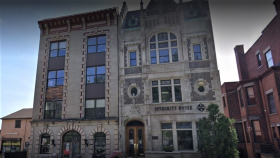
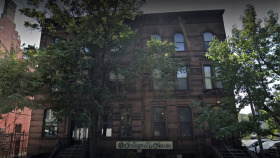
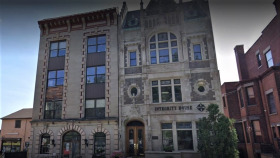
The local treatment landscape reflects that need. Newark is home to long-established nonprofit providers such as Integrity House, a CARF-accredited therapeutic community on Lincoln Park that offers residential care, outpatient services and medication-assisted treatment.
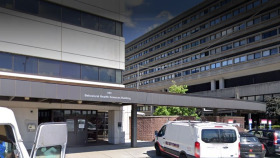
Hospital-based screening and behavioral health services operate through Newark Beth Israel Medical Center and Rutgers University Behavioral Health Care, both of which provide 24-hour emergency screening for people in crisis. This mix of residential, outpatient, and hospital-affiliated care means most people can find a starting point close to home regardless of insurance status.
Because fentanyl drives the majority of overdose deaths across New Jersey, Newark’s profile follows that pattern, with opioids and alcohol the substances most often reflected in local treatment admissions and emergency response data.
If opioids are the primary concern, our guide to opioid use disorder explains what dependence looks like and how treatment works.
Cost of Rehab in Newark
The cost of treatment in Newark depends far more on the level of care and length of stay than on the city itself. New Jersey statewide averages give a useful benchmark for what different types of care can cost before insurance or financial assistance is applied.
Because Newark sits in a high-cost-of-living metro, out-of-pocket prices at private programs may run at or above these state averages. However, public and nonprofit providers in the city offer substantially lower-cost and no-cost options for eligible residents.
These are averages for people paying without insurance coverage. The good news is that most residents do not pay full price.
Insurance, Medicaid, sliding-scale fees and financial assistance all reduce what a person actually owes, and several factors listed below determine where a given program falls within these ranges.
Verifying benefits before you enroll is the single most useful step for controlling cost. Our guide to using insurance for rehab walks through how to check your coverage.



How to Pay for Rehab in Newark
Across the 29 Newark-area facilities in our directory, payment options are broad. Most accept self-payment, and a large majority work with private insurance and New Jersey’s Medicaid program.
Many also offer sliding-scale fees or financial assistance, which is especially important in a city where cost is a real barrier to care. The overview below shows how many local facilities accept each payment type.





Medicaid
New Jersey’s Medicaid program, NJ FamilyCare, covers the full continuum of substance use disorder care, including medical detox, residential treatment, partial hospitalization, intensive outpatient, standard outpatient and medication-assisted treatment.
Coverage is administered through managed care organizations. Prior authorization may be required for higher levels of care such as residential treatment.
Because New Jersey expanded Medicaid, many low-income Newark adults qualify, and for eligible residents, NJ FamilyCare can eliminate or sharply reduce out-of-pocket costs. Of the 29 facilities in our directory, 24 accept NJ FamilyCare. When opioid use disorder is involved, NJ FamilyCare also covers medication-assisted treatment such as methadone and buprenorphine.
Medicare
Medicare covers medically necessary addiction treatment for adults 65 and older and for some younger residents with qualifying disabilities. Coverage spans inpatient hospital detox, outpatient counseling and prescription medications used in recovery, though specific costs depend on the parts of Medicare a person carries.
Ten Newark-area facilities in our directory accept Medicare. If you are comparing what Medicare will and will not cover against a private plan, our guide to verifying your rehab benefits can help you sort out the details before you enroll.
Insurance and Private Pay
Twenty of the local facilities accept private health insurance, and 25 accept self-payment. Under federal parity law, most private plans must cover substance use treatment comparable to other medical care, but network status, deductibles, and prior-authorization rules vary widely by plan.
Major carriers active in New Jersey include the ones listed below. Confirming that a program is in-network before you enroll is the most reliable way to avoid a surprise bill.
- Aetna
- AmeriHealth NJ
- Cigna
- Horizon Blue Cross Blue Shield of NJ
- UnitedHealthcare
- NJ FamilyCare
- Medicare
Other Low-Cost Options
For residents who are uninsured or underinsured, 14 Newark-area facilities offer sliding-scale fees and 17 offer some form of financial assistance, adjusting cost based on income and household size. State-funded and grant-supported programs also serve people regardless of their ability to pay.
If cost is the main barrier, exploring rehab scholarships and asking each program directly about income-based fees can open doors that seem closed at first glance.
Levels of Care Available in Newark
Newark-area facilities cover the core levels of addiction care, with a deep base of outpatient options, a strong inpatient presence, several detox programs and a large number of dual-diagnosis programs for people managing addiction alongside a mental health condition.
The grid below shows how many local facilities offer each level of care.


Medical detox. Six local facilities offer medically supervised detox, the first step for people who need to withdraw safely from alcohol, opioids or other substances under clinical monitoring. Detox stabilizes the body but is not treatment on its own; it works best as the entry point to a longer program.
Inpatient and residential rehab. Fourteen facilities provide inpatient rehab, where people live on-site for the duration of treatment. This level suits those who need structure away from daily triggers or who have more severe or long-standing substance use.
Outpatient rehab. With 21 clinics, outpatient and intensive outpatient programs are the most widely available level of care in Newark. Outpatient care lets people continue living at home and meeting work or family obligations while attending scheduled therapy and counseling.
Dual diagnosis care. Twenty-five facilities treat co-occurring conditions, integrating addiction care with support for co-occurring depression, anxiety or trauma. Treating both together improves outcomes compared with addressing either alone.
Sober living. Six sober living homes give people a substance-free residence during and after treatment. These homes pair naturally with rehab aftercare to support the transition back to independent living.
Specialty Programs in Newark
Many Newark-area facilities tailor care to specific populations and substances. The programs below reflect the specialty tracks most available locally, from gender-specific and young-adult programming to substance-focused care for alcohol and opioid use.






Alcohol and opioids are the substances most reflected in local treatment, with 23 facilities offering dedicated alcohol use disorder care and 21 providing focused opioid-specific programming. Twenty-six facilities offer young-adult tracks and 19 offer women’s programs, reflecting Newark’s large and diverse population.
For people who want affirming care, 5 facilities offer LGBTQ+ affirming addiction care and 3 provide rehab resources for veterans and military members.
Free and Low-Cost Rehab Resources in Newark
Cost and insurance status should not keep anyone in Newark from getting help. The resources below are free or low-cost, and several operate 24 hours a day. All are open to residents regardless of their ability to pay.
Crisis and Statewide Helplines
These lines connect callers to immediate support and treatment referrals. For anyone in emotional crisis, the 988 Suicide and Crisis Lifeline provides free, confidential crisis support around the clock.
- 988 Suicide and Crisis Lifeline
https://988lifeline.org/
Free, confidential, 24/7 crisis support. - ReachNJ Addiction Helpline
https://www.nj.gov/humanservices/reachnj/
New Jersey’s 24/7 addiction treatment referral line, staffed by trained counselors, open to residents of all ages regardless of insurance status or ability to pay. - SAMHSA National Helpline
https://www.samhsa.gov/find-help/helplines/national-helpline
Free, confidential, 24/7 treatment referral and information service. - NJ 2-1-1
https://nj211.org/
Statewide referral line for treatment, food, housing and social services.
County and Government Resources
- Essex County Local Alcoholism and Drug Abuse Program
https://northjerseyrecovery.com/resources/locations/essex-county-nj/
The county office that connects Essex County residents to publicly funded treatment. - NJ Division of Mental Health and Addiction Services (DMHAS)
https://www.nj.gov/humanservices/dmhas/contact-us/dmhas/
The state authority on substance use, offering referrals and a searchable directory of licensed treatment providers. - Essex County Opioid Overdose Recovery Program (OORP)
https://www.rwjbh.org/treatment-care/institute-for-prevention-and-recovery/
RWJBarnabas Health Institute for Prevention and Recovery.
Recovery specialists follow up with people after an overdose reversal for up to eight weeks, at no cost.
Hospital-Based Emergency Screening
These centers provide 24-hour psychiatric and substance use crisis screening for Essex County residents.
- Newark Beth Israel Medical Center
https://www.rwjbh.org/newark-beth-israel-medical-center/
24-hour screening - Rutgers University Behavioral Health Care
https://ubhc.rutgers.edu/
24-hour screening
Harm Reduction
Harm reduction centers offer sterile syringes, naloxone (Narcan), fentanyl test strips, wound care, and connections to treatment in a non-judgmental setting.
- North Jersey Community Research Initiative (NJCRI) Harm Reduction Center
https://www.njcri.org/
One of New Jersey’s authorized harm reduction centers, offering syringe access and connection to care. - Naloxone365 / Free Narcan by Mail
https://njharmreduction.org/get-naloxone/
Free naloxone shipped anonymously through New Jersey’s mail program.
Drug and Alcohol Use Statistics in Newark
Essex County, anchored by Newark, has carried the heaviest overdose burden of any county in New Jersey. The figures below draw on the New Jersey Office of the Chief State Medical Examiner and the New Jersey Department of Health, and reflect the county-level data most relevant to Newark residents.
Fentanyl and other opioids drive the majority of these deaths, which is why fentanyl overdose risk is central to local prevention work.
Overdose deaths in New Jersey have declined from their 2021 pandemic peak, and Essex County’s 2024 count fell from prior years, but the county’s toll remains the state’s largest.
The overdose rate among Black residents statewide is roughly twice that of white residents, a disparity that weighs heavily in a majority-Black city like Newark and shapes the placement of the harm-reduction and outreach programs listed above.
For statewide and national context, see our overview of national substance use statistics.
Resources
- New Jersey Office of the Chief State Medical Examiner. (2025). Suspected Drug-Related Deaths, County Data. https://www.nj.gov/oag/newsreleases.htm
- New Jersey Department of Health. (2024). New Jersey Marks Progress in Reducing Overdose Deaths. https://www.nj.gov/health/populationhealth/opioid/
- New Jersey Department of Human Services, Division of Mental Health and Addiction Services. (2024). NJ FamilyCare Substance Use Disorder Treatment. https://www.nj.gov/humanservices/dmhas/home/index.html
- New Jersey Harm Reduction Coalition. (2024). Harm Reduction Centers Directory. https://njharmreduction.org/get-syringes/
- New Jersey Department of Human Services. (2024). Help That Can Save Your Life: Essex County Addiction Resources. https://www.nj.gov/humanservices/dmhas/resources/addiction/
- Substance Abuse and Mental Health Services Administration. (2024). National Helpline and Behavioral Health Treatment Locator. https://www.samhsa.gov/find-help/national-helpline