




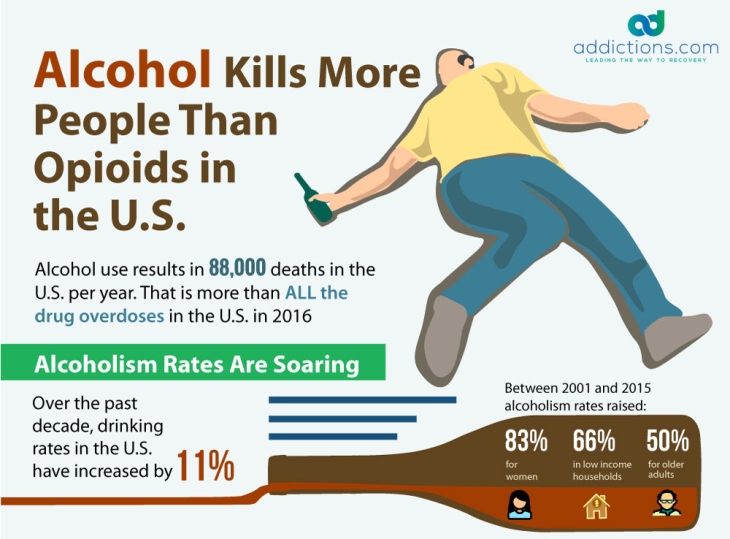
According to the CDC, over 178,000 people die every year due to excessive alcohol use. Some of these deaths come from chronic alcohol use, such as deaths from liver disease and long-term alcohol abuse, while others come from an acute incident of alcohol use, such as alcohol poisoning or an alcohol-related car accident. Regardless, the number of alcohol-attributed deaths is more than all drug overdose fatalities put together. If the United States is facing an opioid addiction crisis, then there is no question that we are also facing an alcohol addiction crisis.
Problem drinking also causes far more problems than loss of life. Those who drink excessively often have a far reduced quality of life and increased physical and emotional pain that results from the short and long-term effects of alcohol. Unfortunately, alcohol abuse affects people of all ages in the US, as well as their families and loved ones, even in the case of high-functioning alcoholics. We need to find ways to turn the tide on excessive drinking to build a healthier nation. Learn more about how treatment programs help individuals overcome dependence and rebuild their lives in our Guide to treatment & recovery.
What is considered excessive drinking?
Standards for excessive drinking are different between men and women due to the unique ways their bodies process alcohol. Men have a higher percentage of water in their bodies and a lower percentage of fat. This means that women can drink the same amount of alcohol as men of their same size and weight, but end up with a higher concentration of alcohol in the blood.
This causes women to become intoxicated more quickly than men. Additionally, a woman’s stomach lining produces less alcohol dehydrogenase, an enzyme that breaks down alcohol in the stomach before it can enter the bloodstream.
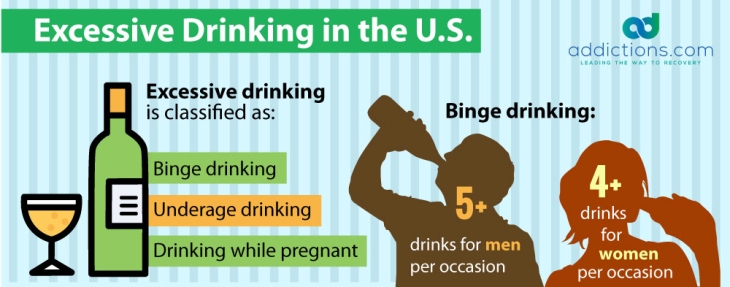
Binge drinking is defined as five or more drinks in a single occasion for men, and four or more drinks in a single occasion for women. A drink is defined as 1.5 ounces of liquor or spirits (vodka, gin, whiskey, etc.), 5 ounces of wine, 8 ounces of malt liquor, or 12 ounces of beer.
Binge drinking is considered a form of “excessive drinking” — a term that also represents drinking by people under the age of 21 and any drinking by pregnant women. Another level of excessive drinking is “heavy drinking.” Heavy drinking is defined as binge drinking 5 or more times in a month. Not everyone who drinks excessively is an alcoholic, but excessive drinking does put them at a greater risk of developing an addiction.
Moderate drinking is defined as two drinks per day for men, and one drink per day for women. This is a level at which alcohol is expected to have little or no impact on your health. People are advised not to drink at all if they:
- Are recovering from alcohol addiction
- Are pregnant or might be pregnant
- Have certain medical conditions
- Are taking OTC or prescription medications that interact with alcohol
- Are you planning to drive or participate in activities that require alertness, coordination, and skill
Alcoholism Statistics in the United States
According to the 2024 NSDUH, nearly half of people in the US who are 12 or older have drunk alcohol in the past month: 46.6%, or 134.3 million people. Among them, over 43% binge drank in the past month, and nearly 11% are heavy drinkers.
Meanwhile, nearly 28 million people in the US over age 12 have alcohol use disorder. That’s nearly 1 in 10 people. Alcohol addiction is more prominent among males (11.8%) than females (7.6%). Ethnically, alcohol use disorder affects white people at the highest rate (10.3%), followed by multiracial people (10%), American Indian or Alaskan Native people (9.8%), Black people (9.6%), and Hispanic or Latino people (9.1%). The least affected groups are Native Hawaiian or Pacific Islanders (7.9%) and Asian people (5.5%).
The good news is that the rates of problem drinking and alcohol use disorder are declining. The percentage of people with alcohol use disorder has declined slightly 2021 and 2024, from 10.6% to 9.7%. There have been declines in every age group: teenagers ages 12 to 17, young adults ages 18 to 25, and adults age 26 or older. Fortunately, the NSDUH brings us a glimmer of hope for declining rates of alcohol addiction.
How can we reduce alcohol consumption as a society?
While there are hints of declining alcohol use, it’s still taking 178,000 lives every year, and that’s 178,000 families who mourn the preventable loss of a loved one. Here are some of the top recommended strategies for reducing alcohol consumption:
Higher alcohol taxes: Research has found that when alcohol costs more, people drink less. To use that knowledge, some experts propose that higher taxes at the state and federal levels, which would raise the total cost of alcohol, should reduce drinking. There’s evidence that it may also reduce alcohol-related violent crime.
Harsher penalties for drinking offenses: There are many ways to penalize people for excessive drinking, including harsher DUI laws. South Dakota has seen success with its 24/7 Sobriety Program. Offenders who have had their drinking rights revoked after committing alcohol-related offenses are monitored through bracelets that track blood alcohol levels or twice-daily breathalyzer tests. Every failed test results in one or two days of jail time. The program has been linked to reductions in domestic violence arrests, DUIs, and alcohol-related deaths.
Harsher penalties for dram shop liabilities: Dram shop liability, or commercial host liability, is when retail establishments that sell alcohol are held liable for harms or injuries caused by over-serving intoxicated customers or serving underage customers. The theory is that dram shop liabilities extend accountability beyond the individual who is drinking, allowing for more opportunities to prevent over-intoxication.
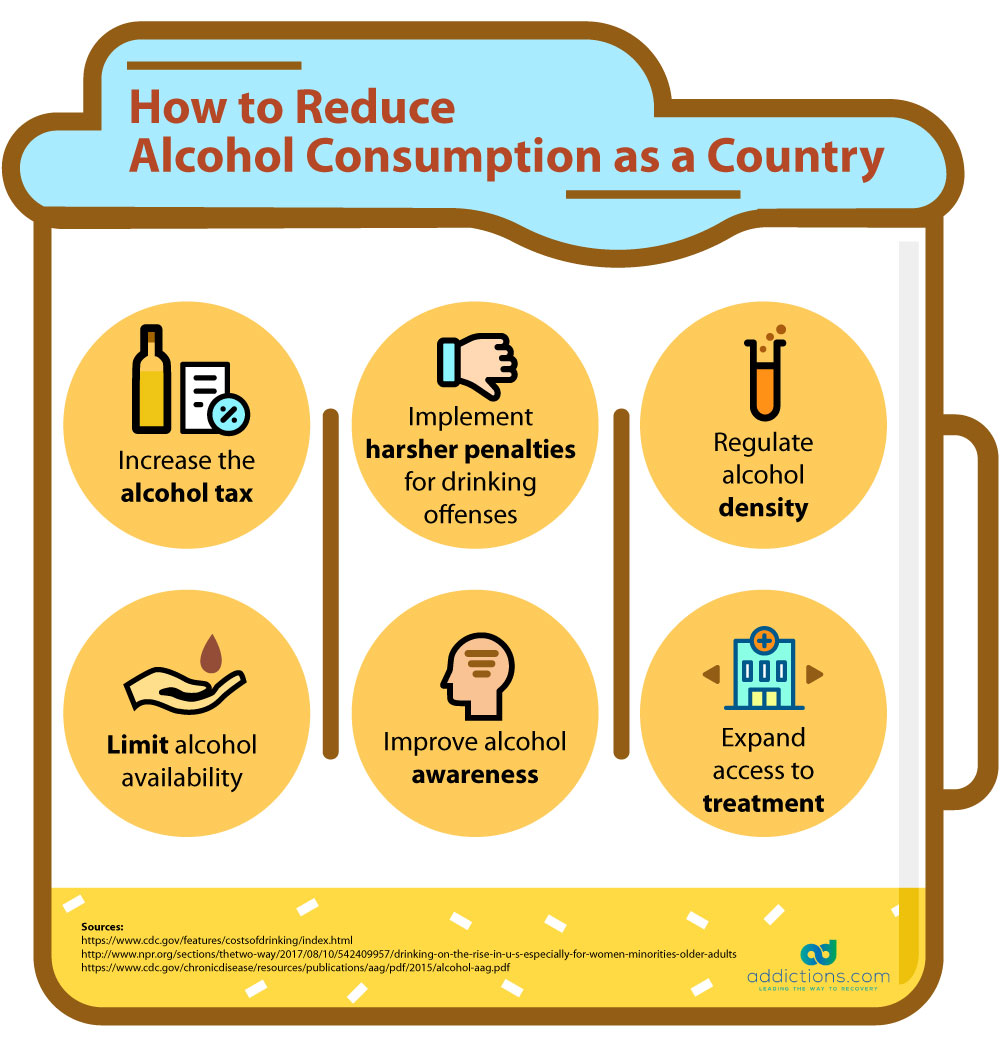
Regulation of alcohol density: Through zoning and licensing regulations, the government could limit the number of alcoholic beverage outlets allowed to operate in any given area. The goal is to make it less convenient for people to drink. However, results have been mixed: some studies show that heavy drinking was unaffected or even slightly increased, while the only decrease was among light drinkers.
Limiting the amount of time available to purchase alcohol: Some communities and states already limit alcohol sales to certain times of day and certain days of the week. While the legal closing time for bars may be midnight in some areas, others allow alcohol to be served until 5 a.m. Some studies found that when they increased the hours that alcohol was sold by 2 hours or more, alcohol-related harms increased, so it’s expected that reducing the alcohol availability by 2+ hours would lower alcohol-related harms. Likewise, a neighborhood in Baltimore saw a 23% reduction in violent crime when it reduced late-night alcohol sales.
Improved Alcohol Awareness: Our society has normalized harmful drinking behaviors, such as binge drinking, which can be dangerous in both the short and long term. Many people are not aware of these dangers, and also believe that a person cannot be addicted to alcohol if they are also able to hold down a job, pay their bills, maintain relationships, or otherwise present themselves as “together.” Understanding that there are high-functioning alcoholics who can hide their addiction while secretly suffering for years can help people with alcohol use disorder and their loved ones better identify when professional help is needed.
Increased access to treatment for alcohol use disorder: Considering the wide treatment gap between individuals suffering from addiction to alcohol and how many of them receive specialty treatment (less than 10% of people with alcohol use disorder received treatment in the past year), increasing access to treatment is a definite way to decrease rates of excessive drinking and the associated harms.
Expanding access to treatment and promoting awareness are key to helping those struggling with alcohol use disorder find long-term stability. For a deeper look at what comprehensive recovery programs involve, including detox, counseling, and long-term support. See our Guide to treatment & recovery.
Short-Term and Long-Term Effects of Alcohol Consumption
It is important to understand the short- and long-term effects of alcohol, especially for those who aren’t able to see how excessive drinking negatively impacts their quality of life.
Short-term effects of alcohol consumption, particularly binge drinking, can include:
- Decreased coordination, perception, vision, hearing, and judgment
- Breathing difficulties
- Headaches, stomach pain, vomiting, diarrhea
- Stillbirth, miscarriage, and fetal alcohol spectrum disorders
- High-risk sexual behaviors such as unprotected sex and sex with multiple partners, which can lead to sexually transmitted diseases and accidental pregnancy
- Illness or death due to alcohol poisoning from high blood alcohol levels
- Violent tendencies, including intimate partner violence, sexual assault, suicide, and homicide
- Injuries such as burns, falls, drownings, and car accidents
- Memory lapses and blackouts
- Dizziness, fainting, or unconsciousness
- Coma
Long-term effects of alcohol consumption include the development of serious problems, such as:
- Digestive problems, liver disease, gastritis, malnutrition, and ulcers
- High blood pressure, stroke, and heart disease
- Sexual problems
- Cancer of the colon, liver, esophagus, throat, mouth, and breast
- Social problems, including unemployment, family problems, and lost productivity and opportunity
- Learning and memory problems, including poor academic and professional performance and dementia
- Mental health issues such as anxiety and depression
- Brain and nerve damage
- Thiamine (Vitamin B1) deficiency, which can lead to a serious disorder characterized by disorientation, apathy, loss of coordination, and amnesia, and which can have fatal complications
The Emotional Toll of Alcoholism
Alcohol use disorder can disrupt a person’s life professionally and personally, causing problems with relationships and finances as well as a host of psychological problems. The general quality of life is reduced when someone is addicted to alcohol, no matter how “safely” they imbibe.
Some who suffer from alcohol addiction may insist that they don’t have a drinking problem because they never drive while drunk or never miss work due to a hangover, and any other justification they can find. Insisting on these types of black-and-white guidelines only gives the individual justification to keep drinking, which inarguably increases their risk of suffering the negative short- and long-term effects of excess alcohol use.
It’s also important to remember that for many people, alcohol use disorder may have developed slowly, meaning that they gradually became acclimated to life while abusing alcohol. After receiving alcohol use disorder treatment, these individuals are pleasantly surprised to discover how much better they feel and how much happier they are while living a sober lifestyle. They had no idea how bad things were before because life as an alcoholic was “normal” for them.
Frequently Asked Questions About Alcohol Addiction
What’s the latest alcohol death count?
According to the CDC’s alcohol-related death impact report (ARDI), 178,000 people each year die from alcohol-attributable deaths. That equates to 488 lives lost every day. For the people who lose their lives to alcohol, it shortens their lives by an estimated average of 24 years.
How many people meet AUD criteria?
According to the 2024 National Survey of Drug Use and Health, about 28 million people in the US meet the criteria for alcohol use disorder, also called alcohol addiction or alcoholism. That’s about 1 in 10 people who are over age 12.
Alcohol Use Disorder Treatment Options
Choosing to seek treatment for your alcohol use disorder will be the best decision you ever make. If you drink heavily or have been addicted to alcohol for a year or more, be sure to look after your physical and mental safety in the early days of your recovery by choosing a treatment facility that provides a medically monitored detox.
Alcohol withdrawal can be highly dangerous for some and lead to a fatal form of withdrawal known as delirium tremens. This severe form of alcohol withdrawal can cause hallucinations, extreme agitation, and dangerous seizures. A medical detox center will be able to effectively monitor for and treat any complications that arise, so only detox from alcohol with professional help, don’t try to quit on your own.
You will experience many phases to your alcohol addiction treatment, which may include inpatient or residential programs that have you living full-time at the treatment facility, outpatient programs that provide day or evening addiction treatment while you live at home, and aftercare services, which may include facility alumni events, relapse prevention counseling, and peer support groups.
To find the right treatment center for each stage of your recovery, use our online rehab directory.