



Expert Insights
We all know the Covid pandemic had a negative impact on society, but as more and more data comes in – specifically data that relates to the lockdowns – it is undeniable that drug addiction took hold of far more people than we anticipated.
I can remember reading a news article in 2020 about Cheryl Wilson, a Winston-Salem mother whose son died from a fentanyl overdose during the lockdowns. I can also remember thinking that the isolation would be as hard for his mother as it was for him.
The CDC now believes, in the first 12 months of the lockdowns, more than 100,000 Americans died from drug overdoses. Now that we know the number of deaths, I can’t help but to think that the isolation forced upon us during lockdowns is a main culprit for the rise of addiction and fatal overdoses.
One of the main reasons we start using drugs is because we’re running from something – we want to avoid emotions that cause us pain or discomfort. During active addiction, being forced to remain stationary and alone for extended periods of time can be a recipe for disaster.
How We Rank Listings
Addictions.com organizes Winston-Salem rehab listings to make comparison straightforward, not to sell a single facility. Listings draw on data from the Substance Abuse and Mental Health Services Administration (SAMHSA), accrediting bodies including the Joint Commission and the Commission on Accreditation of Rehabilitation Facilities (CARF), state licensing records, and facility-reported details.
When you browse programs on this page, a few factors shape what you see:
- Accreditation and state licensing status, which signal that a facility meets recognized standards of care
- Levels of care offered, from medical detox through outpatient and aftercare
- Payment options accepted, including Medicaid, Medicare, private insurance, and self-pay
- Specialty programming for specific populations, such as women, men, older adults, and young adults
We do not guarantee outcomes, and a listing is not an endorsement. Use these details as a starting point, then verify current availability, cost, and insurance directly with any facility before you enroll.
Rehab in Winston-Salem: What to Know
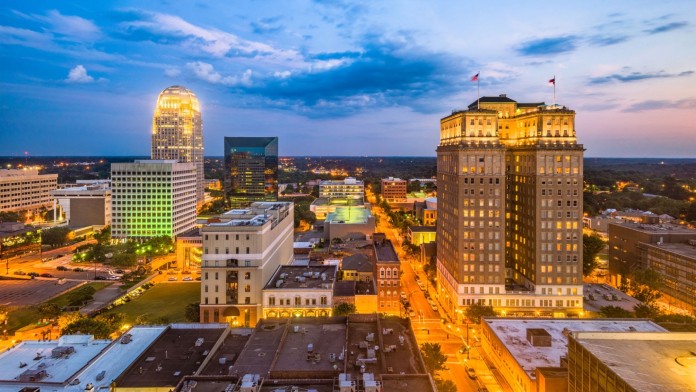
Winston-Salem is the seat of Forsyth County and anchors the western side of the Piedmont Triad, the three-city region it shares with Greensboro and High Point. The North Carolina rehab directory lists treatment options statewide, and within Winston-Salem you can compare 20 facilities spanning detox, residential, and outpatient care.
That mix means most people can find addiction treatment options without leaving the county, though the right fit still depends on the level of care and payment method you need.
Forsyth County’s behavioral health response is coordinated through county Behavioral Health Services and delivered largely by community providers, hospital systems including Novant Health and Atrium Health Wake Forest Baptist, and nonprofit organizations.
Insight Human Services, a long-running nonprofit headquartered downtown on West 4th Street, provides residential and outpatient care and receives public and United Way funding, which makes it a common entry point for residents without private insurance.
One local resource worth knowing about is Unseen Patterns, an interactive overdose-tracking map the county launched to show where overdoses happen across Forsyth ZIP codes and where residents can find free naloxone.
The county reported responding to 1,741 overdose calls in 2024, up from 1,583 the year before, and county officials have flagged a sharp rise in alcohol-involved overdose calls and in cases affecting young people.
Because two major drug-trafficking corridors, U.S. 52 and Interstate 40, run through the county, fentanyl and other opioids remain a significant driver of local overdose activity. If opioids are the primary concern for you or a loved one, it helps to understand fentanyl addiction and overdose risk and the medication options available before you choose a program.
Cost of Rehab in Winston-Salem
There is no single price for rehab in Winston-Salem. What you pay depends on the level of care, the length of the program, and whether you use insurance. Statewide averages for North Carolina give a useful starting point for setting expectations, since city-specific pricing is not consistently published.
Medical detox is the most expensive level of care, averaging $153,932 statewide in North Carolina.
Long-term inpatient rehab in North Carolina costs an average of $54,086.
Outpatient addiction treatment in North Carolina averages $8,322.
Outpatient methadone treatment is the most affordable option, averaging $7,394.
These figures reflect the full range from the most intensive medical care to lower-intensity outpatient options. Because Winston-Salem sits in a mid-sized metro rather than a high-cost coastal market, local prices tend to track close to these North Carolina averages rather than running well above them.
Rather than fixating on a single sticker price, weigh cost against the level of care that matches your situation, and remember that using insurance for rehab can substantially lower what you actually pay out of pocket. Several factors move the final cost up or down:




How to Pay for Rehab in Winston-Salem
Across the 20 facilities listed in Winston-Salem, several payment pathways are available, including self-pay, private insurance, Medicaid, and Medicare. The mix below shows how many local programs accept each option, which can help you narrow your search before you start calling.

18 accept self-payment or cash
15 accept private health insurance

9 accept North Carolina Medicaid

3 accept Medicare

6 offer financial assistance

4 offer sliding-scale fees

4 accept TRICARE

1 accepts Employee Assistance Programs
Coverage details vary from one program to the next, so confirm your specific plan and any prior-authorization requirements directly with the facility before you enroll.
Medicare
Medicare covers medically necessary addiction treatment for eligible older adults and people with qualifying disabilities, including inpatient care, outpatient services, and certain medications.
Three Winston-Salem facilities accept Medicare. Coverage rules, copays, and network requirements differ by plan, so review your plan’s addiction treatment benefits carefully before you commit to a program.
Medicaid
Nine local facilities accept North Carolina Medicaid, which covers substance use treatment across levels of care under NC Medicaid Managed Care. People with more intensive behavioral health needs may be served through a Behavioral Health and Intellectual/Developmental Disabilities Tailored Plan and their regional Local Management Entity/Managed Care Organization (LME/MCO).
Medicaid also covers medication-assisted treatment, the standard of care for opioid use disorder, through licensed opioid treatment programs.
Military Benefits
Four Winston-Salem facilities accept TRICARE, the health program for active-duty service members, retirees, and their families. Veterans in the Piedmont Triad may also qualify for care through the U.S. Department of Veterans Affairs. Additional rehab resources for veterans and military families can help you understand eligibility and enrollment.
Insurance and Private Pay
Private insurance is the most widely accepted payment type in Winston-Salem, taken by 15 facilities, and 18 accept self-payment. If you plan to pay privately, ask each program about total cost, financing, and whether fees can be adjusted based on income.
Other Low-Cost Options
Four facilities offer sliding-scale fees and six offer some form of financial assistance, which can make treatment reachable for people who are uninsured or underinsured. Nonprofit providers in the county, including Insight Human Services, often work with clients on payment.
Free Treatment Programs
While no listed Winston-Salem facility advertises fully free treatment for all clients, grant-funded and nonprofit programs, along with rehab scholarships, can close the gap for those who cannot pay.
County and state-funded services described in the resources section below are another route to low- or no-cost care. Major insurance carriers active in North Carolina include:
- Aetna
- AmeriHealth Caritas
- Blue Cross Blue Shield of NC
- Carolina Complete Health
- Cigna
- Healthy Blue
- Humana
- UnitedHealthcare
- WellCare
Levels of Care Available in Winston-Salem
Winston-Salem facilities cover the core levels of care, with 11 offering medical detox, 13 offering inpatient or residential treatment, 16 offering standard outpatient services, and 13 providing dual diagnosis care for co-occurring conditions. The grid below shows what is available locally.
11 medical detox facilities
13 inpatient rehab programs

16 standard outpatient clinics

13 dual diagnosis programs

1 sober living home
Medical detox provides supervised withdrawal management, often the first step for people dependent on alcohol or opioids. With 11 programs locally, most residents can begin medical detox close to home before transitioning to ongoing treatment.
Inpatient and residential treatment offers structured, live-in care that removes daily triggers and provides round-the-clock support. Thirteen Winston-Salem facilities offer inpatient rehab, with typical stays ranging from a few weeks to 90 days depending on individual needs.
Standard outpatient care is the most widely available option here, letting people attend treatment while continuing to work, attend school, or care for family. Sixteen facilities provide outpatient rehab and intensive outpatient programs.
Dual diagnosis programs treat substance use disorders alongside mental health conditions such as depression or anxiety, which frequently occur together. Thirteen local facilities offer this integrated care, an important option given that untreated co-occurring depression can undermine recovery.
For people leaving inpatient care, one local sober living home and a range of rehab aftercare options can support the transition back to daily life.
Specialty Programs in Winston-Salem
Beyond general treatment, several Winston-Salem facilities tailor programming to specific groups and substances. The counts below reflect programs that identify a particular focus.

13 men’s programs

12 women’s programs

15 young adult programs

5 programs for older adults

16 alcohol rehab programs
12 opioid rehab programs
Gender-specific programming, offered by 13 men’s and 12 women’s programs locally, lets participants address issues that can be easier to work through in a single-gender setting.
Fifteen programs serve young adults, and five serve older adults, a group that county officials note is affected by overdoses tied to prescription medications.
On the substance side, 16 facilities treat alcohol use disorder, the most commonly addressed substance locally, and 12 treat opioid use disorder.
Given the county’s ongoing opioid overdose activity, programs offering medication for opioid use disorder are especially relevant for many residents.
Free and Low-Cost Rehab Resources in Winston-Salem
Cost should not be the reason someone goes without help. Winston-Salem and Forsyth County offer a range of free and low-cost resources, from crisis lines to harm reduction and county-coordinated behavioral health services. The list below focuses on options you can contact directly.
Crisis and Helplines
- 988 Suicide and Crisis Lifeline
https://988lifeline.org/
Call or text 988 for free, confidential support 24/7. See our crisis support resources for more. - SAMHSA National Helpline
https://www.samhsa.gov/find-help/helplines/national-helpline
Free, confidential, 24/7 treatment referral and information service. - NC 211
https://nc211.org/
Dial 211 to connect with local health and human services, including substance use and housing support.
County and Nonprofit Services
- Forsyth County Behavioral Health Services
https://www.co.forsyth.nc.us/hhs/
County-coordinated behavioral health programming and referral. Visit forsyth.cc for current contact details. - Insight Human Services
https://insightnc.org/
A CARF-accredited nonprofit offering residential and outpatient treatment, with public and United Way funding that supports uninsured clients.
Harm Reduction and Naloxone
- NC Twin City Harm Reduction Collective
https://www.tchrc.org/
Provides harm reduction services and free naloxone (Narcan). - Free naloxone dispensers:
Available at the Forsyth County Pharmacy (725 Highland Ave.) and the lobby of the Forsyth County Detention Center (201 N. Church St.). - Unseen Patterns:
https://forsyth.cc/
The county’s overdose map shows overdose trends and additional naloxone access points across Forsyth County.
Government and Medicaid
- NC Medicaid
https://medicaid.ncdhhs.gov/
Covers substance use treatment across levels of care. Apply through the North Carolina Department of Health and Human Services at ncdhhs.gov.
Drug and Alcohol Use Statistics in Winston-Salem
Local data help put the need for treatment in Winston-Salem in context. Forsyth County tracks overdose activity closely through its Unseen Patterns surveillance project, and both call volume and death data point to a persistent, evolving crisis.
Overdose calls Forsyth County emergency services responded to in 2024, up from 1,583 in 2023 — Forsyth County, Unseen Patterns, 2025.
Overdose calls in Forsyth County between January 2021 and December 2023 — Forsyth County, Unseen Patterns, 2024.
Medication and drug overdose deaths per 100,000 Forsyth County residents, 2017-2021, above the statewide rate of 27.6 — NC DHHS Division of Public Health, 2023.
Opioid overdose death rate per 100,000 Forsyth County residents, 2017-2021, above the statewide rate of 22.7 — NC DHHS Division of Public Health, 2023.
Fatal overdoses did ease slightly in the most recent year, with the county recording 21 fewer overdose deaths in 2024 than in 2023, even as total overdose calls rose.
County officials have highlighted two trends behind the numbers: a marked increase in alcohol-involved overdoses and growing overdose activity among young people.
Statewide, an estimated 8 North Carolinians died from a drug overdose each day in 2024, according to the NC Department of Health and Human Services, underscoring why access to timely opioid use disorder treatment and harm reduction remains a local priority.
For national context, see our overview of national substance use statistics.
Resources
- Forsyth County. (2025). Unseen Patterns highlights impact of overdoses in Forsyth in 2024. https://forsyth.cc/article.aspx?NewsID=28663
- Winston-Salem Journal. (2024). Drug overdoses increase in Forsyth County in first few months of 2024. https://journalnow.com/news/local/government-politics/drug-overdoses-increase-in-forsyth-county/
- Winston-Salem Journal. (2025). Can Forsyth County, state curb the overdose epidemic? https://journalnow.com/news/local/government-politics/can-forsyth-county-state-curb-the-overdose-epidemic/
- North Carolina Department of Health and Human Services, Division of Public Health. (2023). Medication and Drug Overdose in Forsyth County: County Overdose Death Slides. https://injuryfreenc.dph.ncdhhs.gov/
- North Carolina Department of Health and Human Services, Division of Public Health. (2025). North Carolina Overdose Epidemic Data. https://www.dph.ncdhhs.gov/
- North Carolina Department of Health and Human Services. (2026). Mental Health and Substance Use Disorders; Medicaid Managed Care. https://www.ncdhhs.gov/assistance/mental-health-and-substance-use-disorders
- Substance Abuse and Mental Health Services Administration. (2024). Findtreatment.gov. https://findtreatment.gov