




Expert Insights
Talk about a mom on a mission. Leah Wright is a first grade teacher who found out the hard way it’s not as easy as people think it is to find treatment for a loved one struggling with opioid addiction. So Leah decided to do something about it: she raised the money to open a high school in Wake County designed specifically for students overcoming addiction.
According to Leah, when she was trying to find treatment for her teenage son’s addiction, she quickly realized there weren’t enough resources for adolescents. She was turned away from every rehab she called due to the fact that they didn’t accept patients under the age of 18.
She partnered with Addiction Professionals of North Carolina to open a recovery high school in Raleigh. The school provides an accredited education course, as well as substance abuse treatment and certified drug counselors. Recovery schools are designed to be part of a step-down program for teens in recovery after completing a 30-day inpatient addiction treatment program. Wake Monarch Academy opened in 2020.
Listings in our Raleigh directory are ranked using a weighted scoring system that rewards quality indicators rather than paid placement. Accreditation carries the most weight: programs holding credentials from the Joint Commission, CARF, or NAATP are scored higher because those bodies set external quality benchmarks that facilities must maintain to keep their credentials. In Raleigh, 3 facilities hold Joint Commission accreditation and 10 hold CARF accreditation.
Beyond accreditation, we evaluate service breadth (the number of levels of care and specialty programs offered), accepted payment methods including Medicaid, Medicare, and sliding-scale options, and state licensing status. Facilities that can serve a wider range of patients and payment situations score higher. This directory currently includes 40 treatment providers in the greater Raleigh area. Listings are provided for informational purposes and do not constitute a personal endorsement of any individual program.
Rehab in Raleigh: What to Know
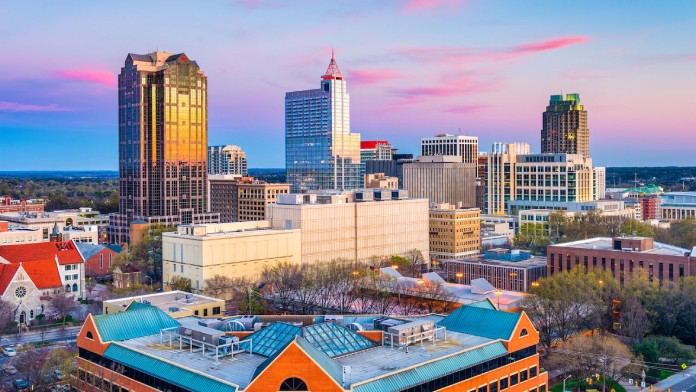
Raleigh is the seat of Wake County and the state capital of North Carolina, situated at the center of the Research Triangle metro region. For people searching for addiction treatment in the Raleigh area, the North Carolina rehab directory currently lists 40 facilities within the city and surrounding communities, ranging from community-based outpatient clinics to residential programs with medically supervised detox.
Treatment demand has grown alongside Wake County’s rapid population growth, and local public health infrastructure has expanded accordingly. Wake County manages public behavioral health services through Alliance Health, the Local Management Entity and Managed Care Organization (LME-MCO) serving Medicaid-eligible and uninsured residents across the county. In December 2024, Wake County established a dedicated Behavioral Health Department, a structural response to a more than 40% rise in emergency room visits for mental health and substance use concerns over the preceding five years.
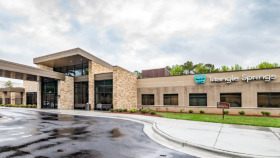
WakeBrook, the county’s flagship behavioral health campus in Raleigh, provides crisis stabilization and inpatient and outpatient behavioral health services; WakeMed assumed management of facility-based inpatient services there in late 2024.
Wake County has committed substantial public resources to the opioid crisis through national settlement agreements. The county will receive approximately $65.6 million from those settlements over 18 years, through 2039. Fiscal year 2025 allocations are directed toward expanding naloxone distribution, mobile medication-assisted treatment units, peer support staffing, and housing for people in early recovery.
The Wake County Recovery Court, a drug treatment court for adults whose criminal justice involvement stems from a substance use disorder, provides a structured path toward addiction treatment as an alternative to incarceration.
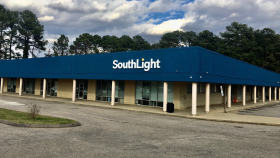
Two widely accessed community providers operate throughout Raleigh. SouthLight Healthcare is a nonprofit agency offering adult outpatient treatment, office-based opioid treatment, mobile MAT services, and family counseling; it accepts NC Medicaid and state-funded coverage and is a primary resource for uninsured residents.
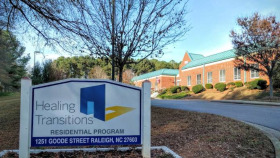
Healing Transitions is a peer-run nonprofit providing free non-medical detox, long-term recovery programming, and emergency shelter for men and women with no insurance requirement. Like much of North Carolina, Wake County has felt the acute effects of the synthetic opioid supply, with county and state data showing that fentanyl-related overdose deaths drove most of the county’s overdose burden through 2022, even as Wake County’s rate remained consistently below the statewide average.
Cost of Rehab in Raleigh
Treatment costs in Raleigh generally track North Carolina state averages, which fall slightly below the national midpoint for residential care. The biggest variable is level of care: outpatient programs cost significantly less than residential stays, and medical detox is typically priced and billed separately from the broader treatment program that follows.
Verifying your insurance benefits before selecting a program is one of the most effective ways to understand your actual out-of-pocket cost. The figures below reflect North Carolina state-level averages from the National Center for Drug Abuse Statistics; individual facilities in Raleigh will vary.




How to Pay for Rehab in Raleigh
Among the 40 treatment providers in the Raleigh area, the large majority accept more than one form of payment, giving most people at least one viable path to covering the cost of care.





Medicare
Medicare Part A covers medically necessary inpatient substance use treatment, including hospital-based detox, and Part B covers outpatient mental health and behavioral health services. People enrolled in Medicare Advantage plans receive at minimum the same core benefits, though specific coverage varies by plan. 11 facilities in the Raleigh area accept Medicare. For a breakdown of covered services and how to confirm your benefits before admission, see our guide to using insurance for rehab.
NC Medicaid
North Carolina Medicaid covers a broad range of substance use disorder services, including outpatient treatment, intensive outpatient programming (SAIOP and SACOT), social setting detox, and medication-assisted treatment with methadone, buprenorphine, and naltrexone.
Effective July 1, 2024, NC Medicaid introduced Behavioral Health and IDD Tailored Plans for people with severe substance use disorders, providing more integrated care coordination under a single plan. Wake County residents who are Medicaid-eligible or uninsured can reach Alliance Health at (800) 510-9132 to connect with a provider and receive a clinical screening. Seventeen facilities in the Raleigh area accept NC Medicaid.
Military Benefits
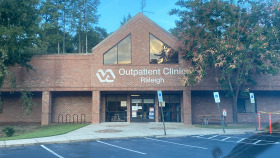
Active-duty service members, veterans, and eligible dependents may have treatment covered through TRICARE, and 8 facilities in Raleigh accept it. Veterans can also access substance use services directly through VA clinics in the area. Our guide to rehab resources for veterans and military families covers those options in more detail.
Insurance and Private Pay
Thirty-two facilities in Raleigh accept private health insurance. Major carriers with substantial networks in North Carolina include Blue Cross Blue Shield of NC, Aetna, Cigna, UnitedHealthcare, and Humana. Coverage for substance use treatment varies by plan, but the Mental Health Parity and Addiction Equity Act requires insurers to cover substance use disorder treatment on terms no more restrictive than medical or surgical coverage.
- Blue Cross Blue Shield of NC
- Aetna
- Cigna
- UnitedHealthcare
- Humana
Other Low-Cost Options
Eight facilities offer sliding-scale fees that adjust costs based on income, and 15 offer some form of financial assistance. 4 provide financing arrangements for treatment costs not covered by insurance. Rehab scholarships are worth exploring for people who fall outside insurance and Medicaid eligibility; several national and North Carolina-specific scholarship programs exist specifically for substance use treatment.
Levels of Care Available in Raleigh
Raleigh’s treatment network covers a full range of clinical levels, with particular depth in outpatient services and a solid residential base. The 16 detox facilities, 22 inpatient programs, and 33 outpatient clinics in the directory give most people meaningful choice within the level of care that fits their clinical situation.


Medical Detox
Medically supervised detox is typically the first step for people with physical dependence on alcohol, opioids, or benzodiazepines. The 16 medical detox programs in Raleigh provide 24-hour clinical supervision, monitoring for withdrawal complications, and in many cases, medication management to reduce withdrawal symptoms and lower the risk of serious adverse events. Detox alone does not constitute treatment; most programs provide a direct referral to the next level of care at discharge.
Inpatient Rehab
Inpatient rehab provides structured, live-in care that separates people from the environments and triggers associated with their substance use. The 22 residential programs in Raleigh typically run 28 to 90 days and combine individual therapy, group counseling, and practical skills development in a monitored setting. Residential treatment is generally recommended when outpatient care has not been sufficient, when the severity of use is high, or when the home environment does not support early recovery.
Partial Hospitalization
Partial hospitalization programs (PHPs) provide an intensive daily schedule, typically 5 to 6 hours per day, 5 or more days per week, without an overnight residential component. Raleigh has 1 partial hospitalization program, which is most commonly used as a step-down for people leaving inpatient care who still need structured daily programming before transitioning to standard outpatient treatment.
Standard Outpatient
With 33 outpatient programs, outpatient care is the most accessible level of treatment in Raleigh. Outpatient programs typically involve weekly or multi-weekly counseling and therapy sessions and allow people to continue living at home and maintaining work or family responsibilities during treatment.
This level works best for people with mild to moderate substance use concerns and a stable living situation. Several outpatient providers in Raleigh also offer intensive outpatient scheduling for people who need more clinical hours per week without the commitment of residential care.
Dual Diagnosis Programs
Twenty-four programs in the Raleigh directory are equipped to treat co-occurring substance use and mental health conditions, including anxiety disorders, depression, and PTSD. Treating both conditions within the same program, rather than sequentially, generally produces better outcomes for people whose substance use and mental health concerns are closely linked. Many of Raleigh’s co-occurring programs incorporate evidence-based behavioral therapies including cognitive-behavioral therapy, dialectical behavior therapy, and motivational interviewing alongside medication management.
Specialty Programs in Raleigh
Many of the 40 facilities in Raleigh offer programming built around specific populations or clinical profiles. The counts below reflect how many programs in the directory are configured to serve each group.






Free and Low-Cost Rehab Resources in Raleigh
A range of publicly funded, nonprofit, and government-supported resources are available to Raleigh residents who need treatment but cannot afford it or lack insurance. Anyone in a mental health or substance use crisis can call or text 988 at any time, free of charge. For broader crisis support and suicide prevention resources, see our dedicated guide.
Crisis Lines
- 988 Suicide and Crisis Lifeline — Call or text 988, 24/7. Free, confidential crisis support for mental health and substance use emergencies, available to anyone in the United States. https://988lifeline.org/
- Alliance Health Behavioral Health Crisis Line — (877) 223-4617, 24/7. Wake County’s primary behavioral health crisis line; mobile crisis response is available for acute situations in the home or community setting. https://www.alliancehealthplan.org/
- SAMHSA National Helpline — (800) 662-4357, 24/7, free and confidential. Treatment referrals, information, and service navigation in English and Spanish. samhsa.gov https://www.samhsa.gov/find-help/helplines/national-helpline
County Health and Managed Care Access
- Alliance Health — (800) 510-9132, Monday through Saturday 7 a.m. to 6 p.m. The LME-MCO for Wake County, Alliance Health manages NC Medicaid behavioral health services and connects uninsured and underinsured residents to appropriate providers through a phone screening process. Access specialists are available during business hours; the crisis line above operates 24/7. alliancehealthplan.org.
Community and Nonprofit Providers
- Healing Transitions (Men’s Campus) — 1251 Goode St, Raleigh, NC 27603, (919) 838-9800. A peer-run nonprofit providing free non-medical detox (24/7), emergency shelter, and long-term recovery programming; no insurance required, no referral needed for detox. healing-transitions.org
- Healing Transitions (Women’s Campus) — 3304 Glen Royal Rd, Raleigh, NC 27617, (919) 838-9800. Free non-medical detox and long-term peer-based recovery programming for women; programs typically run 12 to 18 months. healing-transitions.org
- SouthLight Healthcare — 2101 Garner Road, Suite 117, Raleigh, NC 27610. Community-based outpatient treatment, office-based opioid treatment, mobile MAT services, and family counseling; accepts NC Medicaid and offers sliding-scale fees for uninsured patients. https://southlight.org/
VA and Military Services
- Raleigh II CBOC (Durham VA Healthcare System) — 3040 Hammond Business Place, Suite 105, Raleigh, NC 27603, (919) 899-6259. A community-based outpatient clinic offering substance use disorder intensive outpatient treatment for veterans; Monday through Friday, 8 a.m. to 4:30 p.m. https://www.va.gov/durham-health-care/
- Veterans Crisis Line — Call or text 988, then press 1. Available 24/7 and free of charge; provides confidential crisis support and referrals for veterans and their families. https://www.veteranscrisisline.net/
Harm Reduction and Naloxone Access
- NC Harm Reduction Coalition — Operates syringe services programs and distributes naloxone across Wake County. Naloxone is also available through Wake County’s opioid settlement-funded distribution programs; current distribution sites are listed at wake.gov under the Drug Overdose Prevention Coalition. https://www.nchrc.org/
Drug and Alcohol Use Statistics in Raleigh
Wake County’s substance use data reflects a crisis that accelerated sharply between 2019 and 2022, driven largely by the spread of illicitly manufactured fentanyl, and has shown meaningful statewide improvement since. County-level progress has been supported by expanded naloxone access, increased medication-assisted treatment, and opioid settlement investment. For national substance use and overdose statistics in context, see our broader data resource.
Resources
- Wake County Government. (December 2024). Wake County establishes behavioral health department. . https://www.wake.gov/news/wake-county-establishes-behavioral-health-department
- Wake County Government. (2024). WakeBrook Behavioral Health Campus. https://www.wake.gov/departments-government/health-human-services/health-human-services-locations/additional-health-human-services-locations/wakebrook-behavioral-health-campus
- Wake County Government. (2024). National Opioid Settlement. https://www.wake.gov/departments-government/behavioral-health/national-opioid-settlement
- CBS17 / The News and Observer. (February 2025). Recent Wake County drug bust sheds light on drug epidemic; cites Wake County opioid settlement manager on 2022 opioid death total. cbs17.com.
- NCDHHS Division of Public Health, Injury and Violence Prevention Branch. (2023). 2022 Wake County Drug Overdose Integrated Epidemiologic Profile. NCDHHS.
- NCDHHS. (2025). Fentanyl-related and overall overdose death decline reported for North Carolina, 2023 to 2024. Reported by ABC11 Raleigh-Durham. abc11.com.
- USAFacts / Centers for Disease Control and Prevention. (2025). How many drug overdose deaths happen every year in North Carolina? usafacts.org.
- NCDHHS Division of Public Health. (2025). North Carolina Overdose Epidemic Data. dph.ncdhhs.gov.
- Addiction Resource. (2026). Average Cost of Addiction Treatment in North Carolina. addictionresource.net.
- National Center for Drug Abuse Statistics, via addicted.org. (2025). Cost of Drug and Alcohol Rehab in North Carolina. addicted.org.
- NC DHHS. (2024). Substance Use Disorders. ncdhhs.gov.
- NC Medicaid. (August 2024). NC Medicaid Increasing Reimbursement Rates for SAIOP and SACOT. medicaid.ncdhhs.gov.