





Expert Insights
North Carolina is taking a hard stance against drug dealers caught selling drugs that are directly linked to fatal overdoses, particularly those linked to fentanyl.
Last year, Chatham County Sheriff Capitan Ronnie Miller was proud to announce that a local Cary man was being charged with the death of a Chapel Hill man who overdosed and had fentanyl, heroin, and cocaine in his system upon passing. The official name for this charge is “death by distribution,” and this was the second time Chatham County used it.
Sheriff Miller said they anticipate many more drug dealers will face charges in the coming months and years, showing their commitment to ridding the area of these deadly drugs and the people who supply them.
How We Rank Listings
Every facility on this page is verified against public licensing and accreditation records before it appears in our directory. We prioritize programs that hold recognized third-party accreditation from the Joint Commission or the Commission on Accreditation of Rehabilitation Facilities (CARF), that carry current state licensure through the North Carolina Division of Health Service Regulation, and that clearly report the levels of care and payment options they offer.
Listings are organized to help you compare what matters most when choosing care: location, treatment types, insurance and payment acceptance, and specialty programs. We do not sell placement, and paid sponsorship never changes a facility’s position based on clinical quality. When information cannot be verified through a facility or a public source, we leave it out rather than guess.
- Current state licensure and third-party accreditation status
- Levels of care and evidence-based services offered
- Accepted insurance and payment options, including Medicaid and financial assistance
- Specialty programs for specific populations
Rehab in Cary: What to Know
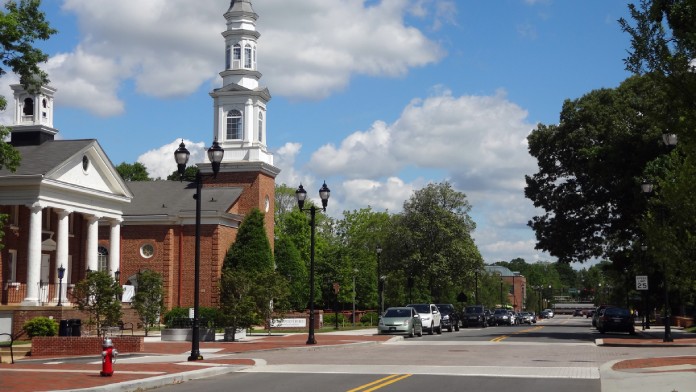
Cary is one of the largest municipalities in Wake County and among the most affluent suburbs in the Raleigh-Durham Research Triangle. Our directory lists 10 treatment providers in and around the town, weighted toward inpatient and outpatient care. For programs beyond the town limits, you can also browse the full North Carolina rehab directory, which includes the wider Triangle.
Local care is anchored by WakeMed Cary Hospital, part of the WakeMed system that also runs a community drug take-back program, alongside nearby Triangle hospitals and outpatient providers. Wake County publishes a detailed annual overdose profile and has moved to put naloxone in every county school. When comparing programs, it helps to understand the full range of addiction treatment options before deciding.
Wake County’s overdose death rate has consistently run below the statewide rate, but fentanyl remains the primary driver of local deaths, increasingly mixed with xylazine, an animal tranquilizer that naloxone does not reverse. That makes access to naloxone, drug-checking, and timely treatment important even in lower-rate communities. If synthetic opioids are part of your situation, our overview of fentanyl addiction and overdose risk explains what to watch for.



Cost of Rehab in Cary
The cost of treatment in Cary varies by the level of care you need, how long you stay, and whether you use insurance. Statewide averages give a useful starting point for what different types of care tend to cost in North Carolina before insurance is applied. Verifying your benefits early is one of the most effective ways to lower what you pay out of pocket, and our guide to using insurance for rehab walks through how to do that.
Cary has one of the higher costs of living in the state, and its treatment market leans toward private insurance and self-pay, so local prices can run at or above these North Carolina averages, particularly for residential care. Rather than focusing on a single sticker price, it helps to weigh cost against the level of care that fits your situation, since inpatient and outpatient programs occupy very different points on the price range. Several factors influence the final number:




How to Pay for Rehab in Cary
Cost should not be the reason someone goes without care. Among the 10 Cary facilities in our directory, payment leans heavily toward self-payment and private insurance, with fewer programs accepting public coverage than in most North Carolina cities. Verifying your benefits early is especially important here. The cards below show how many local facilities report accepting each payment type.


Medicaid
North Carolina expanded Medicaid to more adults ages 19 through 64 in December 2023, which broadened access to substance use treatment across the state. Only one Cary facility in our directory accepts North Carolina Medicaid, so residents relying on Medicaid may find more options in nearby Raleigh or elsewhere in Wake County. Coverage includes medications for opioid use disorder; our guide to medication-assisted treatment explains how it works.
Medicare
Medicare covers addiction treatment for eligible adults aged 65 and older and for some younger people with qualifying disabilities. Coverage spans inpatient care, outpatient services, and medications used in treatment. One Cary facility in our directory reports accepting Medicare, so confirm what applies to you and consider nearby Triangle programs before you enroll.
Insurance and Private Pay
Five Cary facilities accept private health insurance and five accept self-payment, the backbone of the local market. Under federal parity rules, most plans cover addiction treatment at the same level as other medical care, but your actual cost depends on your plan, deductible, and whether a program is in network. Verifying benefits before admission is the single best way to avoid a surprise bill.
Other Low-Cost Options
Options for people without robust insurance are more limited in Cary than in lower-cost parts of the state, though one local program offers financing and another uses sliding-scale pricing. Wake County’s publicly funded behavioral health system, coordinated through the Alliance Health LME/MCO, extends care to uninsured residents who meet eligibility criteria, and people who need help covering a specific program can explore rehab scholarships as another route to care. Many major insurance carriers are accepted across Cary facilities, including:
- Blue Cross Blue Shield of North Carolina
- Aetna
- Cigna
- UnitedHealthcare
- Humana
- Ambetter
Levels of Care Available in Cary
Cary offers care across the core levels, with a notable concentration of inpatient and outpatient programs for a town its size. Our directory lists 2 detox facilities, 5 inpatient rehab programs, and 8 outpatient clinics. The cards below show what is available locally.



Care often begins with medical detox, where withdrawal is managed under supervision. From there, some people choose inpatient or residential treatment for structured, round-the-clock support, while others use outpatient programs to receive care while keeping up with work or family. Half of the local programs treat co-occurring conditions such as depression alongside addiction, and planning for aftercare from the start makes lasting recovery more likely.
Specialty Programs in Cary
Cary’s providers report a focused set of specialty programs. The counts below reflect the options most commonly offered locally.





Five programs treat alcohol use disorder, the most common single focus locally, and three address opioid use disorder. Four programs work with young adults, and support for young adult and college student substance use is available given the Triangle’s large student population. Gender-specific tracks round out the local specialty options.
Free and Low-Cost Rehab Resources in Cary
Beyond the facilities in our directory, Cary residents can draw on Wake County and statewide resources for immediate help, harm reduction supplies, or a way into publicly funded treatment. If you or someone you know is in crisis, help is available right now. Reaching out to a crisis support line is a safe first step.
Crisis and Helplines
- 988 Suicide and Crisis Lifeline: call or text 988 any time for free, confidential help during a substance use or mental health crisis.
- Hope4NC Helpline: 1-855-587-3463, a free, confidential 24/7 line for emotional support, counseling referrals, and community resources across North Carolina.
- SAMHSA National Helpline: 1-800-662-HELP (4357), a free, confidential, 24/7 treatment referral line in English and Spanish.
- NC 211: dial 211 to connect with local health, housing, and recovery resources across Wake County.
Local Treatment and Recovery
- Alliance Health (LME/MCO): coordinates publicly funded substance use and mental health services for Medicaid members and uninsured residents in Wake County.
- WakeMed Cary Hospital: the town’s main hospital, offering emergency and behavioral health services and a community drug take-back program.
Harm Reduction and Naloxone
- North Carolina Harm Reduction Coalition and naloxonesaves.org: mail free naloxone statewide and connect residents to harm reduction and treatment services.
Drug and Alcohol Use Statistics in Cary
Wake County’s substance use data shows a comparatively lower overdose burden than most of the state, even as fentanyl continues to drive local deaths. County health officials track the crisis closely and have expanded naloxone access, including in schools.
A lower rate does not mean no risk: xylazine-adulterated fentanyl and the wide reach of the drug supply keep naloxone and treatment access relevant for Cary families. For a broader look at how these figures compare nationally, see our overview of national substance use statistics.
Resources
- North Carolina Department of Health and Human Services. (2026). North Carolina Overdose Epidemic Data. https://www.dph.ncdhhs.gov/programs-services/chronic-disease-and-injury/injury-and-violence-prevention-branch/north-carolina-overdose-epidemic-data
- Wake County. (2025). 2024 Wake County Drug Overdose Integrated Epidemiologic Profile. https://www.wake.gov/
- UNC Street Drug Analysis Lab. (2024). North Carolina Drug Supply Sample Testing. https://uncstreetdrug.org/
- USAFacts. (2026). How many drug overdose deaths happen every year in North Carolina? https://usafacts.org/answers/how-many-drug-overdose-deaths-happen-every-year-in-the-us/state/north-carolina/
- WakeMed. Drug Take-Back Program. https://www.wakemed.org/patients-and-visitors/drug-take-back-program
- North Carolina Department of Health and Human Services. Substance Use Disorders. https://www.ncdhhs.gov/divisions/mental-health-developmental-disabilities-and-substance-use-services/substance-use-disorders
- North Carolina Harm Reduction Coalition. Naloxone Access. https://www.nchrc.org/