



How We Rank Listings
Every facility on this page is a licensed or accredited provider drawn from public treatment registries and verified against state licensing records. We prioritize centers that hold recognized third-party accreditation, list a verifiable physical address in or near Delray Beach, and disclose the levels of care and payment options they accept.
Our listings are organized to help you compare providers on the factors that matter most when choosing care: level of care, accepted insurance and payment types, accreditation status, and specialty programs. We do not accept payment for higher placement, and inclusion is not an endorsement of any single provider.
Because a person’s needs change across the course of treatment, we surface the full continuum available locally, from medical detox through outpatient and sober living, so you can plan for each stage.
- Verified state licensing and recognized accreditation such as the Joint Commission or CARF
- A confirmed physical location serving the Delray Beach area
- Transparent disclosure of levels of care, specialty programs, and accepted payment types
Rehab in Delray Beach: What to Know
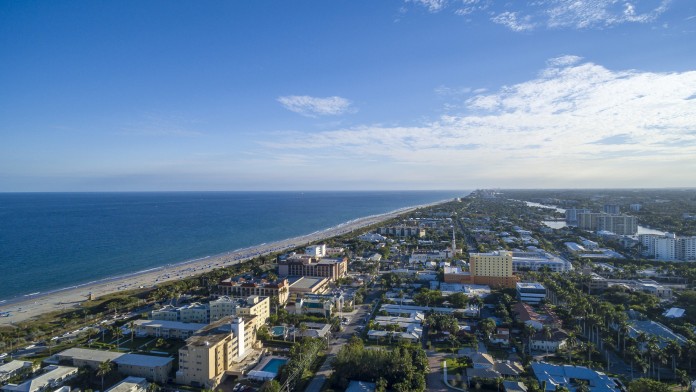
Delray Beach sits in southern Palm Beach County, on the Atlantic coast between Boynton Beach and Boca Raton, with a population of roughly 65,000. Few cities its size carry the treatment history that Delray Beach does. A 2007 New York Times article named it the recovery capital of the country, and the label stuck as people from across the U.S. came for its year-round climate, active 12-step community, and the step-down “Florida model” of care that moves people from residential treatment into sober living and part-time work.
That reputation is a genuine local asset. The density of meetings, alumni networks, and recovery residences here is unusual for a town this size.
The same history has a harder side. Through the 2010s, Palm Beach County became the epicenter of Florida’s overdose crisis, and Delray Beach in particular drew scrutiny for unregulated sober homes and insurance fraud schemes known locally as “patient brokering” and the “Florida shuffle.”
The Palm Beach County State Attorney’s Sober Homes Task Force, launched in 2016, has since made scores of arrests and convictions targeting those practices, and city ordinances now require recovery residences to hold independent certification.
For someone searching today, the practical takeaway is to confirm a provider’s licensing and accreditation before committing, which is exactly what the listings on this page are screened for.
The 35 facilities serving Delray Beach cover the full continuum of addiction treatment options, from medically supervised detox through residential, partial hospitalization, standard outpatient, and structured sober living. Dual diagnosis care is widely available, reflecting how often local providers treat substance use alongside co-occurring mental health conditions.
Opioids remain the substance most reflected in recent county data, though alcohol continues to be the most frequently identified substance in fatal overdoses statewide. Anyone weighing opioid use disorder treatment locally will find that most Delray Beach programs offer medication support and integrate it with therapy and aftercare planning.
Cost of Rehab in Delray Beach
Treatment costs in Delray Beach track the broader Florida market, where the average total cost of a residential rehab program runs about $56,640 per person according to the National Center for Drug Abuse Statistics.
Actual costs vary widely by level of care, length of stay, and amenities. Delray Beach is home to a large share of the region’s luxury and beachfront facilities, so private-pay rates at the high end of the market can sit at or above the state average, while accredited standard programs and sliding-scale providers offer considerably lower-cost paths. Verifying insurance benefits before admission is the single biggest factor in what you actually pay.
Because Delray Beach is in a higher cost-of-living area of South Florida, private residential and luxury programs tend to price at or above these state benchmarks. Insurance coverage, sliding-scale fees, and scholarships can substantially lower out-of-pocket costs.
Verifying your benefits and confirming a facility’s in-network status before you commit is the most reliable way to reduce your out-of-pocket expenses.



How to Pay for Rehab in Delray Beach
Of the 35 facilities serving Delray Beach, most accept some combination of self-payment, private insurance, and public coverage. Under the Affordable Care Act, health plans must cover substance use disorder treatment as an essential health benefit, so verifying your specific benefits is usually the first step toward affordable care.
The breakdown below shows how many local facilities accept each payment type.




Coverage and cost-reduction options differ by facility, so it helps to understand how each payment path works before you call a provider.
Medicare
Medicare covers medically necessary addiction treatment for eligible older adults and people with qualifying disabilities. Part A helps with inpatient hospital-based care, while Part B covers outpatient services such as counseling and screening. Four Delray Beach facilities accept Medicare.
Coverage details depend on your plan, so confirm benefits with the provider and review how Medicare covers addiction treatment before scheduling an assessment.
Medicaid
Florida Medicaid covers substance use disorder services including detox, outpatient care, and some residential treatment for eligible residents. Five Delray Beach facilities accept Florida Medicaid.
It is worth noting that Florida has not expanded Medicaid, so low-income adults without dependent children may find eligibility limited and should ask providers about county-funded and sliding-scale alternatives. Many programs that accept Medicaid also provide medication-assisted treatment for opioid and alcohol use disorders.
Military Benefits
Seven Delray Beach facilities accept TRICARE, which covers substance use treatment for active-duty service members, retirees, and eligible family members. Veterans may also qualify for care through the VA. Ask the provider whether they bill TRICARE directly and what documentation you will need.
Insurance and Private Pay
Thirty Delray Beach facilities accept private health insurance, and 34 accept self-payment. Because Delray Beach has a high concentration of private and luxury programs, many centers work primarily with PPO plans that allow out-of-network care. Confirm whether a facility is in-network with your plan, since that choice has the largest effect on your out-of-pocket cost.
Other Low-Cost Options
Seven Delray Beach facilities offer sliding-scale fees, three offer financial assistance, and three offer financing plans. Sliding-scale pricing adjusts fees based on income, making treatment more accessible for people paying out of pocket. County-funded programs through Florida’s regional Managing Entities and federally qualified health centers provide additional lower-cost options for uninsured residents.
Free Treatment Programs
None of the 35 listed Delray Beach facilities report offering fully free treatment to all clients, but scholarships and charity care can reduce or eliminate costs at some programs. Learn how rehab scholarships work and ask providers directly whether scholarship beds are available.
- Aetna
- Blue Cross Blue Shield of Florida
- Cigna
- Florida Blue
- Humana
- TRICARE
- UnitedHealthcare
- Florida Medicaid
- Medicare
Levels of Care Available in Delray Beach
Delray Beach offers a full continuum of care, with 17 medical detox facilities, 23 inpatient rehab programs, 9 partial hospitalization programs, and 30 standard outpatient clinics. This depth, paired with 18 sober living homes, is what gives the local “step-down” model its reputation.


Medical detox provides supervised withdrawal management, often the first step for people with alcohol or opioid dependence. Delray Beach’s 17 detox facilities offer 24/7 monitoring and medication support to keep withdrawal safe and comfortable. Read more about what to expect during medical detox.
Inpatient rehab offers structured, live-in care with round-the-clock clinical support, typically over 30 to 90 days. The city’s 23 residential programs range from standard accredited facilities to luxury beachfront settings. Learn how residential treatment works.
Partial hospitalization programs deliver intensive daytime treatment, usually six to eight hours a day several days a week, while allowing people to return home or to sober living at night. Delray Beach has 9 PHP options.
Standard outpatient care is the most flexible option, letting people keep work and family commitments while attending scheduled sessions. With 30 outpatient clinics, Delray Beach has the widest availability at this level. Explore outpatient rehab options.
Dual diagnosis programs treat substance use and co-occurring mental health conditions together. Twenty-seven local facilities offer integrated care, which matters because untreated conditions like co-occurring depression or anxiety frequently drive relapse.
Sober living homes bridge the gap between treatment and independent life. Delray Beach’s 18 recovery residences are central to the local model, though it remains important to choose a certified home. See our guide to rehab aftercare.
Specialty Programs in Delray Beach
Beyond general treatment, many Delray Beach facilities tailor care to specific populations. The counts below reflect how many local programs offer each specialty track.






Thirty-two Delray Beach programs treat alcohol use disorder, and 30 treat opioid use disorder, the two substances most represented in local and statewide treatment demand. Seven facilities provide LGBTQ+ affirming addiction care, and six offer rehab resources for veterans and military members. Twenty-seven programs serve young adults, a group well matched to Delray Beach’s active recovery and alumni community, which can help sustain young adult and college student substance use recovery.
Free and Low-Cost Rehab Resources in Delray Beach
Cost should not be a barrier to getting help. Palm Beach County offers a network of free and low-cost resources for crisis support, harm reduction, and treatment access. The county’s 211 helpline alone fielded roughly 37,000 mental health and addiction-related calls across 2022 and 2023.
This is a reflection of both the local need and the infrastructure built to meet it. If you or someone you love is in crisis, crisis support is available 24/7 through the resources below.
Crisis and Helplines
- 988 Suicide & Crisis Lifeline
https://988lifeline.org/
Dial or text 988 for free, confidential, 24/7 crisis support. - 211 Palm Beach and Treasure Coast
https://211palmbeach.org/
Dial 2-1-1, or text your ZIP code to 898211, for 24/7 crisis counseling and referrals to local mental health and addiction services. - SAMHSA National Helpline
https://www.samhsa.gov/
1-800-662-HELP (4357), a free, confidential, 24/7 treatment referral and information service. - NAMI Palm Beach County HelpLine
https://namipbc.org/crisis-info/
1-800-950-NAMI (6264), or text “HELPLINE” to 62640, for mental health support and family programs.
County Health and Harm Reduction
- Florida Department of Health in Palm Beach County
https://palmbeach.floridahealth.gov/
Runs the county’s Overdose Data to Action (OD2A) program and overdose surveillance dashboard. Contact [email protected] for prevention resources. Visit palmbeach.floridahealth.gov. - Health Care District of Palm Beach County
https://www.hcdpbc.org/
Offers free grab-and-go Narcan (naloxone) at its clinics to help reverse opioid overdoses. Visit hcdpbc.org.
Government and Low-Cost Treatment
- Florida’s Managing Entities
https://flmanagingentities.com/
County-funded programs offer free or sliding-scale treatment based on income for uninsured residents. Contact 211 for a referral to the regional Managing Entity serving Palm Beach County. - Federally Qualified Health Centers
Provide low-cost or free outpatient addiction and behavioral health services on a sliding scale. Find a location at findahealthcenter.hrsa.gov.
Drug and Alcohol Use Statistics in Delray Beach
Delray Beach’s treatment landscape exists against the backdrop of Florida’s overdose crisis, though recent data show meaningful improvement.
According to the Florida Medical Examiners Commission’s 2024 Annual Drug Report, total drug-related deaths statewide fell 14% and opioid-related deaths fell 26% compared with 2023, a decline that Palm Beach County officials credit in part to broader Narcan access and the local Sober Homes Task Force. The figures below place Delray Beach in county and state context.
Fentanyl continues to drive the majority of fatal overdoses, both statewide and in Palm Beach County, which is why local providers emphasize medication support and harm reduction alongside treatment.
Anyone concerned about fentanyl overdose risk should carry naloxone, available free through the county Health Care District. For national context on how these figures compare, see our national substance use statistics.
Resources
- National Center for Drug Abuse Statistics. (2024). Cost of Rehab. https://drugabusestatistics.org/cost-of-rehab/
- Florida Department of Law Enforcement, Medical Examiners Commission. (2025). Drugs Identified in Deceased Persons: 2024 Annual Drug Report. https://www.fdle.state.fl.us/
- Palm Beach County Behavioral Health and Substance Use Change and Opioid Response Division. (2024). Behavioral Health and Substance Use Disorder Plan 2024. https://discover.pbc.gov/communityservices/BHSUCOD/
- Florida Department of Health in Palm Beach County. (2025). Data About the Overdose Epidemic: Overdose Data to Action (OD2A). https://palmbeach.floridahealth.gov/programs-and-services/OD2A/
- Office of the State Attorney, 15th Judicial Circuit. (2022). Palm Beach County Bucks Statewide Trend: Latest Data Show Decrease in Opioid Overdose Deaths. https://sa15.org/press_release/data-shows-decrease-in-opioid-overdose-deaths/
- NAMI Palm Beach County. (2025). Overdose Awareness: Honoring Lives, Confronting Stigma, Building Hope. https://namipbc.org/overdose-awareness-2025/
- Substance Abuse and Mental Health Services Administration. (2024). National Helpline. https://www.samhsa.gov/find-help/national-helpline