




Expert Insights
Rhode Island was the first state to legalize supervised drug consumption sites.
Now, Providence is seeking to open the first of these. Some believe this site will reduce the number of drug overdoses in the area. I believe it will only encourage drug use and cause other problems for the city.
How can we expect this to go anywhere good, when we make it easier for people to get high and continue their unhealthy patterns of substance abuse? Don’t we want to stop drug use, reduce crime, and free people from addiction?
Instead, we’re building a place with the express purpose of getting high. Harm reduction, they say? I say harm-inflicting – to those who are struggling with addiction, and to the surrounding city.
How We Rank Listings
Every facility on this page is scored the same way, so families can compare Providence rehab centers on the details that matter instead of on advertising spend.
Our Rehab Score combines a center’s operational history, verified accreditations, accepted payment types, licensing status, and recent client feedback into a single quality signal that reflects where a program stands today, not years ago.
We give weight to independent accreditation from the Joint Commission and CARF, current state licensing through Rhode Island’s behavioral health authority, and transparency around cost and insurance.
Listings are refreshed as new information becomes available, and sponsored placements are labeled as such. A higher score points you toward well-documented, accountable programs, but it does not replace a conversation with the facility about your specific situation.
Rehab in Providence: What to Know
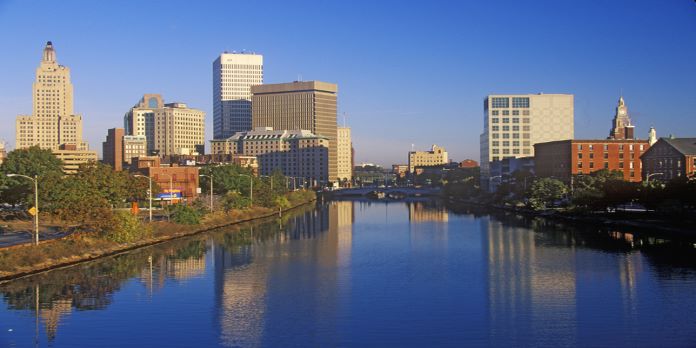
Providence is Rhode Island’s capital and by far its largest city, home to roughly 190,000 residents and anchoring a metro area of more than 1.6 million people that stretches across the state line into Massachusetts.
Because Rhode Island’s five counties carry no administrative role, addiction treatment here is coordinated at the state level rather than by a county behavioral health department, primarily through the Rhode Island Department of Behavioral Healthcare, Developmental Disabilities and Hospitals (BHDDH) and the Rhode Island Department of Health.
That centralized structure means a person searching in Providence can reach most of the state’s addiction treatment options within a short drive. You can also browse the full statewide network on the Rhode Island rehab directory.
The 30 facilities listed in Providence cover the full range of care, from medical detox through residential and outpatient programs, and many are clustered near the city’s major hospital systems and Brown University’s academic medical footprint.
AdCare, one of the region’s larger providers, operates both residential and outpatient services in the area, and several programs sit within the South Providence and downtown corridors served by public transit.
Opioids are the driving force behind the local crisis, though the picture is shifting. Statewide, cocaine surpassed fentanyl as the most frequently detected substance in fatal overdoses in 2024, and about half of overdose deaths now involve prescription drugs alone or in combination with illicit ones.
Providence has historically had one of the highest fatal overdose rates of any Rhode Island municipality, second only to Woonsocket, which is part of why the city and state have concentrated harm reduction and opioid use disorder services here.
Rhode Island recorded 219 accidental overdose deaths in 2025, down from 329 in 2024 and a decade high of 436 in 2022, a roughly 50% drop that put the state past its 2030 reduction goal years early. Wide naloxone distribution, expanded treatment access, and street outreach in Providence neighborhoods are among the reasons state epidemiologists cite for the decline.
Cost of Rehab in Providence
Rhode Island ranks 41st nationally for addiction treatment affordability, with a blended average cost of about $58,755 before insurance. Providence tracks closely with the statewide figure.
Because the raw averages below are dominated by the price of medical detox and long-term residential care, most people who use outpatient rehab or intensive outpatient programs pay a small fraction of these numbers. Insurance, sliding-scale fees, and state funding lower the real out-of-pocket cost substantially for most families.
Given Providence’s position as the state’s highest-cost-of-living metro, treatment prices here sit at or slightly above the Rhode Island averages, but no single figure fits every case. Cost depends on the factors below, and verifying your rehab benefits before you commit is the single most effective way to understand what you will actually pay.




How to Pay for Rehab in Providence
Of the 30 treatment facilities listed in Providence, most accept more than one form of payment, so the cost of care rarely comes down to a single option. Self-payment, private insurance, Rhode Island Medicaid, and Medicare are all widely accepted, and a smaller set of programs offer financial assistance, sliding-scale fees, or TRICARE for military families.






The right payment path usually depends on your coverage and household situation. The breakdown below covers the options most Providence residents use.
Medicare
Twelve Providence facilities accept Medicare, which covers medically necessary addiction treatment for adults 65 and older and for some younger residents with qualifying disabilities.
Coverage typically includes inpatient hospital detox, outpatient counseling, and prescriptions used in treatment. If you or a parent is enrolled, confirm which parts of a program Medicare will cover before admission; our guide to using insurance for rehab explains how the benefit periods work.
Medicaid
Nineteen Providence programs accept Rhode Island Medicaid (Medical Assistance), the state’s largest single payer for substance use treatment.
Rhode Island Medicaid covers detox, inpatient and outpatient care, and medication-assisted treatment such as methadone and buprenorphine, which are central to opioid recovery in the state. Eligibility is based on income, and enrollment is open year-round for those who qualify.
Military Benefits
Ten Providence facilities accept TRICARE, and both active-duty service members and veterans have additional options through the VA. Rhode Island veterans can also access care through the Providence VA Medical Center. See our rehab resources for veterans for details on how military benefits coordinate with civilian treatment.
Insurance and Private Pay
Twenty-three Providence programs accept private health insurance, and most in-state carriers must cover substance use treatment as an essential health benefit. Twenty-six facilities accept self-payment for those who are uninsured or prefer not to use benefits. Many centers will verify your plan at no cost and tell you your expected share before you enroll.
Other Low-Cost Options
Fourteen Providence facilities offer some form of financial assistance, four use sliding-scale fees tied to income, and four offer financing plans that spread payments over time. These options can bring residential care within reach for families who would otherwise be priced out.
Free Treatment Programs
At least one Providence facility offers fully free treatment, and BHDDH funds additional state-supported services, including recovery housing, for qualifying residents. If cost is the main barrier, rehab scholarships and state-funded programs are worth pursuing before ruling out treatment.
Major insurance carriers accepted across Providence-area facilities include:
- Aetna
- Blue Cross Blue Shield of Rhode Island
- Cigna
- Neighborhood Health Plan of RI
- Tufts Health Plan
- UnitedHealthcare
- Rhode Island Medicaid
- Medicare
- TRICARE
Levels of Care Available in Providence
Providence offers the full continuum of addiction care, with 15 medical detox facilities, 21 inpatient rehab programs, and 25 standard outpatient clinics among the 30 centers listed. The right starting point depends on the substance involved, the severity of dependence, and whether a co-occurring mental health condition is present.




Medical detox is usually the first step for anyone physically dependent on alcohol, opioids, or benzodiazepines, since withdrawal from these substances can be dangerous without supervision. Providence’s 15 detox facilities provide supervised detox with medical monitoring to manage symptoms safely.
Inpatient rehab follows detox for many people, offering structured, live-in care that removes daily triggers. The city’s 21 residential treatment programs typically run 30 to 90 days.
Outpatient care lets people live at home while attending scheduled treatment sessions. With 25 clinics, intensive outpatient programs and standard outpatient services are the most widely available level of care in Providence and often the most affordable.
Dual diagnosis programs treat addiction alongside conditions like depression or anxiety. Eighteen Providence facilities offer this integrated approach, which matters because untreated co-occurring depression is a common driver of relapse.
Medication-assisted treatment is a cornerstone of opioid recovery in Rhode Island, combining medications like methadone and buprenorphine with counseling. Ask any prospective program whether it offers medication-assisted treatment if opioids are involved.
Sober living and aftercare support the transition back to daily life. Two sober living homes are listed in Providence, and BHDDH funds additional recovery housing statewide; planning continuing care before discharge improves long-term outcomes.
Specialty Programs in Providence
Beyond general treatment, many Providence facilities tailor care to specific populations. Sixteen programs each offer dedicated women’s and men’s tracks, 18 serve young adults, and 10 provide programming designed for older adults. Substance-specific and identity-affirming options are available as well.






The 21 alcohol-focused programs address the most common substance use disorder in the state, and treatment for alcohol use disorder often begins with medically supervised detox. The 15 opioid rehab programs reflect the ongoing need for opioid use disorder care that pairs medication with counseling.
Three programs offer LGBTQ+ affirming addiction care, and three provide dedicated care for veterans and military members. Providence’s large student population also makes young adult and college student substance use services locally relevant, with campus recovery programs at Brown University, the University of Rhode Island, and Rhode Island College.
Free and Low-Cost Rehab Resources in Providence
Providence has one of the most developed harm reduction and free-support networks in New England, much of it coordinated through the state’s Prevent Overdose RI initiative. The resources below are free or low-cost and open to residents regardless of insurance status. If you or someone you know is in immediate danger, call 911.
Crisis and Helplines
- 988 Suicide and Crisis Lifeline:
https://988lifeline.org/
Free, confidential support during a mental health or substance use crisis. See our crisis support resources for what to expect. - SAMHSA National Helpline:
https://www.samhsa.gov/find-help/helplines/national-helpline
Free, confidential, 24/7 treatment referral and information in English and Spanish. - RI Hope and Recovery Line
https://hoperecoverycenter.org/our-services/centers.html
Connects Rhode Islanders to treatment and state-funded recovery housing through BHDDH. - Rhode Island 211
https://www.unitedwayri.org/get-help/2-1-1/
Dial 211 to reach food, housing, healthcare, veterans’ services, and substance use referrals across the state.
Harm Reduction
- Project Weber/RENEW
https://weberrenew.org/
Distributes free naloxone, fentanyl test strips, sterile syringes, and safer-use supplies at its South Providence drop-in center and through street outreach, plus peer recovery coaching and treatment referrals. - AIDS Care Ocean State / ENCORE
https://aidscareos.org/services/prevention-center/needle-exchange
Rhode Island’s sterile needle exchange program, with a mobile outreach team providing free needles, HIV and hepatitis C testing, and treatment referrals statewide. - Prevent Overdose RI
https://preventoverdoseri.org/
Free naloxone by mail and a statewide map of harm reduction vending machines and participating pharmacies. preventoverdoseri.org/get-naloxone
City and State Services
- City of Providence Substance Use Disorder Prevention and Behavioral Health Office
https://www.providenceri.gov/healthy-communities/substance-abuse-prevention-mental-health/
Local prevention programming, free naloxone access, and medication drop-box locations. providenceri.gov - BHDDH State-Funded Recovery Housing
https://dbh.ohio.gov/supporting-providers/housing-providers/recovery-housing-residences/statewide-registry
State-supported recovery residences for residents with a history of substance use disorder; a waitlist may apply.
College and Student Services
- Brown University Donovan Program
https://college.brown.edu/
Collegiate recovery support for students. - University of Rhode Island AODE Program
https://web.uri.edu/healthservices/health-promotion/aode/
Alcohol and other drug education, support groups, and outreach for students. - Rhode Island College RICovery
https://our.ric.edu/news-events/news/ricovery-resource-students-dealing-substance-abuse
Student-led peer recovery support with weekly meetings and overdose prevention education.
Drug and Alcohol Use Statistics in Providence
Rhode Island’s overdose numbers have improved sharply, but the crisis remains concentrated in Providence and the state’s other urban centers.
The most striking recent shift: statewide overdose deaths fell to 219 in 2025, a 50% drop from the 2022 peak that carried the state past its 2030 reduction target. The figures below place Providence in that statewide context.
The data also shows a changing drug supply. Cocaine surpassed fentanyl as the most frequently detected substance in fatal overdoses statewide in 2024, and opioids continue to drive the majority of deaths, which is why opioid addiction treatment and naloxone access remain central to Providence’s response. For national context on how Rhode Island compares, see our overview of national substance use statistics.
Resources
- Office of the Governor, State of Rhode Island. (2026). Rhode Island Surpasses 2030 Goal as Overdose Deaths Continue to Decline. https://governor.ri.gov/press-releases/rhode-island-surpasses-2030-goal-overdose-deaths-continue-decline
- Rhode Island Department of Health. (2024). Rhode Island Overdose Deaths Decreased 7.3% in 2023. https://www.ri.gov/press/view/47787
- Rhode Island Current. (2024). Accidental overdose deaths in R.I. down 7.3% in 2023, marking first decline in four years. https://rhodeislandcurrent.com/2024/07/10/accidental-overdose-deaths-in-r-i-down-7-3-in-2023-marking-first-decline-in-four-years/
- U.S. Census Bureau. (2024). QuickFacts: Providence city, Rhode Island. https://www.census.gov/quickfacts/fact/table/providencecityrhodeisland
- Rhode Island Department of Health. (2026). Addiction and Overdose. https://health.ri.gov/addiction-overdose
- Prevent Overdose RI. (2024). Harm Reduction: For People Who Use Drugs. https://preventoverdoseri.org/people-who-use-drugs/
- Project Weber/RENEW. (2026). Harm Reduction. https://weberrenew.org/harm-reduction/
- City of Providence. (2026). Substance Use Disorder Prevention and Behavioral Health. https://www.providenceri.gov/healthy-communities/substance-abuse-prevention-mental-health/
- Substance Abuse and Mental Health Services Administration. (2025). National Helpline. https://www.samhsa.gov/find-help/national-helpline