



Expert Insights
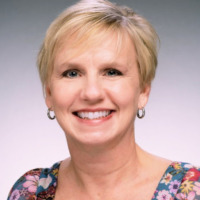
One principle that people often get confused about is harm reduction, mainly because there is no single definition of or specific set of rules for implementing these strategies. From claims that harm reduction enables substance abusers to assumptions that harm reduction tools actually make addiction worse, it’s important to make sure people have accurate information to make informed decisions about these tools and efforts.
Harm reduction is a set of strategies and ideas meant to reduce the negative consequences of drug use. Born out of a movement that centers around the belief that people who use drugs have rights and deserve to be respected as human beings. It relies on a wide variety of tools and plans that attempt to create safer drug use, supervised drug use, total abstinence and harm reduction is the poster child for “meeting people where they’re at.”
Our directory listings are organized to help you quickly and confidently compare drug and alcohol treatment providers in Albuquerque. We prioritize facilities that hold recognized third-party accreditation, such as accreditation from the Joint Commission or CARF, along with current state licensure and verified LegitScript certification where applicable. Listings reflect the levels of care each facility offers, the substances and populations it serves and the insurance and payment types it accepts. Verified and independently reviewed profiles are surfaced ahead of unverified ones. We regularly review profile data against public records and provider submissions, and we do not sell placement in a way that overrides these quality signals. When information cannot be confirmed, we omit it rather than guess, so you can evaluate each Albuquerque option on facts that matter to your care.
Rehab in Albuquerque: What to Know
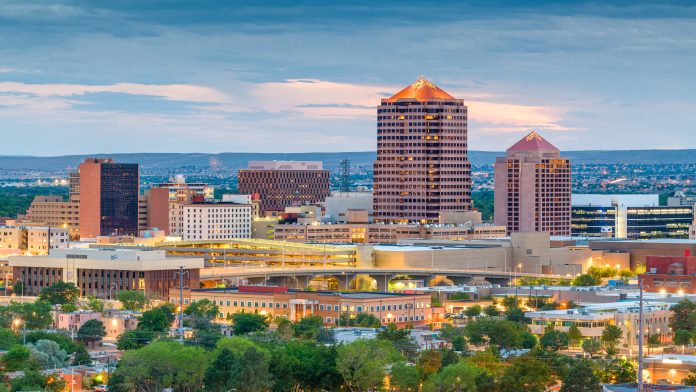
Albuquerque is the county seat of Bernalillo County and the largest city in New Mexico, with an estimated 557,161 residents in 2024 and roughly 676,444 people countywide as of the 2020 U.S. Census. It anchors the four-county Albuquerque metropolitan statistical area, which the U.S. Census Bureau estimated at 926,303 residents in 2024. This concentration of people, health systems and public agencies is why the city holds 64 of the treatment facilities in our New Mexico directory. You can compare providers statewide through our New Mexico drug and alcohol rehab directory.
Albuquerque residents can draw on an unusually deep public and academic behavioral health network. The University of New Mexico Hospital and UNM Health operate the state’s largest community behavioral health provider, the UNM Psychiatric Center, and Presbyterian Healthcare Services runs major hospital and health-plan operations in the metro. Bernalillo County operates its own Department of Behavioral Health Services through the CARE Campus, which provides medically monitored withdrawal, residential care and crisis stabilization regardless of a person’s ability to pay. The county and city also run initiatives such as Law Enforcement Assisted Diversion (LEAD) and the Keep NM Alive fentanyl-awareness campaign.
Substance use pressures here are serious and specific. Through its Operation Engage Albuquerque program, the U.S. Drug Enforcement Administration states that local DEA officials have identified illicit fentanyl as the top drug threat in Albuquerque, and a 2024 Bernalillo County and City of Albuquerque opioid-settlement plan reported that the county experienced the highest number of overdose deaths in the state. Kirtland Air Force Base, on the city’s southeast side, also adds a substantial military and veteran population whose treatment needs shape local services.
Cost of Rehab in Albuquerque
No verified Albuquerque-specific price estimate was available for this page, so the figures below reflect New Mexico statewide averages compiled by the National Center for Drug Abuse Statistics. Because the Albuquerque metro’s cost of living sits close to the New Mexico average, local prices generally track at or near these statewide numbers rather than far above or below them. Treat these as planning ranges, not quotes; your actual cost depends on your care level, length of stay and coverage.
Several factors move your final cost up or down. Reviewing them before you call a facility helps you ask better questions, and our guide to rehab cost without insurance explains options if you are paying out of pocket. Methadone and other medication-based programs are billed differently from residential care; see our overview of methadone treatment for how those costs work.





How to Pay for Rehab in Albuquerque
Most Albuquerque facilities accept more than one form of payment, and many combine coverage sources to make care affordable. The cards below show how many of the city’s 64 facilities accept each payment type, followed by details on the options residents use most.









Self-Pay
Paying directly is the most widely accepted option in Albuquerque, with 55 facilities taking self-payment. Self-pay can give you more choice of program and faster admission, and many centers pair it with financing or sliding-scale discounts.
Private Insurance
Private plans are accepted at 43 local facilities. Major carriers active in New Mexico include Presbyterian Health Plan, Blue Cross Blue Shield of New Mexico, Molina Healthcare of New Mexico and Western Sky Community Care. Under federal parity rules, most plans must cover substance use treatment comparably to other medical care; verify your specific benefits before admission.
New Mexico Medicaid (Centennial Care)
New Mexico Medicaid, known as Centennial Care and administered by the New Mexico Health Care Authority, is accepted at 30 Albuquerque facilities and funds a large share of substance use treatment statewide. Centennial Care covers detox, residential and outpatient care and medications for opioid use disorder, including buprenorphine and methadone. Our guide to Medicaid rehab coverage explains eligibility and what to expect.
Medicare
Medicare is accepted at 14 Albuquerque facilities and helps older adults and some people with disabilities cover assessment, counseling and medication treatment. Learn what is included in our overview of Medicare rehab coverage.
Sliding-Scale and Financial Assistance
Ten Albuquerque facilities set fees on a sliding scale based on income, and 15 offer some form of financial assistance. These options, sometimes funded by federal block grants, can substantially lower costs for uninsured or underinsured residents.
Payment Plans and Financing
Eleven facilities offer financing or structured payment plans, letting you spread the cost of treatment over time rather than paying up front.
Free and State-Funded Programs
Five Albuquerque facilities provide free treatment, and county-run programs such as the Bernalillo County CARE Campus serve residents regardless of ability to pay.
Military Benefits
With Kirtland Air Force Base in the city and a large veteran population, military coverage matters in Albuquerque, and 11 facilities accept TRICARE. Veterans may also receive care directly through the VA. See our military and veterans addiction resources for more.
Levels of Care in Albuquerque
Effective treatment is a continuum, and most people move through more than one level as they stabilize. The cards below show how many Albuquerque facilities offer each level of care, and our guide to the full addiction treatment continuum explains how they fit together.





Medical Detox
Thirty-seven Albuquerque facilities provide detox, the supervised management of withdrawal. Because alcohol and opioid withdrawal can be dangerous, medically supervised detox is often the first step before ongoing treatment.
Inpatient and Residential Care
Thirty-one facilities offer inpatient rehab, in which you live on-site and receive structured, round-the-clock support. This level suits people with severe substance use disorders or unstable home environments.
Outpatient, PHP, and IOP
Outpatient care is the most widely available level in Albuquerque, offered by 55 facilities, while one facility offers a partial hospitalization program and an intensive outpatient program. Outpatient options let you keep working or caring for family while attending therapy.
Co-Occurring Disorders
Thirty-five facilities treat co-occurring mental health and substance use conditions together, an integrated approach associated with stronger outcomes. Opioid-focused programs frequently pair counseling with medication-assisted treatment.
Sober Living
Ten facilities offer sober living or transitional housing, which provides a structured, substance-free environment as people reenter daily life. Our guide to life after treatment covers how aftercare supports long-term recovery.
Specialty Programs in Albuquerque
Many Albuquerque facilities tailor treatment to specific populations and substances. The cards below show how many local programs serve each group.







Given the University of New Mexico’s large student population and New Mexico’s nation-leading alcohol death rate, young-adult and alcohol-focused programs are especially well represented. Opioid programs are also widespread, reflecting fentanyl’s role as the region’s leading drug threat.
Free and Low-Cost Rehab Resources in Albuquerque
If cost or coverage is a barrier, the Albuquerque and Bernalillo County resources below offer crisis support, low-cost treatment, harm reduction, and help enrolling in coverage. In a life-threatening emergency, call 911.
Crisis and Helplines
- 988 Suicide and Crisis Lifeline: Call or text 988, 24 hours a day, for free, confidential support with mental health or substance use crises.
- New Mexico Crisis and Access Line (NMCAL): Call 1-855-662-7474, available 24/7/365 for any emotional, mental health or substance use concern. The Peer-to-Peer Warmline is 1-855-466-7100. More at nmcrisisline.com.
- SAMHSA National Helpline: Call 1-800-662-HELP (4357), a free, confidential, 24/7 treatment referral and information service in English and Spanish. https://www.samhsa.gov/find-help/helplines/national-helpline
- New Mexico 211: Dial 211 for free referrals to local health and human services; United Way of North Central New Mexico operates the line at (505) 245-1735. https://uwncnm.org/211a-2/
County and University Behavioral Health
- Bernalillo County Department of Behavioral Health Services, CARE Campus: 5901 Zuni Rd. SE, Albuquerque; (505) 468-1555. Offers detox, residential care and crisis stabilization; services are provided regardless of ability to pay. https://www.bernco.gov/behavioral-health-authority/departments/dbhs/care-campus/
- UNM Psychiatric Center: The state’s largest community behavioral health provider, offering emergency and outpatient psychiatric and addiction care; 24-hour line (505) 272-2920. https://unmhealth.org/locations/psychiatric-center.html
Harm Reduction and Overdose Prevention
- New Mexico Department of Health Harm Reduction Program: New Mexico was among the first states to distribute naloxone legally through harm reduction and syringe service programs, beginning in 2001; free naloxone can be ordered by mail at NMHarmReduction.org.
- New Mexico Harm Reduction Collaborative (Albuquerque): Syringe access, overdose prevention and naloxone training; (505) 235-2847. https://www.nmhrc.org/
Veterans
- Raymond G. Murphy VA Medical Center: 1501 San Pedro Dr. SE, Albuquerque; Substance Use Clinic at 505-265-1711, ext. 7532 or 2522. Veterans in crisis can dial 988 then press 1. VA.gov
Tribal and Native American Health
- First Nations Community HealthSource: New Mexico’s urban Indian health center and a Federally Qualified Health Center, offering behavioral health and substance use services; Truman Clinic (625 Truman St. NE) at 505-248-2990, Zuni Clinic at 505-262-2481. https://www.fnch.org/
Medicaid Enrollment
- New Mexico Medicaid (Centennial Care): Administered by the New Mexico Health Care Authority; enroll or check eligibility at yes.nm.gov.
Substance Use Statistics in Albuquerque and New Mexico
Albuquerque and Bernalillo County carry the largest share of New Mexico’s substance use burden. The county consistently records the highest total number of overdose deaths in the state, and New Mexico continues to rank among the nation’s worst for both drug overdose and alcohol-related deaths. The figures below put the local picture in context and reinforce why alcohol addiction treatment is in high demand here.
The statewide overdose decline through 2023 reflected wider naloxone access and harm-reduction efforts. However, provisional CDC data show New Mexico’s overdose deaths rising again more recently even as national deaths fell. Bernalillo County remains the epicenter of the state’s overdose crisis, and New Mexico’s long-standing status as the state with the highest alcohol death rate underscores the need for accessible treatment in Albuquerque.
Resources
- New Mexico Department of Health. (2023). Overdose deaths declined in New Mexico again.
- Bernalillo County and City of Albuquerque. (2024). Strategic Plan for Opioid Settlement Funds.
- New Mexico Department of Health, Office of Alcohol Misuse Prevention. (2023). Alcohol-related deaths in New Mexico.
- KFF. (2024). Alcohol Deaths: National Trends and Variation by Demographics and States (analysis of CDC WONDER).
- Centers for Disease Control and Prevention, National Center for Health Statistics. (2026). Provisional drug overdose death counts.
- Albuquerque Journal. (2026). Overdose deaths in New Mexico (reporting on CDC provisional data).
- New Mexico Behavioral Health Providers Association. (2023). Legislative testimony to the New Mexico Legislature.
- U.S. Census Bureau. (2024). Population estimates, Albuquerque city, Bernalillo County, and Albuquerque MSA.
- National Center for Drug Abuse Statistics. (2024). Cost of rehab by state.
- New Mexico Health Care Authority. (2024). Centennial Care 2.0.
- U.S. Drug Enforcement Administration. (2024). Operation Engage Albuquerque.
- New Mexico Crisis and Access Line. (2025). Array of services.
- Substance Abuse and Mental Health Services Administration. (2025). National Helpline.
- New Mexico Department of Health. (2025). Harm Reduction Program.
- U.S. Department of Veterans Affairs. (2026). VA New Mexico Health Care System.
- First Nations Community HealthSource. (2025). Services.