




How We Rank Listings
Every rehab center in the Brighton directory is a licensed or accredited provider, and listings are organized to help you compare real options rather than to promote one facility over another. We prioritize programs that hold state licensure through Michigan’s Department of Licensing and Regulatory Affairs and independent accreditation from the Joint Commission or CARF, and we label any sponsored placement clearly so you always know what you are looking at.
Listing details reflect the levels of care, specialty tracks, and payment types each facility reports, drawn from public licensing records and facility information. Because openings and insurance participation change, confirm current availability and program specifics directly with a center when you reach out. The aim is to give you an accurate starting point for finding care close to home.
Rehab in Brighton: What to Know
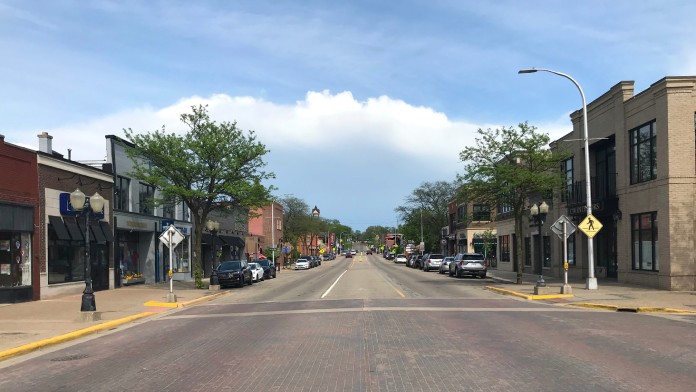
Brighton sits in Livingston County between Detroit and Lansing, and it carries a deeper base of addiction care than its size would suggest, with 9 rehab centers in and around the city and a notably strong set of detox options. You can compare every nearby option through the Michigan rehab directory and explore the wider range of addiction treatment settings across the county.
Much of that depth reflects hospital-affiliated care in the area, including the St. Joseph Mercy system that is part of Trinity Health, which helps explain why Brighton reports four local detox programs when many comparable communities report none. Public behavioral health for residents with Medicaid or no insurance is delivered by the Community Mental Health Authority of Livingston County and coordinated regionally through the Community Mental Health Partnership of Southeast Michigan, the Prepaid Inpatient Health Plan for the area.
Livingston County is one of Michigan’s lower-overdose counties, but local leaders are not standing still. County organizations are directing roughly $9 million in opioid-settlement funds toward prevention, treatment, and recovery, and the county publishes an annual overdose report to track local trends.




Cost of Rehab in Brighton
The cost of rehab in Brighton depends on the level of care, program length, and whether you use insurance. Michigan ranks 13th nationally for treatment affordability, with a statewide average of about $56,508 without insurance, though most people pay a fraction of that once insurance benefits are applied. The figures below reflect Michigan averages by care type and are a useful benchmark while you compare local programs.
Medical detox is the most expensive level of care, at an average of $139,313 statewide (National Center for Drug Abuse Statistics, 2022).
Long-term inpatient rehab in Michigan averages $49,865 (National Center for Drug Abuse Statistics, 2022).
Outpatient addiction treatment averages $8,286, far less than residential care (National Center for Drug Abuse Statistics, 2022).
Outpatient methadone treatment is the most affordable option, averaging $7,362 (National Center for Drug Abuse Statistics, 2022).
Actual costs vary with setting, amenities, and length of stay. Outpatient programs cost far less than residential care, while medical detox and inpatient stays carry the highest price tags. Insurance, the Healthy Michigan Plan, and financial assistance can lower what you pay out of pocket.




How to Pay for Rehab in Brighton
Across the 9 rehab centers serving Brighton, most accept a mix of private insurance, Medicaid, and self-payment, and several offer financial assistance for people without full coverage. The counts below show how many local facilities report accepting each payment type.

8 accept self-payment or cash
8 accept private health insurance
5 accept Medicaid (Healthy Michigan Plan)

8 accept Medicare

3 offer financial assistance
3 accept TRICARE
Which option makes the most sense depends on your coverage and income. The subsections below outline how the main payment paths work for Brighton residents.
Medicaid
Michigan expanded Medicaid through the Healthy Michigan Plan, which covers the full continuum of substance use care, from detox to outpatient counseling and medication-assisted treatment. Specialty behavioral health benefits are managed through the Community Mental Health Partnership of Southeast Michigan and delivered locally by the Community Mental Health Authority of Livingston County, reachable at 517-546-4126. Five local facilities report accepting Medicaid.
Medicare
Medicare covers substance use treatment that is medically necessary, including inpatient care under Part A and outpatient services and counseling under Part B, with Medicare Advantage plans offering the same benefits. Eight Brighton area centers accept Medicare, the highest count among local payment types, which fits a county with a substantial share of older adults.
Military and TRICARE
Veterans and active-duty families have several routes to care. Three area facilities accept TRICARE, and the VA coordinates services for the region through the Ann Arbor and Detroit VA systems. See more rehab resources for veterans and military families.
Insurance and Private Pay
Most Brighton centers in the directory accept private insurance or self-payment. Coverage varies by plan and by whether a facility is in network, so verify benefits before you commit. Major carriers active in Michigan include:
- Blue Cross Blue Shield of Michigan
- Priority Health
- HAP
- Aetna
- Cigna
- UnitedHealthcare
Other Low-Cost Options
For those without full coverage, three local centers offer financial assistance. Some programs use state or federal grant funding to serve uninsured residents, and treatment scholarships can help close the gap. The Community Mental Health Authority of Livingston County also serves residents regardless of ability to pay, on a sliding fee scale.
Accreditation
Accreditation signals that a program meets independent quality standards. Among Brighton area facilities, two are accredited by the Joint Commission and two hold CARF accreditation. Accreditation is separate from state licensure, which every legitimate Michigan provider must maintain.
Levels of Care Available in Brighton
Brighton offers care across the continuum, with an unusually strong detox base of 4 programs, plus 2 inpatient programs and 9 outpatient clinics reported locally. Most facilities also treat co-occurring mental health conditions, and a partial hospitalization option adds a step between residential and outpatient care.
4 medical detox facilities
2 inpatient rehab programs

1 partial hospitalization program
9 standard outpatient clinics

7 dual diagnosis programs

1 sober living home
Medical detox provides 24-hour supervision to manage withdrawal safely and is the usual first step for opioid or alcohol dependence. Brighton reports four medically supervised detox programs, a strong base for a community this size and a draw for people across the region.
Inpatient and residential rehab provides structured, live-in treatment. Two local inpatient rehab programs serve people who need to step away from daily triggers to focus on early recovery.
Partial hospitalization offers day-long, structured treatment while a person returns home in the evening. One area program provides this level, bridging residential and standard outpatient care.
Outpatient treatment lets people live at home while attending scheduled sessions, and it is the most common format in the area, with 9 clinics reported. It suits people with work or family obligations and those stepping down from residential care.
Dual diagnosis care treats addiction alongside conditions like depression or anxiety. Seven reporting facilities address co-occurring disorders, which matters given how often mental health and substance use overlap.
Sober living offers substance-free housing that supports the transition back to independent life. One local home provides this option, and aftercare planning helps maintain progress after a program ends.
Specialty Programs in Brighton
Many Brighton facilities tailor treatment to specific groups and substances. The counts below reflect programs that report each specialty focus.

8 alcohol rehab programs

8 young adult programs
7 opioid rehab programs

7 men’s programs

7 women’s programs

3 programs for older adults
2 veterans and military programs

1 LGBTQ+ friendly program
Alcohol remains a leading reason people enter treatment in Michigan, and eight area programs focus on alcohol use disorder. Seven treat opioid use disorder. Two facilities offer dedicated tracks for veterans and military families and one provides LGBTQ+ affirming addiction care, alongside programs for young adults, men, women, and older adults.
Free and Low-Cost Rehab Resources in Brighton
Cost should not keep anyone from help. Brighton residents can reach crisis support, treatment access lines, and harm-reduction resources at no charge, including crisis and suicide-prevention support around the clock.
Crisis and Helplines
- 988 Suicide & Crisis Lifeline: Call or text 988 any time to reach the Michigan Crisis and Access Line for a mental health or substance use crisis.
- Livingston County Mental Health Crisis Line: 517-546-4126, 24-hour crisis assessment through the Community Mental Health Authority of Livingston County.
- SAMHSA National Helpline: 1-800-662-HELP (4357), free and confidential treatment referrals, available 24/7.
Local Treatment and Recovery
- Community Mental Health Authority of Livingston County: 517-546-4126, the county public provider serving Medicaid and uninsured residents on a sliding fee scale (cmhliv.org).
- Community Mental Health Partnership of Southeast Michigan (CMHPSM): 855-571-0021, the regional PIHP coordinating Medicaid substance use services (cmhpsm.org).
Government and Harm Reduction
- Livingston County Health Department: Public health services, naloxone access, and referrals (milivcounty.gov).
- Michigan Naloxone Direct Portal: Free naloxone by mail to reverse an opioid overdose (michigan.gov/naloxone).
- Michigan SUD Treatment Locator (MiSUD): Find licensed treatment across the state (michigan.gov).
Drug and Alcohol Use Statistics in Brighton
Livingston County has historically posted lower overdose rates than most of Michigan, and it publishes an annual Substance Use Poisoning and Overdose Death Report to track local trends. County organizations are also directing roughly $9 million in opioid-settlement funds toward prevention and treatment. Statewide overdose data show three straight years of decline, with fentanyl still driving most deaths.
Opioid-settlement funds Livingston County organizations are directing toward local prevention, treatment, and recovery (CBS Detroit, 2025).
Overdose deaths statewide in Michigan in 2024, the fewest since 2014 (MDHHS, 2025).
Michigan overdose deaths are projected to have fallen about 34% from 2023 to 2024 (MDHHS, 2025).
An estimated 80% of Michigan’s 2024 overdose deaths involved opioids, primarily fentanyl (MDHHS, 2025).
Resources
- CBS Detroit. (2025). Michigan opioid overdose deaths expected to drop in 2024; Livingston County opioid settlement funds. cbsnews.com/detroit.
- Community Mental Health Authority of Livingston County. (n.d.). Emergency and access services. cmhliv.org.
- Community Mental Health Partnership of Southeast Michigan. (n.d.). Livingston County services. cmhpsm.org.
- Michigan Department of Health and Human Services. (2025). Michigan projects third consecutive year of decline in opioid overdose deaths. michigan.gov.
- Michigan Department of Health and Human Services. (n.d.). Healthy Michigan Plan. michigan.gov/healthymiplan.
- National Center for Drug Abuse Statistics. (2022). Average Cost of Drug Rehab by Type, State and More.
- Substance Abuse and Mental Health Services Administration. (2024). National Helpline. samhsa.gov.