



Expert Insights
I was so happy to read that Fort Wayne City Council has given our Police Department $350,000 to fund a clinical social worker and peer recovery coach.
Having worked in crisis services alongside the police, I can attest to how important it is to have a mental health provider out with law enforcement. Mental illness plays such a large role in social problems and the use of substances and behavioral health support is needed more than criminal justice. We cannot help someone find recovery, or overcome the trauma that led to their substance use, if they are stuck in a prison or jail cell.
I hope that this new partnership can support people on the streets in mental health crises being supported and stabilized with community resources, freeing up the police department to deal with crime and safety.
How We Rank Listings
Listings on this page are ordered by the breadth of services each Fort Wayne facility offers to the local community. Programs with more treatment options, greater payment flexibility and verifiable credentials rank above those with fewer. Within those groupings, facilities that accept Medicaid, Medicare, TRICARE or sliding-scale fees receive additional weight, because affordability is a real barrier for many people seeking help.
Accreditations from the Joint Commission, CARF, or LegitScript serve as quality indicators and factor into placement. No facility has paid to appear here or to rank higher in results. If a listing appears outdated or contains an error, the feedback link below each entry allows you to report it.
Rehab in Fort Wayne: What to Know
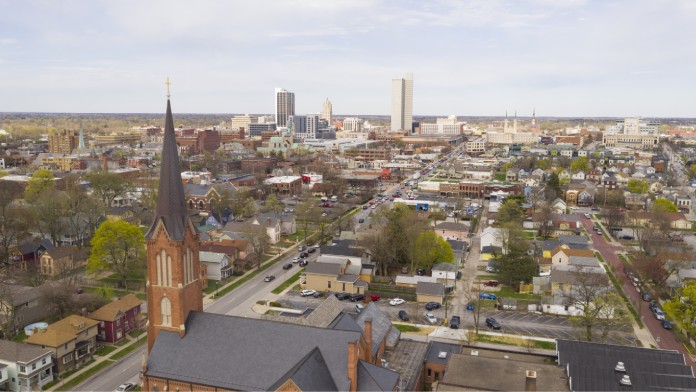
Fort Wayne is the county seat of Allen County in northeastern Indiana, located at the confluence of the St. Mary, St. Joseph and Maumee rivers. With a city population of approximately 277,000 and a county population of more than 400,000, it is Indiana’s second-largest city and the economic and medical center of the northeastern part of the state. The 42 facilities in our Indiana rehab directory for Fort Wayne span Allen County and include a range of care from short-term medical stabilization through long-term outpatient support.
Two health systems anchor the city’s behavioral health infrastructure: Parkview Health and Lutheran Hospital, both of which operate addiction medicine and mental health programs in the Fort Wayne metro area. Community-based providers including Fort Wayne Recovery, Bowen Health and Lutheran Social Services of Indiana extend outpatient and peer recovery services across Allen County and several surrounding counties. Most facilities accept Medicaid, private insurance or TRICARE, and a portion offer sliding-scale fees for people without coverage. For an overview of the full range of addiction treatment programs available in the region, the levels-of-care section below covers each option in detail.
Fentanyl emerged as the primary driver of overdose deaths in Allen County after 2020. Fatal overdoses peaked at 173 in 2021 before declining to 120 in 2023, the lowest total since 2016. That downward trend coincided with a major expansion of naloxone access to reverse fentanyl overdoses, with more than 30 distribution sites active across the city by 2024. The Fort Wayne Police Department’s Hope and Recovery Team (HART), a collaboration with more than a dozen community organizations, shifted the department’s approach from arrest toward connection to treatment services. The team has helped more than 1,500 people in Allen County access treatment resources since its launch in 2018.
Cost of Rehab in Fort Wayne
Costs in Fort Wayne generally track Indiana’s statewide averages, though fees at individual facilities vary by program length, level of care and what your insurance covers. No Fort Wayne-specific cost data with sufficient confidence is available for this page, so the figures below reflect Indiana state-level estimates. Outpatient programs are typically the most accessible entry point on cost; medical detox and residential stays represent a larger upfront investment, though insurance and financial assistance programs significantly reduce out-of-pocket expenses for many people.
Several factors determine where an individual program lands within that range:




How to Pay for Rehab in Fort Wayne
Among the 42 facilities listed in Fort Wayne, 36 accept self-payment or cash and 30 work with private insurance. Twelve facilities accept the Healthy Indiana Plan (HIP), Indiana’s Medicaid program and 10 accept Medicare. Nine facilities offer sliding-scale fees and 9 provide additional financial assistance. Six accept TRICARE for veterans and military families, and 2 offer free treatment regardless of ability to pay.







Medicare
Ten Fort Wayne facilities accept Medicare for addiction treatment. Medicare Part A covers medically necessary inpatient detox, and Part B covers outpatient substance use counseling and medication-assisted treatment when provided by a Medicare-enrolled clinician. Medicare Advantage plans (Part C) often include broader behavioral health benefits. Calling the facility’s billing department before intake will confirm whether they are currently enrolled in Medicare and what cost-sharing to expect. Verifying your rehab insurance benefits ahead of time is the clearest way to understand what Medicare will and will not cover at any given program.
Medicaid
Twelve facilities in Fort Wayne accept Indiana’s Medicaid program, formally known as the Healthy Indiana Plan (HIP). HIP covers the full continuum of substance use disorder services for income-eligible adults, including medical detox, residential treatment, outpatient counseling and medication-assisted treatment with buprenorphine, methadone or naltrexone. A 2018 federal waiver significantly expanded Indiana Medicaid’s coverage for inpatient SUD treatment, including stays at facilities that previously did not qualify for reimbursement. People with serious substance use disorders are generally exempt from HIP’s cost-sharing requirements.
Sliding-Scale Fees and Financial Assistance
Nine facilities in Fort Wayne charge fees on a sliding scale based on income, and 9 offer additional financial assistance. These options serve people who earn too much to qualify for Medicaid but cannot afford full program rates. Most facilities can review your financial situation and discuss adjusted pricing at the time of your intake call. It is worth asking about these programs directly, even when a facility does not advertise them.
Military Benefits and TRICARE
Six Fort Wayne facilities accept TRICARE, the health coverage program for active-duty military, National Guard and Reserve members and their dependents. TRICARE covers medically necessary substance use disorder treatment at authorized providers. Additional rehab resources for veterans and military families are available through the VA system, including the Fort Wayne VA Clinic on East State Boulevard, which provides outpatient SUD treatment for eligible veterans.
Free Treatment Programs
Two facilities in Fort Wayne offer treatment at no cost to qualifying individuals. Free programs rely on state grants and charitable funding and may carry waiting lists. If a spot is not immediately available, ask about state-funded options through Indiana’s Next Level Recovery initiative or explore rehab scholarships offered by national organizations that help cover the cost of private treatment.
Private Insurance
Thirty facilities in Fort Wayne accept private health insurance. The Mental Health Parity and Addiction Equity Act requires most commercial plans to cover substance use disorder treatment at the same level as other medical conditions. Major carriers active in Indiana include:
- Anthem
- Aetna
- CareSource
- Cigna
- Humana
- Managed Health Services
- UnitedHealthcare
Levels of Care Available in Fort Wayne
Fort Wayne’s treatment network covers the full continuum of care, with 22 medical detox facilities, 32 inpatient programs, 36 standard outpatient clinics and 17 dual diagnosis programs. Partial hospitalization and intensive outpatient options are also available, along with 6 sober living homes for people who need a structured transitional environment after completing residential treatment.






Medical detox is typically the first clinical step for people entering treatment. Supervised by physicians and nurses, medical detox manages withdrawal symptoms safely and prepares a person for the next level of care. Alcohol, benzodiazepine and opioid withdrawal carry significant medical risks and should not be attempted without clinical supervision.
Inpatient rehab provides 24-hour structured care in a residential setting. Inpatient programs combine individual and group therapy, medical monitoring and daily structure designed to support early recovery. Most programs run 28 to 90 days, with longer stays generally recommended for people with more complex needs or a history of multiple treatment episodes.
Partial hospitalization programs (PHP) offer intensive treatment during daytime hours while allowing participants to return home or to sober housing in the evenings. Partial hospitalization suits people who need more support than standard outpatient care but do not require overnight residential placement.
Intensive outpatient programs (IOP) and standard outpatient clinics serve people who can live at home while attending scheduled treatment sessions, typically three to five days per week. Outpatient care is the most flexible format and works well for people managing work, family or school responsibilities during recovery.
Dual diagnosis programs address substance use disorder and co-occurring mental health conditions at the same time. Co-occurring anxiety disorders, depression, PTSD and trauma are common in people seeking addiction treatment. Addressing both the substance use and the underlying mental health condition together typically leads to better long-term outcomes than treating them separately.
Sober living homes provide a structured, substance-free living environment for people transitioning out of residential treatment. Residents live together, follow house rules and reintegrate into work and community life while maintaining their sobriety. For a full picture of what comes after formal treatment, rehab aftercare resources cover continuing care planning, peer support and step-down options.
Specialty Programs in Fort Wayne
Fort Wayne’s treatment network includes programs designed for specific populations, with strong options for people with alcohol or opioid use disorder, young adults, men and women. LGBTQ+ affirming care and programs for older adults are also available across the city.






Free and Low-Cost Rehab Resources in Fort Wayne
Fort Wayne has a well-developed network of publicly funded and community-supported addiction resources. The organizations listed below provide crisis support, harm reduction and connections to treatment at low or no cost. For mental health and crisis support resources beyond what is listed here, Indiana’s 988 network connects callers to local crisis services 24 hours a day.
Crisis Lines
- 988 Suicide and Crisis Lifeline — Call or text 988, 24/7. Connects callers to trained crisis counselors and can facilitate referrals to local substance use treatment. Available in English and Spanish. No cost.
- Veterans Crisis Line — Call 988 and press 1, or text 838255, 24/7. Dedicated line staffed by counselors who specialize in veteran and military-specific mental health and substance use crises.
- SAMHSA National Helpline — 1-800-662-4357, 24/7. Free, confidential referral and information service for people dealing with substance use disorders. Connects callers to local treatment programs, support groups, and community resources. Also available at findtreatment.gov.
County Health Department
- Allen County Department of Health — (260) 449-7561 | allencountyhealth.com. The county health department administers public health programs in Allen County, including community health navigators who can connect residents to substance use treatment, naloxone access and harm reduction services. Administrative office at 200 E. Berry St., Suite 360, Fort Wayne, IN 46802.
State and Community Resources
- Indiana 211 — Dial 2-1-1, 24/7. Free referral line connecting Hoosiers to local treatment programs, recovery housing, and social services. Also available at in211.org.
- Overdose Lifeline — overdoselifeline.org. Indiana-based nonprofit offering naloxone training, family support programs and youth prevention initiatives. Resources available statewide with a Fort Wayne presence through partner organizations.
Veterans and Military
- Fort Wayne VA Clinic — (260) 426-5431 | va.gov/northern-indiana-health-care. Located at 2500 East State Blvd, Fort Wayne, IN 46805. Outpatient substance use disorder treatment, mental health care and peer support services for eligible veterans. Hours: Monday through Friday, 8:00 a.m. to 4:30 p.m.
Drug and Alcohol Use Statistics in Fort Wayne
Allen County has seen a sustained decline in overdose deaths since the 2021 peak. That progress reflects expanded naloxone access, treatment-focused policing and community coordination, but the conditions that made northeastern Indiana a high-need area for substance use treatment services relative to national benchmarks have not disappeared. Fentanyl remains the primary substance in the local overdose picture, and polysubstance use involving methamphetamine continues to be a factor in many cases.
Resources
- Indiana Family and Social Services Administration. (2024). Healthy Indiana Plan: Substance Use Disorder Treatment Coverage. https://www.in.gov/medicaid/providers/clinical-services/substance-use-disorder-treatment/
- Allen County Department of Health. (2025). Contact Information. https://allencountyhealth.com/contact
- Substance Abuse and Mental Health Services Administration. (2024). National Helpline. https://www.samhsa.gov/find-help/national-helpline
- Indiana Division of Mental Health and Addiction. (2024). 988 Indiana: Suicide and Crisis Lifeline. https://www.in.gov/fssa/dmha/update-on-988-in-indiana/
- U.S. Department of Veterans Affairs, Northern Indiana Health Care. (2024). Fort Wayne VA Clinic. https://www.va.gov/northern-indiana-health-care/locations/fort-wayne-va-clinic/
- Overdose Lifeline. (2024). Programs and Resources. https://www.overdoselifeline.org
- WBOI / Fort Wayne Police Department Hope and Recovery Team. (2024). Allen County sees 22% decline in overdose deaths in 2023. https://www.wboi.org/news/2024-04-24/allen-county-sees-22-decline-in-overdose-deaths-in-2023
- Journal Gazette. (2024). Overdose deaths drop in Allen County, statewide. https://www.journalgazette.net/news/health-science/overdose-deaths-drop-in-allen-county-statewide/article_9eb405e6-a4fe-11ee-95eb-0fa52ec53bcb.html
- Journal Gazette. (2026). Sharp drop in opioid deaths shouldn’t invite complacency. https://www.journalgazette.net/opinion/sharp-drop-in-opioid-deaths-shouldnt-invite-complacency/article_c1856276-b10f-4ea5-8ad4-6b274f2b6093.html
- Indiana Drug Overdose Dashboard / WBAA. (2024). Overdose deaths statewide declined from 2,812 in 2021 to 2,089 in 2023. https://www.wbaa.org/local-news/2024-05-16/new-data-shows-indiana-had-second-largest-decrease-in-overdose-deaths-in-2023
- USAFacts / Centers for Disease Control and Prevention. (2024). How many drug overdose deaths happen every year in Indiana? https://usafacts.org/answers/how-many-drug-overdose-deaths-happen-every-year-in-the-us/state/indiana/