




Expert Insights
I was surprised to learn that — according to an article in the news — many folks struggle to stay in recovery after completing traditional treatment programs.
That’s where a new idea was born for a nonprofit, called Recovery Unplugged. I love their idea of using music as a catalyst for positive and long-lasting recovery. So often people in recovery benefit from a creative outlet and, as these guys say, everyone loves music. It also is a great medium for recovery as it not only allows folks to express themselves, but connect with others, and experience the enjoyment of music.
Recovery is hard work so adding lightness and enjoyment, while building the other essential components of process and community, could have a real impact on folks’ long-term treatment outcomes.
Compare drug and alcohol rehab in Hollywood, Florida, with 20 local treatment providers offering detox, inpatient, and outpatient care across Broward County. See which centers accept your insurance, what treatment costs in South Florida, and where to find free and low-cost help nearby.
How We Rank Listings
Our directory is built to help you compare treatment options honestly, not to sell placement. Every facility listed on this page is a licensed provider serving the Hollywood and Broward County area, and listings are organized to surface the information that matters most when you are choosing care.
We prioritize verifiable details over marketing language. When we rank and display listings, we weigh:
- Accreditation from recognized bodies such as the Joint Commission and CARF
- State licensing through the Florida Department of Children and Families
- Levels of care offered, from medical detox through outpatient and aftercare
- Accepted forms of payment, including Medicaid, Medicare, private insurance, and sliding-scale options
- Specialized programs for specific populations, such as veterans, women, and young adults
We do not guarantee outcomes, and no ranking replaces a conversation with a qualified clinician about what level of care fits your situation. Use this page as a starting point, then verify current details directly with any facility you contact.
Rehab in Hollywood, Florida: What to Know
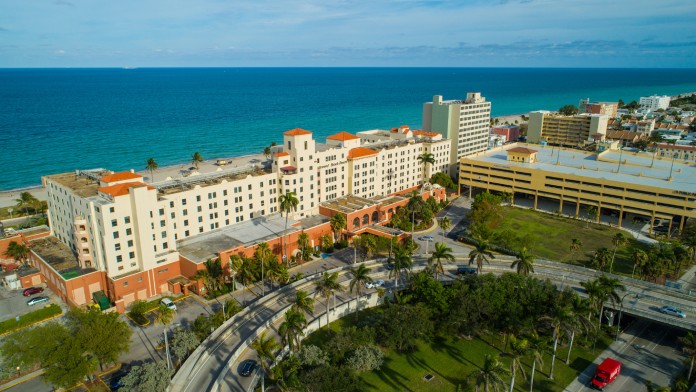
Hollywood is the third-largest city in Broward County and sits in the heart of the Miami metropolitan area, with a population of roughly 159,000. Its location between Fort Lauderdale and Miami means people seeking care in Hollywood can draw on one of the densest concentrations of behavioral health providers in the Southeast, with 20 treatment facilities listed within the city and many more a short drive away across Broward.
The county anchors its public system through the Broward Addiction Recovery Center (BARC), a county-run provider that offers detox, residential, and outpatient services for adults affected by substance use and co-occurring disorders, often at little or no cost to residents who qualify.
Alongside BARC, Hollywood-area residents have access to a large private treatment sector and a network of nonprofit and faith-based programs. For people weighing their addiction treatment options, this range is an advantage, though it also makes verifying licensing and accreditation especially important in a market this size.
South Florida has been at the center of the state’s opioid crisis, and Broward in particular has recorded some of the highest fentanyl-involved death totals in Florida. Local law enforcement and health agencies have responded with expanded naloxone distribution, a drug court program run through the 17th Judicial Circuit.
The coordinated outreach is administered by the United Way of Broward County’s Commission on Behavioral Health and Drug Prevention. Understanding how opioid use disorder shows up locally can help you and your family choose a program equipped for the substances most common in the area.



Cost of Rehab in Hollywood, Florida
What treatment costs in Hollywood depends heavily on the level of care, the length of the program, and whether you use insurance. Because Hollywood sits within a higher-cost metro area, out-of-pocket prices at private facilities can sit at or above the Florida state average.
However, public and nonprofit programs and sliding-scale options bring costs down substantially for those who qualify. The figures below reflect statewide averages for each level of care and are useful as a general benchmark rather than a quote for any specific Hollywood facility.
Most private health plans are required to cover substance use treatment as an essential health benefit, which can dramatically reduce what you pay. Before committing to a program, it is worth confirming your benefits so you know your deductible, copays, and whether a facility is in network.
The choice between residential and outpatient care is usually the single biggest cost driver. Several other factors also shape the final price:




How to Pay for Rehab in Hollywood, Florida
Across the 20 facilities listed in Hollywood, payment options are broad. Nineteen accept self-payment, 17 accept private insurance, and a mix of public and assistance-based options help people without private coverage access care. The cards below summarize how Hollywood-area facilities are set up to be paid.



Choosing the right way to pay is often the difference between starting treatment now and putting it off. Below is a closer look at the most common options available to Hollywood residents.
Medicare
Five Hollywood-area facilities accept Medicare, which covers addiction treatment for eligible adults age 65 and older and for some younger people with qualifying disabilities. Medicare Part A helps with inpatient hospital-based treatment, while Part B covers outpatient services such as counseling and screening.
Coverage rules and cost-sharing vary by plan, so confirming details ahead of time is important. Our guide to using insurance for rehab walks through how to check what your plan includes.
Medicaid
Florida administers Medicaid through the Statewide Medicaid Managed Care (SMMC) program, and six Hollywood-area facilities accept it. SMMC plans cover medically necessary detox, inpatient and residential rehab, outpatient programs, and medication-assisted treatment for opioid and alcohol use disorders.
Prior authorization is commonly required for inpatient and residential care. Eligibility is based on income, household size, and residency, and you can apply through the Florida Department of Children and Families ACCESS portal.
Military Benefits
Six Hollywood facilities accept TRICARE, the health program covering active-duty service members, retirees, and their families. TRICARE covers a range of substance use services, including detox, inpatient rehab, and outpatient care. Veterans in the area may also qualify for care through the U.S. Department of Veterans Affairs. For a fuller picture of what is available, see our rehab resources for veterans and military families.
Insurance and Private Pay
Seventeen Hollywood facilities accept private insurance and 19 accept self-payment or cash. If you carry a private plan through an employer or the marketplace, your policy is required to cover substance use treatment, though your out-of-pocket cost depends on your specific benefits. Paying out of pocket gives you the widest choice of facilities but can be costly for higher levels of care, which makes it worth exploring insurance and financing first.
Other Low-Cost Options
For people without robust coverage, eight Hollywood facilities offer financial assistance, six offer sliding-scale fees based on income, and five offer financing plans. The county-run Broward Addiction Recovery Center is another route to affordable care. If cost is the main barrier, rehab scholarships and free treatment programs can help bridge the gap.
- Aetna
- Blue Cross Blue Shield of Florida
- Cigna
- Florida Blue
- Humana
- UnitedHealthcare
- TRICARE
- Medicaid
- Medicare
Levels of Care Available in Hollywood, Florida
Hollywood-area facilities cover the full continuum of care, from medically supervised detox through long-term outpatient support. Local listings include 5 detox providers, 9 inpatient programs, and 18 outpatient clinics, along with partial hospitalization, intensive outpatient, dual diagnosis, and sober living options. The cards below show what is available locally, and the explanations that follow describe what each level involves.



Medical detox is often the first step for people with physical dependence, providing 24-hour supervision to manage withdrawal safely. Because withdrawal from alcohol, opioids, and benzodiazepines can be medically serious, supervised detox is strongly recommended over quitting alone.
Inpatient rehab provides live-in treatment with structured therapy and around-the-clock support, typically over 30 to 90 days. With nine programs locally, Hollywood offers solid access to residential treatment for people who benefit from stepping away from daily triggers.
Partial hospitalization and intensive outpatient programs sit between residential and standard outpatient care. PHP offers full-day treatment with evenings at home, while IOP allows people to keep working or studying while attending several therapy sessions each week. Both fall under the umbrella of intensive outpatient programs and step-down care.
Dual diagnosis programs treat substance use and a co-occurring mental health condition at the same time. Fifteen Hollywood facilities offer this integrated approach, which matters for people managing conditions such as co-occurring depression or anxiety alongside addiction.
Sober living homes and continuing care support the transition back to independent life after a formal program ends. Building a plan for rehab aftercare is one of the strongest predictors of sustained recovery.
Specialty Programs in Hollywood, Florida
Beyond the standard levels of care, many Hollywood facilities tailor treatment to specific populations and substances. Program design that reflects a person’s background, identity, or primary substance can make care feel more relevant and easier to stay engaged with. The specialties below are well represented among local listings.






With 15 programs focused on alcohol use disorder and 13 addressing opioid use disorder, Hollywood facilities are well equipped for the two substances that drive most treatment admissions in South Florida. Sixteen programs serve young adults, a group for whom early intervention can change the long-term course of recovery.
Families researching help for that age group can start with our resources on young adult and college student substance use. Three programs serve veterans and military families, and two offer LGBTQ+ affirming addiction care designed to be welcoming and inclusive.
Free and Low-Cost Rehab Resources in Hollywood, Florida
Cost and insurance status should never be the reason someone goes without help. Hollywood and the surrounding Broward County area have a strong public and nonprofit safety net, from 24-hour crisis lines to county-run treatment and free naloxone. The resources below can connect you or a loved one to immediate support and longer-term care.
Crisis and Helplines
- 988 Suicide and Crisis Lifeline
https://988lifeline.org/
Free, confidential, 24/7 crisis support. See our suicide prevention resources for more on when and how to reach out. - 211 Broward
https://www.211-broward.org/
Broward County’s free, 24-hour helpline offering crisis counseling and referrals to local behavioral health, treatment, and human services. - SAMHSA National Helpline
https://www.samhsa.gov/find-help/helplines/national-helpline
Free, confidential, 24/7 treatment referral and information in English and Spanish.
County and Public Treatment
- Broward Addiction Recovery Center (BARC)
https://www.broward.org/addictionrecovery/Pages/Default.aspx
The county-operated provider offering detox, residential, and outpatient services for adults with substance use and co-occurring disorders. Learn more at broward.org/AddictionRecovery. - Florida Medicaid (SMMC)
https://www.flmedicaidmanagedcare.com/
Apply for coverage through the Florida Department of Children and Families ACCESS portal at myflfamilies.com to access publicly funded treatment.
Harm Reduction
- iSaveFL
https://isavefl.com/
The Florida Department of Health program that helps residents find free naloxone kits to reverse opioid overdoses. Visit iSaveFL.com to locate a source. - Broward Sheriff’s Office naloxone program
https://www.police1.com/police-grant-center/fla-county-places-free-naloxone-vending-machines-near-jails
BSO has equipped patrol deputies with naloxone and runs prescription drug take-back and awareness efforts across the county.
Community and Nonprofit Support
- United Way of Broward County, Commission on Behavioral Health and Drug Prevention
https://www.unitedwaybroward.org/coalition-behavioral-health-drug-prevention
Offers prevention resources and coordinates community response to substance use. Visit unitedwaybroward.org. - NAMI Broward County
https://namibroward.org/
Provides mental health support, education, and peer resources, including drop-in centers in Hollywood. Visit namibroward.org.
Drug and Alcohol Use Statistics in Hollywood, Florida
Hollywood’s treatment landscape reflects the broader toll of the opioid crisis in Broward County, which has recorded among the highest fentanyl-involved death counts in Florida.
While statewide figures have begun to decline, the local numbers underscore why access to detox, medication-assisted treatment, and naloxone remains critical across South Florida. The figures below draw on Broward County Medical Examiner and Florida Department of Law Enforcement data.
Statewide, Florida saw total drug-related deaths fall 14 percent in 2024 compared with the prior year, a decline officials have attributed in part to expanded naloxone access and fentanyl interdiction.
Fentanyl nonetheless remained the leading drug involved in Florida overdose deaths. For national context on how these trends compare, see our overview of national substance use statistics. If you or someone close to you is at risk, keeping naloxone on hand and knowing the signs of fentanyl overdose risk can save a life.
Resources
- U.S. Census Bureau. (2024). American Community Survey 1-Year Estimates: Hollywood, FL. https://censusreporter.org/profiles/16000US1232000-hollywood-fl/
- Broward County. (2026). Broward Addiction Recovery Center (BARC). https://www.broward.org/AddictionRecovery/Pages/Default.aspx
- Florida Department of Health. (2025). Substance Use and Overdose Prevention (iSaveFL naloxone). https://www.floridahealth.gov/individual-family-health/injury-prevention-wellness/substance-use-overdose-prevention/
- Florida Agency for Health Care Administration. (2026). Statewide Medicaid Managed Care: Community Behavioral Health Services. https://ahca.myflorida.com/medicaid/
- NBC 6 South Florida. (2023). Thousands Dead in South Florida from Fentanyl-Involved Overdoses. https://www.nbcmiami.com/investigations/deadly-mix-thousands-dead-in-south-florida-from-fentanyl-involved-overdoses/3045805/
- Florida Department of Law Enforcement, Medical Examiners Commission. (2024). Drugs Identified in Deceased Persons Annual Drug Report. https://www.fdle.state.fl.us/