



Drug and alcohol rehab in Pueblo, Colorado spans 22 treatment providers, from medical detox and residential care to outpatient counseling and medication-assisted treatment across Pueblo County. Compare programs by level of care, insurance and payment options, and local support so you can find the right next step for yourself or someone you love.
How We Rank Listings
Our directory brings together drug and alcohol treatment providers serving Pueblo and the surrounding area so you can compare them in one place. Listings draw on public licensing and accreditation records, the levels of care each facility offers, accepted insurance and payment types, and the specialty programs available for different populations.
We prioritize transparency over promotion. This means facilities are not ranked by advertising spend.
We do not make outcome promises on any provider’s behalf. Where a listing shows accreditation from a body such as the Joint Commission or CARF, or a state license through Colorado’s Behavioral Health Administration, that detail comes from the accrediting or licensing source.
We encourage you to verify current services, availability, and cost directly with any facility before making a decision, since programs change over time.
Rehab in Pueblo: What to Know
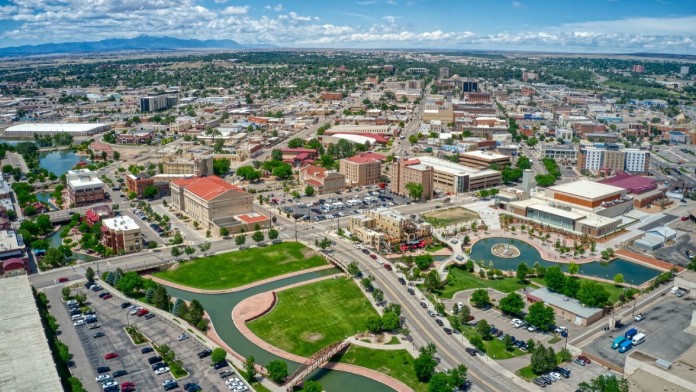
Pueblo is the county seat of Pueblo County and the largest city in southern Colorado outside Colorado Springs. The city is situated where the Arkansas River meets Fountain Creek along the I-25 corridor.
Pueblo’s 22 treatment providers make it the regional hub for addiction care across a wide swath of rural southern Colorado, drawing people from the surrounding plains and mountain counties who would otherwise travel hours for help. You can see the full statewide picture on our Colorado rehab directory, or read more about addiction treatment options before you compare local programs.
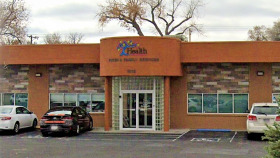
Two long-established organizations anchor the local system. Health Solutions has provided community medical and behavioral health care in Pueblo since 1962 and runs the area’s 24/7 crisis services and Crisis Living Room.
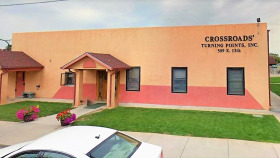
Crossroads’ Turning Points, operating since 1979, is southern Colorado’s largest evidence-based substance use disorder treatment nonprofit, with a full continuum of care that includes withdrawal management, residential and outpatient care, and medication-assisted treatment across a 22-county service area. Colorado Treatment Services and the local VA clinic round out a network that covers most levels of care within the city.
Pueblo has also built out programs that connect people to treatment outside the traditional front door. The county runs a Law Enforcement Assisted Diversion (LEAD) program that lets officers route people arrested for low-level, drug-related offenses to a case manager instead of booking, and a Quick Response Team pairs firefighters with a peer navigator to follow up with people after a nonfatal overdose.
The county’s SURE (Substance Use Resource Ecosystem) initiative maps these services so residents can find the right starting point.
The local need is real and specific. In Pueblo County, fentanyl has come to dominate the illicit drug supply. County public health data for 2019 through 2022 found that 68% of overdose deaths were linked to fentanyl, and 48% involved opioids, with nearly a third involving more than one substance. That pattern shapes the care available locally, with a strong emphasis on opioid use disorder treatment and medication-assisted options.
Cost of Rehab in Pueblo
Cost is one of the first questions most people have, and the honest answer is that it depends heavily on the level of care, the length of stay, and how treatment is paid for. Published, facility-verified price averages specific to Pueblo are not available, so the figures below reflect widely cited national ranges by level of care rather than local quotes. Use them to understand the general shape of costs, then confirm exact pricing with any provider you are considering.
Insurance changes this math substantially. Most facilities in Pueblo accept some form of insurance, and Health First Colorado, the state’s Medicaid program, covers a comprehensive range of substance use treatment. If you have coverage, verifying your benefits before you enroll is the single most useful step you can take. Our guide to using insurance for rehab walks through what to ask.
The following factors play a significant role in determing the final cost of any treatment:






How to Pay for Rehab in Pueblo
Across Pueblo’s 22 treatment providers, there are several ways to pay for care, and most facilities accept more than one. The counts below reflect how many local providers accept each payment type, based on our directory data.







The right payment path depends on your situation. Here is how the most common options work for people seeking treatment in Pueblo.
Medicaid
Health First Colorado, the state’s Medicaid program, covers a comprehensive range of substance use disorder services, including detox, inpatient and residential care, outpatient counseling, and medication-assisted treatment. Fourteen Pueblo providers accept it.
Because Colorado expanded Medicaid, many working adults qualify who would not in other states. Providers like Health Solutions and Crossroads’ Turning Points serve Medicaid members, and coverage often includes medication-assisted treatment for opioid use disorder.
Medicare
Ten providers in Pueblo accept Medicare, which covers medically necessary addiction treatment for adults 65 and older and for some younger people with qualifying disabilities. Coverage spans inpatient care, outpatient services, and certain medications, though specifics vary by plan. Confirm which local providers are in network before enrolling.
Military Benefits
Ten Pueblo providers accept TRICARE, and veterans have an additional option in the PFC James Dunn VA Clinic on Eagleridge Circle. TRICARE covers substance use treatment for active-duty service members, retirees, and eligible dependents. The local VA clinic also offers behavioral health care to enrolled veterans.
Insurance and Private Pay
Eighteen Pueblo facilities accept private insurance, and all 22 accept self-payment. If you are paying out of pocket, ask each facility whether it offers financing or a sliding-scale rate. Seven local providers scale fees to income, and eight offer some form of financial assistance.
Free and Low-Cost Treatment
Options exist for people without the means to pay. Crossroads’ Turning Points is a nonprofit that serves clients regardless of ability to pay for many services, and the county’s harm reduction and peer programs are free. If cost is the main barrier, our guide to rehab scholarships outlines additional ways to fund care.
- Aetna
- Anthem Blue Cross Blue Shield
- Cigna
- Health First Colorado
- Kaiser Permanente
- Medicare
- TRICARE
- UnitedHealthcare
Levels of Care Available in Pueblo
Pueblo’s providers cover the full continuum of addiction treatment, with 10 offering medical detox, 13 offering inpatient rehab, and 19 offering standard outpatient care. Sixteen also treat co-occurring mental health conditions alongside substance use.





Medical detox is often the first step for people physically dependent on alcohol or opioids. Withdrawal from some substances can be dangerous without supervision, and medically supervised detox manages symptoms safely. In Pueblo, Crossroads’ Turning Points provides withdrawal management as part of its continuum.
Inpatient and residential rehab provides 24-hour care in a structured setting, typically for 30 to 90 days. This level suits people with more severe substance use disorders or unstable home environments. Learn more about what to expect from residential treatment.
Outpatient rehab lets people live at home while attending scheduled treatment, making it the most flexible and widely available level of care in Pueblo. Programs range from a few hours a week to more intensive schedules. Our guide to outpatient and intensive outpatient programs explains the differences.
Medication-assisted treatment combines FDA-approved medications like methadone, buprenorphine, and naltrexone with counseling, and it is a central part of Pueblo’s response to opioid use given how heavily fentanyl affects the local supply. Several providers, including Crossroads’ Turning Points and Colorado Treatment Services, offer medication-assisted treatment.
Dual diagnosis care matters here because Pueblo County has long carried high rates of co-occurring mental health conditions. Sixteen local providers treat mental health and substance use together, addressing conditions like co-occurring depression alongside addiction.
Specialty Programs in Pueblo
Beyond general treatment, many Pueblo providers tailor care to specific groups. The counts below reflect how many local facilities offer each specialty.







Sixteen Pueblo facilities offer dedicated alcohol use disorder treatment, and 10 focus on opioid use disorder, reflecting the two substances that drive most local demand. Five providers offer LGBTQ+ affirming addiction care, and two offer programs designed around the needs of veterans and service members, which pairs well with the local VA clinic. Sixteen facilities serve young adults, an important option in a region where early intervention can change the trajectory of a substance use disorder.
Free and Low-Cost Rehab Resources in Pueblo
Cost and insurance status should not be the reasons someone goes without help. Pueblo has a strong network of free and low-cost resources, from 24/7 crisis lines to harm reduction and peer support.
The organizations below serve residents regardless of ability to pay. If you or someone you know is in immediate danger, call 911. For crisis support, the resources below connect you with trained help, and our crisis and suicide prevention resources offer more.
Crisis Lines
- 988 Suicide and Crisis Lifeline
https://988lifeline.org/
Call or text 988 for free, confidential support 24/7. Colorado’s line connects you to local resources. - Colorado Crisis Services
https://www.988colorado.com/en
Call 1-844-493-8255 or text TALK to 38255 for 24/7 mental health, substance use, and emotional crisis support. - Health Solutions Crisis Services
https://www.health.solutions/services/emergency-crisis-services/
Call 719-545-2746, available 24/7. The Crisis Living Room, a walk-in, non-clinical space staffed by peer specialists around the clock, is at 1310 Chinook Lane, Pueblo.
County and Community Resources
- Health Solutions
https://www.health.solutions/
Community behavioral health provider offering outpatient services, medication-assisted treatment, and crisis care. Main campus at 41 Montebello Road, Pueblo. Call 719-545-2746. - Crossroads’ Turning Points
https://www.crossroadstp.org/
Nonprofit offering detox, residential and outpatient treatment, and MAT across southern Colorado. Call 719-546-6666. - Pueblo Department of Public Health and Environment
https://county.pueblo.org/public-health/pueblo-department-public-health-and-environment
Coordinates the county’s SURE resource network, naloxone education, and overdose prevention. Call 719-583-4300.
Harm Reduction
- Access Point Pueblo (Colorado Health Network)
https://coloradohealthnetwork.org/prevention-health-education/access-point/
Free syringe access, naloxone, fentanyl test strips, HIV and hepatitis C testing, and walk-in behavioral health support. Located at 807 N. Greenwood St., Suite 200, Pueblo. Call 719-621-1105.
Veterans and Military
- PFC James Dunn VA Clinic
https://www.va.gov/eastern-colorado-health-care/locations/pfc-james-dunn-va-clinic/
Outpatient VA care including behavioral health, at 4776 Eagleridge Circle, Pueblo. - Pueblo County Veterans Service Office
https://county.pueblo.org/human-services-department/veteran-services
Help accessing VA benefits and services. Call 719-583-4544. Additional support is available through our resources for veterans.
Government and Medicaid
- SAMHSA National Helpline
https://www.samhsa.gov/find-help/helplines/national-helpline
Free, confidential, 24/7 treatment referral and information at 1-800-662-HELP (4357). - Health First Colorado
https://www.healthfirstcolorado.gov/
Colorado’s Medicaid program covers substance use treatment for eligible residents. Apply at healthfirstcolorado.com.
Drug and Alcohol Use Statistics in Pueblo
Pueblo County has felt the state’s overdose crisis acutely, with fentanyl now dominating the local drug supply. The figures below draw on Pueblo County and Colorado public health data.
The heavy presence of fentanyl in Pueblo’s drug supply is why local treatment leans toward medication-assisted care and why harm reduction tools like naloxone and fentanyl test strips are widely distributed. For the national context behind these local numbers, see our national substance use statistics.
Resources
- USAFacts. (2024). How many drug overdose deaths happen every year in Colorado? https://usafacts.org/answers/how-many-drug-overdose-deaths-happen-every-year-in-the-us/state/colorado/
- Pueblo Department of Public Health and Environment. (2023). Fentanyl Fact Sheet. https://county.pueblo.org/sites/default/files/2023-01/PDPHE_BriefFentanyl.pdf
- Pueblo Department of Public Health and Environment. (n.d.). Substance Use Data, Pueblo County. https://county.pueblo.org/public-health-department/substance-use-data-pueblo-county
- Colorado Department of Public Health and Environment. (2023). Pueblo County suicide data, reported via the Pueblo Chieftain. https://county.pueblo.org/public-health-department/mental-health