




According to the National Institute on Drug Abuse, 40.3 million people in the United States had a substance use disorder in 2020. These numbers don’t appear to be decreasing, since the number of people needing treatment for addiction increased between 2013 and 2023 by about 9%.
Scientific research has shown us that drug addiction is a chronic disease that affects a person’s ability to think clearly and make quality decisions – but what about the way it affects the people around them?
A person battling addiction isn’t just a statistic or a story, and they could just as easily be your neighbor, boss, teacher, or friend. To understand how deeply substance abuse can affect a person’s relationships as well as their lives, we surveyed Americans across the country who’ve experienced drug and alcohol misuse first hand. Read on to see what they told us about the impact drugs have had on their families.
The Highs and Lows
Drug use doesn’t just pose a risk to your physical health or well being. Research often links drug addiction with co-occurring mental illness. Caused by overlapping factors including genetic makeup, stress, trauma, or even underlying brain issues, mental illness can lead to drug abuse in the same way that drug abuse can lead to the symptoms of mental illness. The same areas of the brain that are impacted by drug abuse are often connected to depression, schizophrenia, and other psychiatric disorders.
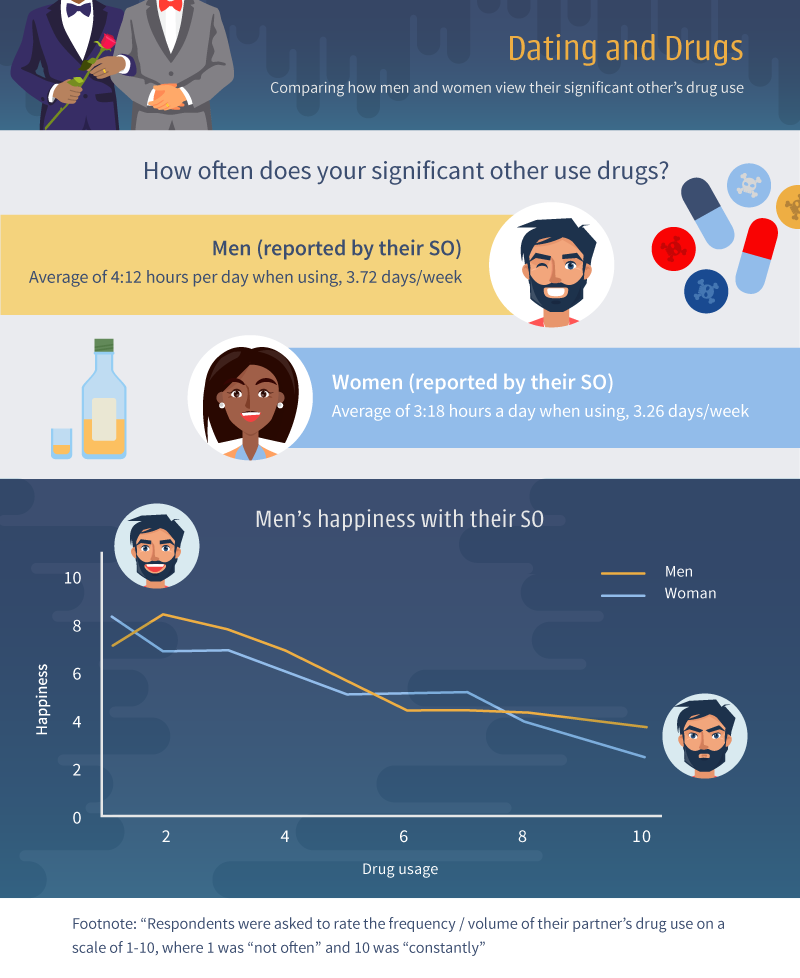
Both men and women we polled about their significant other’s substance abuse issues told us that, on average, their partners used drugs between three and four days each week. Men generally established a higher frequency of drug use, averaging over four hours a day compared to less than three and a half for women.
Our study also revealed that both men and women’s happiness in their relationships declined as their partner’s use of drugs increased. While people who reported only occasional drug abuse still rated their happiness between 7 and an 8 on our scale, happiness with significant others struggling with constant drug abuse fell below a 3 for women and a 4 for men.
Connecting the Dots
Many people want to know what causes addiction. It’s an age-old question with no single answer. Of the many factors that can contribute to a person’s likelihood of experiencing substance abuse or addiction, genetics can play a significant role. Research has shown the genes we inherit from our parents account for roughly half our risk of developing alcoholism or drug addiction. This can lead to both drug dependency and relapse for millions of people.
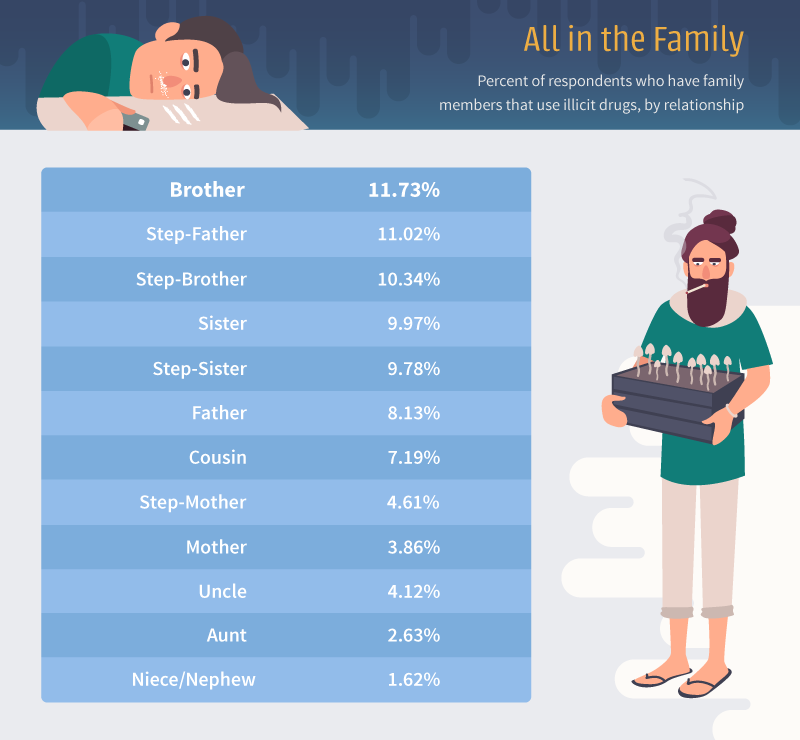
Of the people we polled across the country who’d experienced drug addiction in their lives, more than one in 10 told us their step-fathers had been drug users. Similarly, more than one in 10 people said their brothers or step-brothers had used illicit substances at some point, and nearly one in 10 said they’d had similar experiences with their sisters and step-sisters. While less common, some Americans we polled told us their own fathers, mothers, and cousins had experienced a history of drug abuse at some point in their lives.
Additionally, when we look at addiction among LGBTQ individuals, we see a much higher rate of substance use. The odds that LGBTQ youth will use substances is 190% higher than the rate for heterosexual youth. One study of LGBTQ youth reported that over half of survey respondents used alcohol and 33% had used marijuana in the past year – which are rates higher than the general youth population.
Drawing the Line
There is no blanket approach toward treatment for people suffering from substance abuse and addiction. Every person and their circumstances are completely different. One thing is for sure though: family support and involvement is a key element to overcoming addiction and finding true recovery. It’s not uncommon for family members to struggle with the addictive behaviors of a loved one or feel emotions like anger or resentment. Experts recommend that relatives benefit from counseling sessions or support group meetings to help them address a loved one’s addiction and support both themselves and their loved one through the difficult process of recovery.
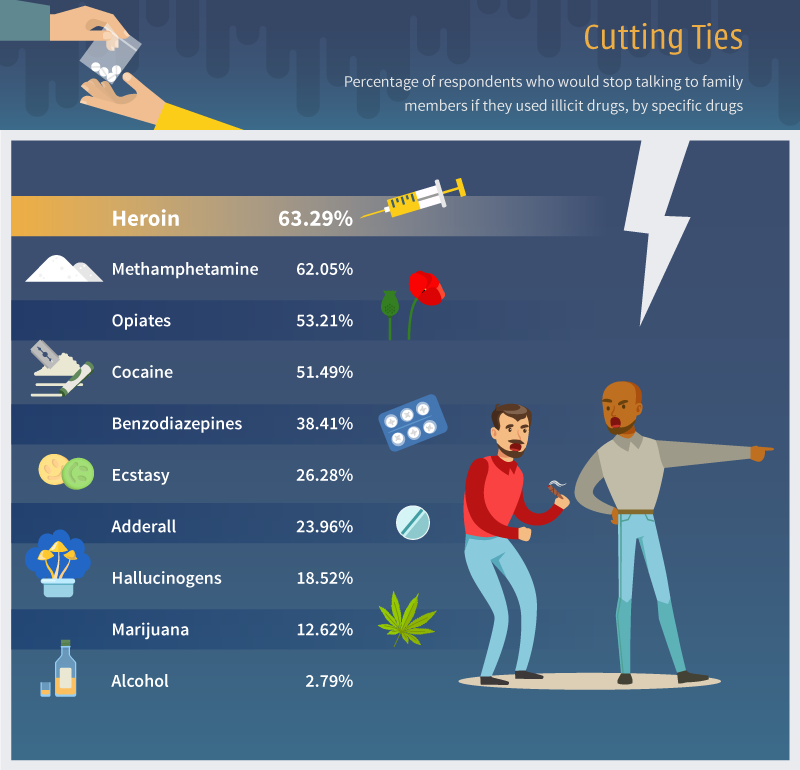
When surveyed, some Americans reported that certain drugs were too extreme to consider keeping a family member in their lives who might be addicted. While less than three percent were willing to cut a loved one out of their lives who became addicted to alcohol, more than one in 10 admitted they would stop talking to a relative who had become dependent on marijuana.
People we polled were even more unforgiving when asked about more deadly substances. More than half acknowledged they would cut ties with a family member who began using cocaine or opiates, while nearly two in three were unwilling to stay in touch with a family member who used heroin or methamphetamines.
Would You Stick Around?
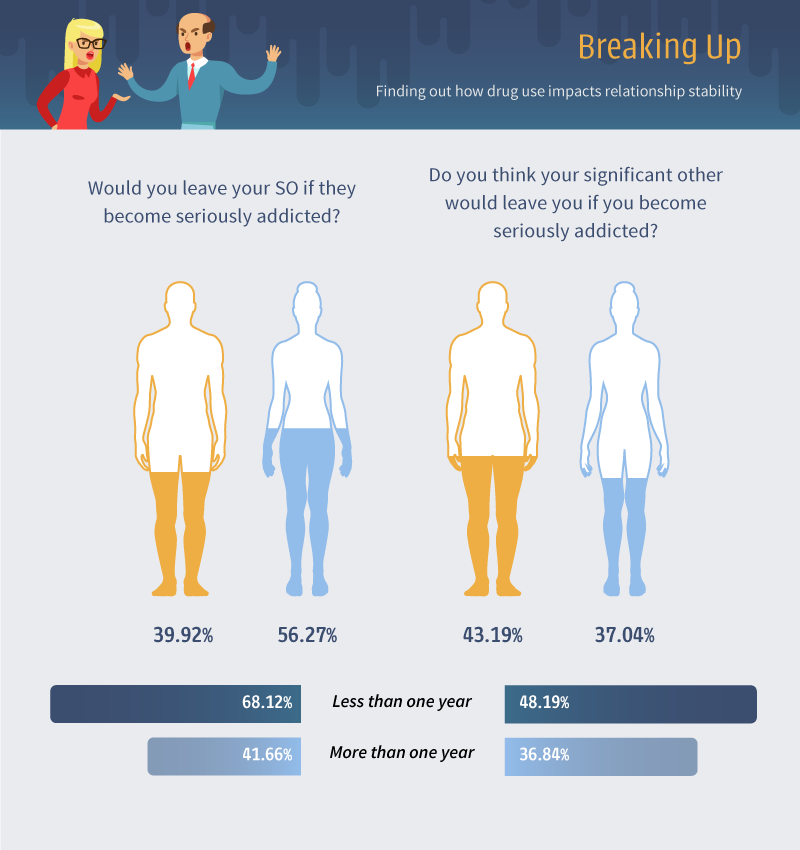
So how do drugs impact the relationships with people in our lives when we aren’t directly related to them? We asked Americans how likely they were to stay in a relationship with someone who’d become seriously addicted to illicit substances. As with nearly everything else regarding drug use – there was no one definitive answer.
More women than men told us they would leave a partner who’d become addicted to drugs. More than half (56 percent) admitted they wouldn’t stay in a relationship with someone suffering from substance abuse, and over a third expected their partners wouldn’t stay with them under the same circumstances. Men we polled were more likely to help their partners through addiction, but they were also more likely to expect their partners wouldn’t stay with them.
The average length of the relationship played a role in how Americans expected they would react if their significant others became addicted, and relationships over a year typically led more people to stick around than short-term romances.
Cause and Effect
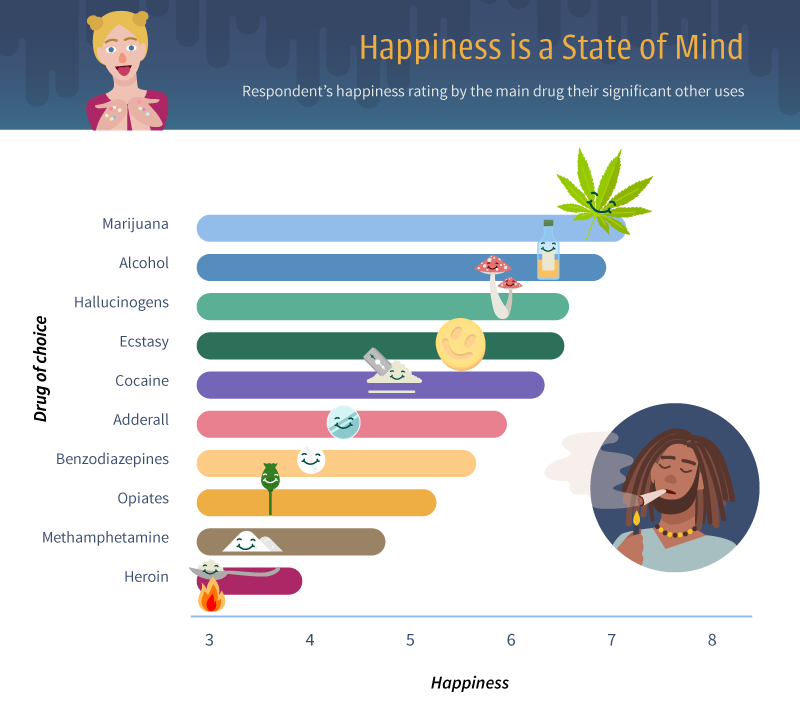
Drug abuse doesn’t just impact the mental state or happiness of the addicted person – we found their significant others sometimes suffer as well.
Americans whose partners used marijuana were typically the happiest of all, rating at just over 7 on our scale. While legal in various capacities across many states (including Washington D.C.) studies have shown marijuana isn’t exactly harmless. Short-term effects like mood swings, reduced body movement, and memory loss may fade, but long-term consequences can include lost mental abilities and reduced verbal and cognitive functionality.
People we polled who had experiences with their significant other and heroin abuse were the least happy by far. Rating themselves less than 4 on average, only methamphetamines and opiates came close to the emotional toll caused by heroin use. Physical effects of heroin use can include heart and skin infections, higher risks of HIV and AIDS, collapsed veins, or pneumonia – all conditions a person might have to be cognizant of if their loved one was addicted.
What about Drugs and Dating Apps?
Have modern technology and new methods for meet-ups had an affect on drug use? In 2020, 44.2 million people in the U.S. used online dating services. Do people who date online use more drugs than those who don’t? Researchers are starting to look into this, and results so far are inconclusive. One study indicated that those who used dating apps were more likely to also use cannabis. However, dating app use and use of cannabis or other drugs seemed to be independent behaviors.
The bottom line? There is no research so far to indicate dating apps are associated with drug use or increase the likelihood of relationship problems involving addiction.
Breaking the Cycle
In 2024, an estimated 80,391 Americans died from drug overdoses, and more than 48,000 of those deaths were attributed to synthetic opioids. For the people who knew these individuals, their lives weren’t measured by addiction or substance abuse alone. All of them were someone’s son or daughter ,and many were siblings, partners, friends, co-workers, and even parents. Addiction is not an isolated occurrence, and it affects more lives every day than we may ever know.
That’s why modern treatment methods include options to address relationship issues. Couples and family therapy are common approaches in drug treatment programs. These treatments address issues such as how to support someone who is in active addiction or recovery as well as how to address and overcome issues that a loved one’s addiction has caused in the lives of family members. Treatment helps to restore relationships and rebuild families.
To make these treatments more accessible, many programs now offer teletherapy options. For parents who need to be home with children, or individuals who can’t make it to in-person treatment for any reason, teletherapy sessions allow them to get treatment from anywhere. For many, this increased accessibility can help them address addiction and relationship issues that would otherwise go untreated.
Hope for Relationships
If you or someone you love is battling with addiction, you are not alone. Addictions.com is here to help you find the best customized treatment and care options available. From interventions to detox and withdrawal, we’ll help you find support every step of the way. Our 24-hour addiction hotline, on-call health professionals, and best in rehab recommendations and reviews will help you find the care you need to start living your best life again. Help is waiting for you. Visit our rehabs page to find support today.
Methodology
We surveyed 1,000 Americans (via Amazon’s Mechanical Turk) who reported that they and/or their significant other used illicit drugs, and we found out how that drug use impacted their relationships. We asked further questions to see how drugs impacted their family and friends.