




In 2024, more than 750,000 Americans experienced homelessness. Of those, around 2/3 were single individuals, with the other 1/3 being families.
While numbers for homelessness were declining, recent years have revealed the tide has turned, and numbers are now on the rise. A 2024 report found that the number of chronically homeless individuals increased by 12 percent from the previous year. Additionally, a record high for the number of people experiencing homelessness in a single night (653,104) was reported in January 2023.
Even with this data, it is hard to say what the true numbers are. Establishing a true figure for the men, women, and children without homes in the U.S. may be more complicated to establish, and therefor not fully accurate.
What does this population actually look like? And what factors came into play in each life that led to homelessness? We decided to take a closer look to find out.
A Closer Look
To get a first-hand look at who makes up our homeless community, where they came from, how they got here, and the role that drug and alcohol addiction may be playing in their daily lives, we interviewed 25 homeless people across South Florida.
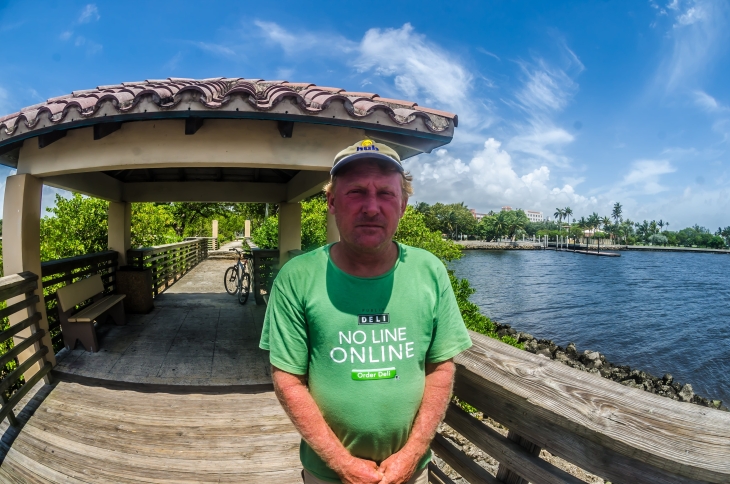
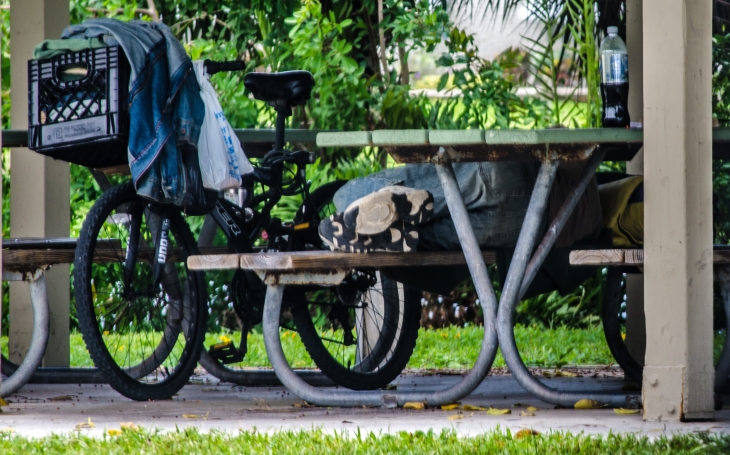
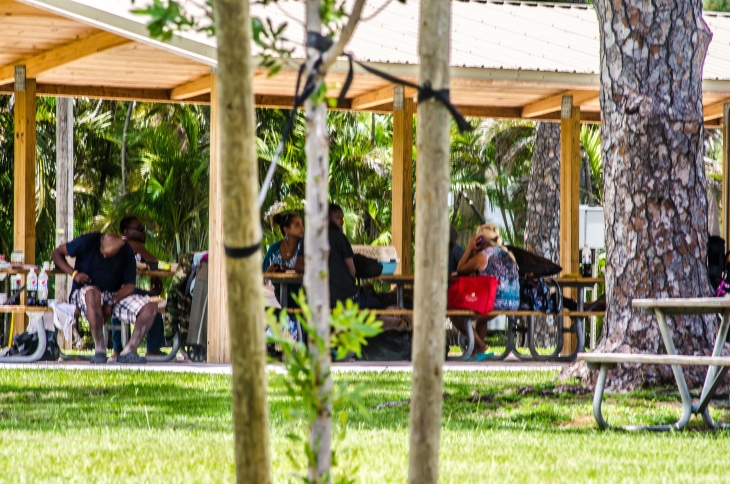
Meet Randall, a man calling the streets of South Florida his home. Following are the results of our survey of Randall and 24 other individuals experiencing homelessness in South Florida.
Who Are Our Homeless Citizens?
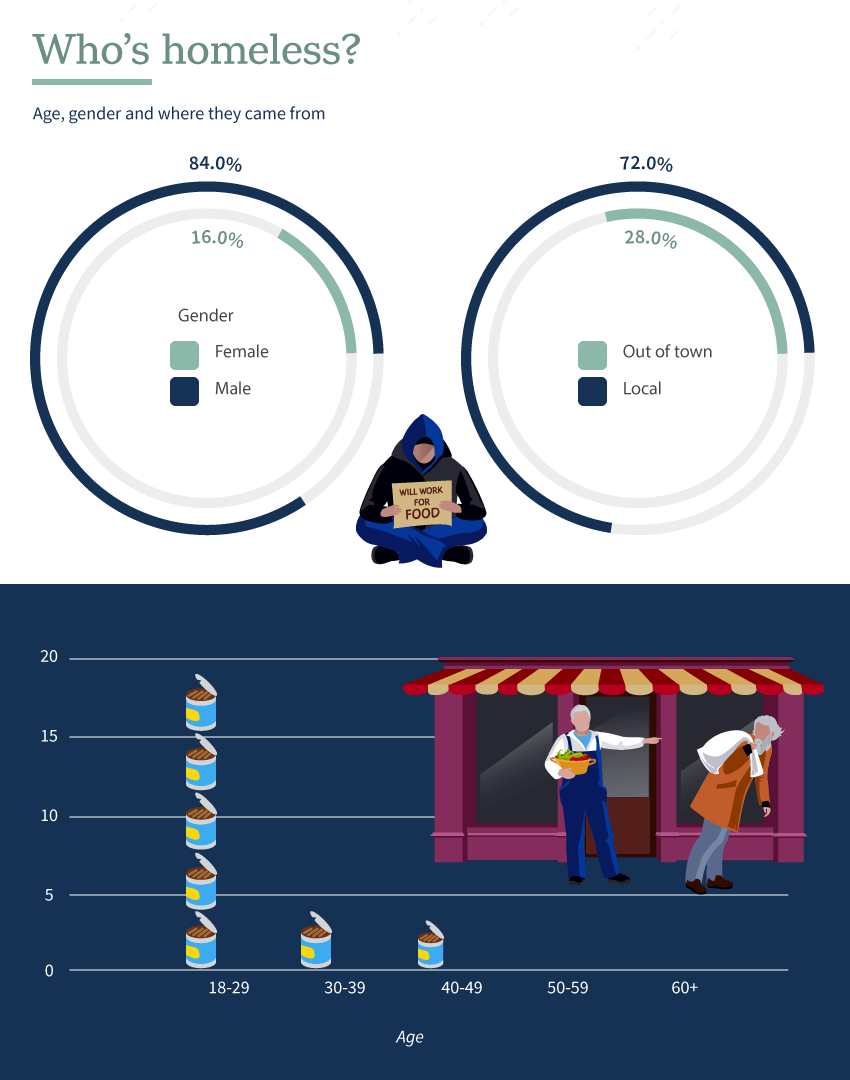
Overwhelmingly, a majority of the homeless population we interviewed in South Florida were comprised of men – 85 percent in fact, compared to only 15 percent who are women. While a minority, women represent the fast growing population of the homeless community and their marginalized presence today creates unique challenges for their ability to find basic care and support. Sanitary products and basic mental health care are often limited and difficult to find, and those who are pregnant or already have children often find suitable resources scarce.
Nearly three out of four surveyed were local to the area they’re currently in, while over a quarter have traveled from other cities or states to their current locations. While a majority of homeless Americans we surveyed were over the age of 60, nearly one in five was between the ages 18 and 29. Young people who find themselves living in homeless shelters or on the streets are often the products of dysfunctional or violent homes or a product of the U.S. foster care system who have “aged out” of the program, making them effectively homeless.
The Real Figures
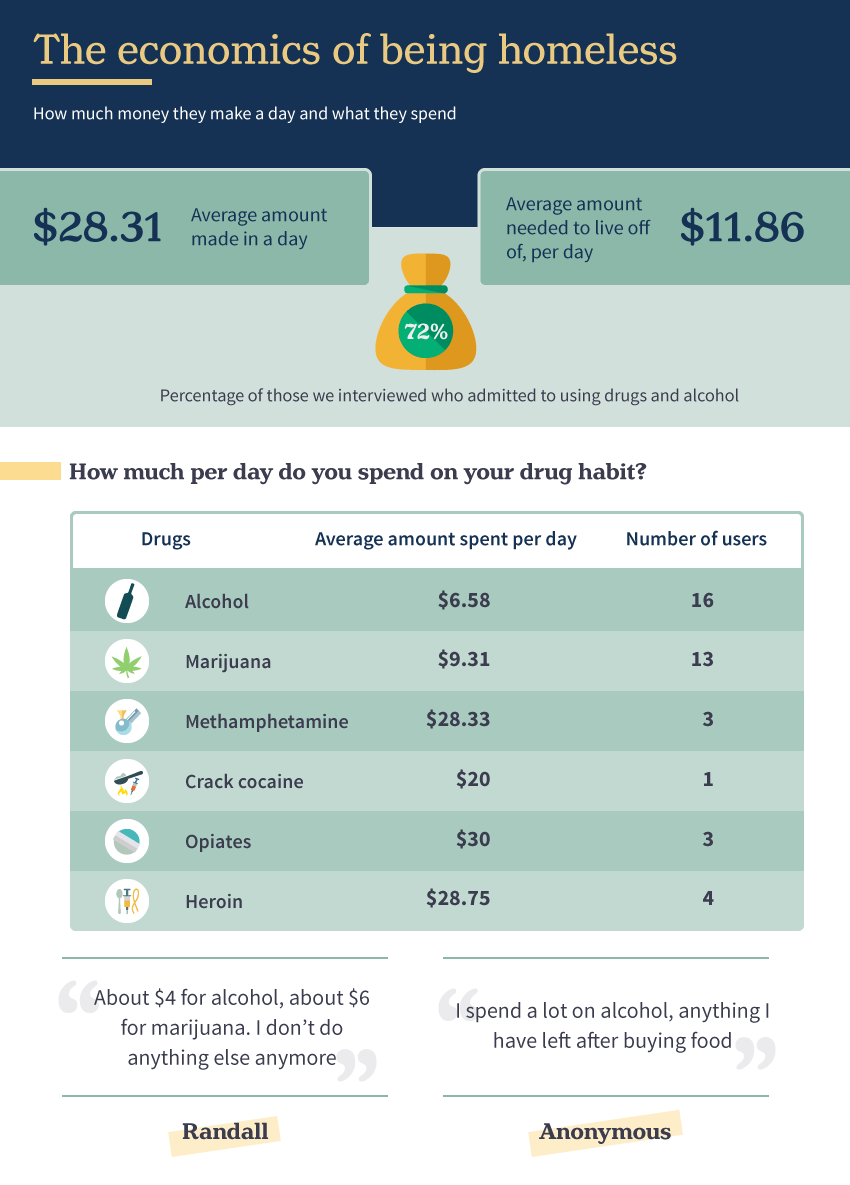
Of the homeless people we interviewed in South Florida, nearly three out of four admitted using drugs, alcohol, or both to us over the course of our study. While they earned just over $28 a day on average from the various jobs they told us they participated in (including panhandling), they indicated needing less than $12 per day to survive. Of course, these figures fail to account for the thousands of dollars spent by the U.S. government on various expenses that could be reduced over time by providing permanent housing and jobs skills.
According to the US Department of Housing and Urban Development, roughly 16.5 percent of Americans experiencing homelessness in 2023 also experienced chronic substance misuse. This substance misuse can prevent them from finding affordable, subsidized, or consistent housing.
A majority of people we polled admitted to consuming alcohol, and spending less than $7 per day on the habit. A slightly smaller percentage also told us they consumed marijuana (currently illegal in the state of Florida at the time of this writing), and spending just over $9 each day on it. An extremely small percentage of homeless Americans we interviewed admitted using drugs including methamphetamine, crack cocaine, or opiates – while those who did indicated spending more each day on them than the averaged amount earned.
How the Homeless Become Homeless
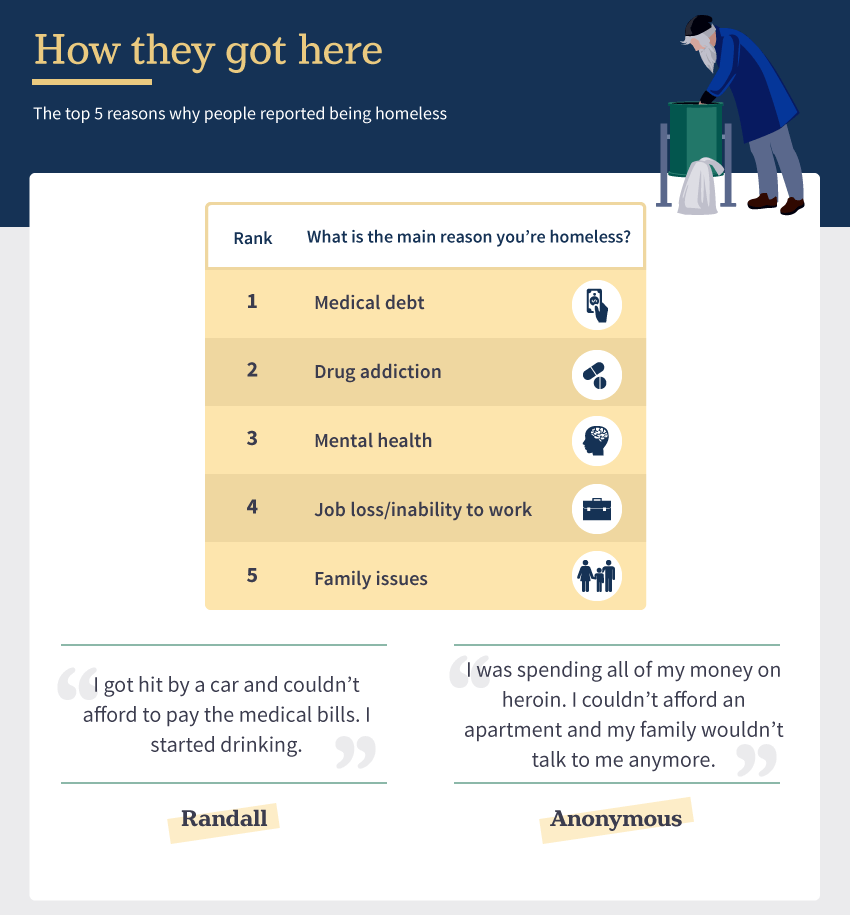
The most common cause of homelessness among the people we interviewed wasn’t drugs or alcohol – though drug addiction ranked as the second-highest cause. The Americans we surveyed pointed to medical debt as the fundamental element of their financial burdens. According to recent studies, 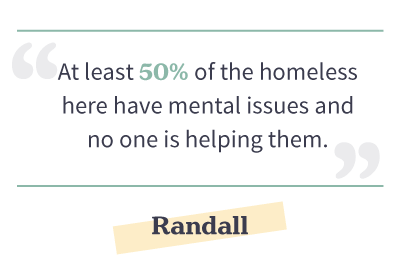 27 percent of Americans say they’ve had trouble paying for medical care in the past year. Many end up withdrawing money from their savings, retirement, and children’s college accounts to help cover medical costs.
In states like Colorado, where the homeless population rose by 39 percent from 2022 to 2023, the availability and decriminalization of marijuana is suspected to be at least partially responsible for the rise in homelessness in recent years.
People we spoke to also indicated that mental health issues were a leading cause of their homelessness. Reports indicate that roughly two-thirds of homeless Americans across the country are experiencing some form of mental health disorder. These can be managed with the right care, but when left untreated they can develop into debilitating conditions.
Job loss and family issues also ranked among the five most common responses we received when asked about the reasoning behind their living scenarios.
Generating a Livelihood
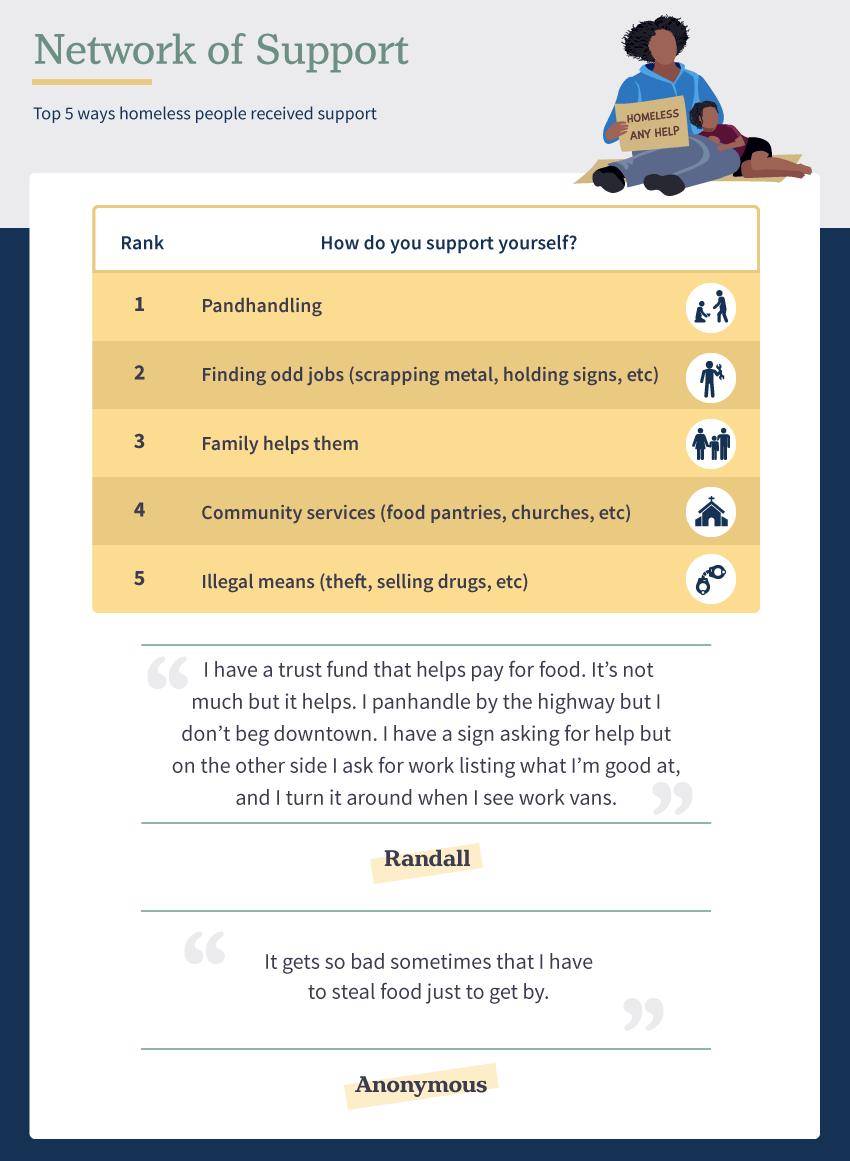
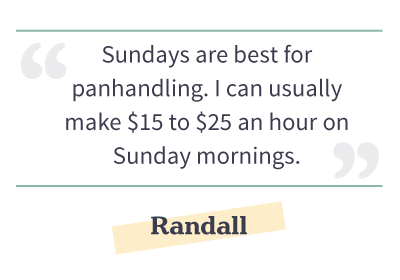
You’ve probably seen individuals accepting money on the street, and perhaps you’ve even given them money yourself. According to those we interviewed, panhandling is the primary source of income for people in the U.S. who struggle to find a permanent housing situation. As indicated above, the average homeless American we spoke to acknowledged earning less than $30 a day from any of the accessible sources of income available to them.
We found that other means of support included miscellaneous employment (like scraping metal), assistance from family and community services, and some even admitted to illegal means including theft and selling drugs.
Outreach Efforts
Many nonprofit organizations, state programs, and federal programs offer additional support for those experiencing homelessness. The U.S. Department of Housing and Urban Development (HUD) announced in 2023 it would be granting $420 million to address homelessness in various communities. Health and Human Services also offers many focused programs to address homelessness, such as transitional living support, street outreach, and children and family services.
Despite these efforts, the number of Americans experiencing homelessness continues to rise. And as we discovered from our survey, many of these individuals have specific regrets about circumstances that led to where they are today.
The True Cost of Homelessness
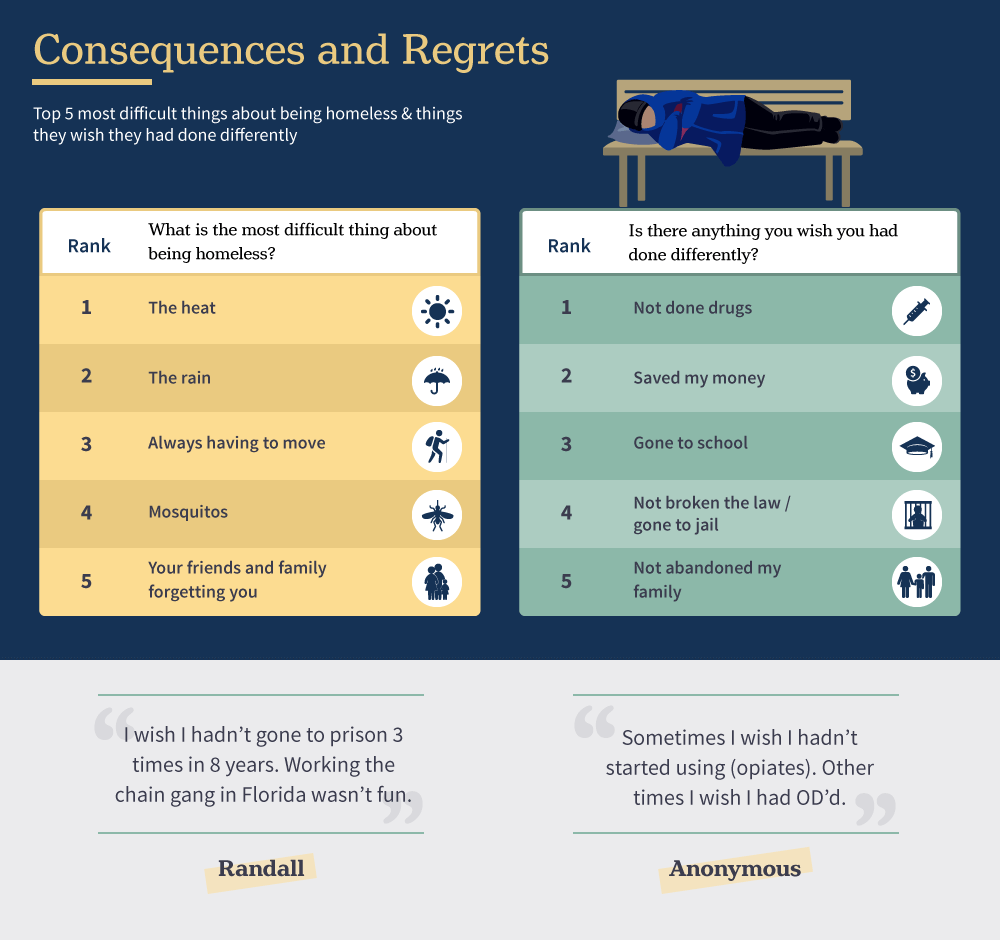
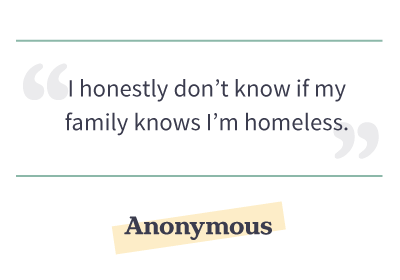
The homeless people we interviewed from South Florida also opened up to us about the hardest parts of not having a warm bed or the guarantee of a hot warm meal. According to those we surveyed, the heat of the Florida sun was the hardest part of their living arrangements. Those we spoke with also admitted that the thought of their friends and family forgetting them was one of the most painful elements of being homeless.
And if they could do it all over again, what would they change? A majority admitted they wouldn’t have started using drugs, while others wished they’d saved their money or even gone to school. Time spent in jail and away from family also ranked among the biggest regrets of the people we surveyed.
Your Best Life, Now
Nearly three-quarters of the people we interviewed in South Florida admitted to consuming drugs, alcohol, or both, and they also told us if they could change anything about their lives, it would be drug use.
If you or someone you love is battling with substance abuse, there is hope. At Addicitions.com, we believe that the treatment process can be different for everyone, and our goal is to help you create a unique plan that works for you. Every step of the way, from intervention to relapse prevention, we’ll help you find the treatment solution that meets your need. Getting sober can help you break the cycle of addiction and get back to living your best life, now. Visit our rehab centers page to learn about free addiction treatment.
Methodology
We conducted 32 in-person interviews in various cities in Palm Beach and Broward County, in South Florida. We asked everyone the same questions and recorded anything extra they offered. Of those 32 people, 7 interviews were left incomplete due to a variety of reasons, such as the person changing their mind midway through or not being able to provide coherent answers. As we wanted a reasonable sample size, we continued to conduct interviews until we had 25 fully completed interviews. While more than one person gave permission to use their name, only Randall also gave permission to use his photo. Last names have been omitted throughout for privacy reasons.