











Expert Insights
A local business in Lubbock, Marley Meats, goes above and beyond to help its employees who are struggling with an addiction. Dallas Marley, who owns the business, recalls they had an employee who had relapsed but couldn’t find a treatment center willing to help him.
So, Dallas gathered his employees and asked them, as a group and a family, if they wanted to throw their hands up and complain about their coworker inconveniencing the workflow, or if they wanted to step up and fight for their brother.
Dallas took to Facebook and later said that he’s realized his job is to build strong people who choose recovery. How could anyone refuse to support such a noble mission?
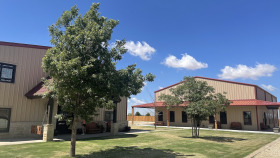
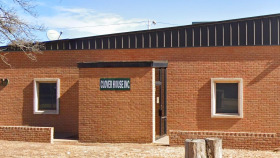
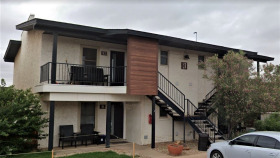
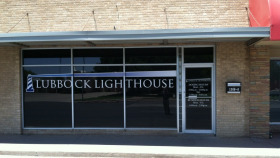
Drug and alcohol rehab in Lubbock, Texas includes 23 treatment providers across the South Plains, offering medical detox, residential and outpatient care, and sober living. Compare local programs by level of care, insurance, and cost, and find help paying for treatment as you take the next step.
How We Rank Listings
Our Lubbock directory brings together licensed drug and alcohol treatment providers so you can compare them in one place. Listings are organized to surface the information that matters most when you are choosing care: the levels of care a facility offers, the payment types and insurance it accepts, its accreditations, and the specialty programs available for specific populations.
We prioritize providers that hold recognized accreditation or state licensure and that report clear, verifiable service and payment details. Where a facility has been reviewed by the Joint Commission, CARF, or listed with LegitScript or NAATP, we note it.
Listings are informational and are not paid placements or endorsements. Always confirm current services, availability, and cost directly with a provider before making a decision.
Rehab in Lubbock: What to Know
Known as the Hub City, Lubbock is the seat of Lubbock County and the medical and economic center of the South Plains region of West Texas, anchoring a metro area of roughly 367,000 people.
Its 23 rehab providers make it the primary point of access to addiction treatment options for people across a wide stretch of rural West Texas, many of whom travel to Lubbock for detox and residential care. You can also compare programs statewide through the Texas rehab directory.
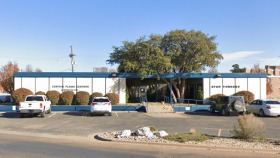
Publicly funded care in the region runs largely through StarCare Specialty Health System, the state-designated Local Authority for substance use disorders across 41 West Texas counties and a Certified Community Behavioral Health Clinic.
StarCare provides screening, outpatient treatment, medication for opioid use disorder, and drug risk education, and its published policy is that no one is turned away because of an inability to pay. Texas Tech University Health Sciences Center adds academic medical capacity to the area.
Substance use in Lubbock County tracks the wider West Texas pattern, with opioids and stimulants driving the most serious harm. The Lubbock Health Department, citing CDC data, reported 41 unintentional drug overdose deaths in the county between August 2023 and July 2024, and noted that all were opioid-related, though not all involved fentanyl.
Statewide, methamphetamine was involved in a growing share of overdose deaths. If prescription or illicit opioids are part of the picture, it helps to understand fentanyl overdose risk before choosing a program.
Lubbock is also a large college town: Texas Tech University and its health sciences center give the city an unusually young population, and about a quarter of residents are between 21 and 34. That shapes local demand for young adult and student-focused programs alongside services for the broader region.




Cost of Rehab in Lubbock
The price of treatment in Lubbock depends far more on the level of care and length of stay than on the city itself. The figures below are Texas statewide averages for the full cost of treatment without insurance, which means most people pay considerably less once coverage,
Medicaid, or sliding-scale pricing is applied. Detox and residential programs sit at the high end because they include around-the-clock care and housing, while outpatient and medication-based treatment are the most affordable.
Because no verified city-specific pricing is available for Lubbock, treat these state averages as a general guide rather than a quote. Local out-of-pocket cost will vary by provider, program length, and how much of the bill your plan covers.





How to Pay for Rehab in Lubbock
Across Lubbock’s 23 providers, self-payment and private insurance are the most widely accepted options, and several facilities also work with public coverage and reduced-fee arrangements. The cards below show how many local providers report accepting each payment type.





Medicare
Four Lubbock providers report accepting Medicare, which covers medically necessary addiction treatment for adults 65 and older and for some younger people with qualifying disabilities. Part A helps cover inpatient and hospital-based detox, Part B covers outpatient services and methadone treatment, and Part D covers medications used in treatment. You can read more about using insurance for rehab before you call a facility.
Medicaid
Texas Medicaid is delivered through the State of Texas Access Reform (STAR) managed care program, and four Lubbock providers report accepting it. Texas Medicaid covers substance use services including assessments, outpatient care, detox, and the FDA-approved medications used in medication-assisted treatment, including methadone, buprenorphine, and naltrexone. StarCare and other publicly funded providers can help you confirm eligibility.
Military Benefits
Three Lubbock providers report accepting TRICARE, the health program for active-duty service members, retirees, and their families. Veterans enrolled in VA health care can also access substance use treatment through the Lubbock VA Clinic, part of the Amarillo VA Health Care System.
Insurance and Private Pay
Private insurance is accepted by 21 of Lubbock’s providers, and every listed facility accepts some form of self-payment. If you are paying out of pocket, ask about total program cost up front and whether the facility offers payment plans. Major insurers active in Texas include the carriers below.
- Aetna
- Blue Cross Blue Shield of Texas
- Cigna
- Humana
- Superior HealthPlan
- UnitedHealthcare
Other Low-Cost Options
For people without insurance, two Lubbock providers report sliding-scale fees and two report financial assistance. StarCare uses a discounted sliding-fee schedule based on income and states that no one is denied services for inability to pay, and Texas maintains one of the country’s larger state-funded treatment networks. If cost is the main barrier, it is also worth asking facilities about rehab scholarships.
Levels of Care Available in Lubbock
Lubbock providers span the core levels of addiction care, with strong availability of detox, inpatient, and outpatient treatment. The counts below reflect how many local facilities offer each level.





Medical detox is the supervised first step for people with physical dependence, managing withdrawal safely before ongoing treatment begins. Fourteen Lubbock facilities offer supervised detox.
Inpatient and residential rehab provides 24-hour structured care and is often recommended for more severe substance use or unstable home environments. Seventeen local programs offer residential treatment.
Outpatient rehab lets people live at home and keep working or studying while attending scheduled treatment, and it is the most common level of care in Lubbock. Nineteen providers offer outpatient rehab.
Dual diagnosis care treats a substance use disorder alongside a mental health condition such as depression or anxiety at the same time. Nine Lubbock programs support people managing co-occurring depression and related conditions.
Sober living homes offer structured, substance-free housing that bridges the gap between treatment and independent life. Four are available locally, and they pair well with rehab aftercare. Ongoing counseling through behavioral therapy supports recovery at every level of care.
Specialty Programs in Lubbock
Many Lubbock providers tailor treatment to specific groups, which can make care feel more relevant and comfortable. The cards below show how many local facilities report each specialty focus.







With Texas Tech University in the city, young adult and student demand is high, and twelve local programs address young adult and college student substance use. Nineteen providers offer alcohol-focused care for people managing alcohol use disorder, and six run opioid-focused programs for opioid use disorder.
One Lubbock provider reports LGBTQ+ friendly services offering LGBTQ+ affirming addiction care, and one offers a program with rehab resources for veterans and military. Women’s, men’s, and older-adult tracks round out the local options.
Free and Low-Cost Rehab Resources in Lubbock
If cost or insurance is a barrier, Lubbock and the South Plains have public and nonprofit resources that can connect you with help quickly. The organizations below offer crisis support, screening, treatment, and overdose prevention, many at low or no cost.
Crisis Lines
- 988 Suicide and Crisis Lifeline
https://988lifeline.org/
Call or text 988, available 24/7 for anyone in emotional distress or crisis. Learn more about crisis support and suicide prevention resources. - StarCare 24-Hour Crisis Line
https://www.starcarelubbock.org/services/mental-health-crisis/mobile-crisis-outreach-team/
Staffed around the clock for mental health and substance use crises in the Lubbock region. - SAMHSA National Helpline
https://www.samhsa.gov/find-help/helplines/national-helpline
A free, confidential, 24/7 treatment referral and information service.
Local Authority and Nonprofit Providers
- StarCare Specialty Health System
https://www.starcarelubbock.org/
The regional Local Authority for substance use disorders, offering sliding-fee care with no one denied for inability to pay (starcarelubbock.org). - Managed Care Center for Addictive and Other Disorders (MCC)
(806) 305-9258
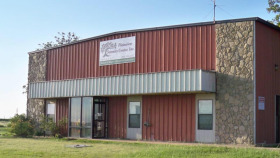
A Lubbock nonprofit providing residential detox, men’s and women’s residential treatment, and outpatient care on a sliding scale (mccaod.com).
Veterans and Military
- Lubbock VA Clinic
https://www.va.gov/amarillo-health-care/locations/lubbock-va-clinic/
Mental health clinic located at 3510 4th Street and part of the Amarillo VA Health Care System, offering substance use and mental health care to enrolled veterans.
Overdose Prevention and Statewide Help
- Texas 211
https://www.211texas.org/
Dial 211 or visit 211texas.org for help finding local treatment, housing, and financial assistance. - Free naloxone (Narcan)
https://healthdata.dshs.texas.gov/dashboard/
The Texas Department of State Health Services Naloxone Distribution Map lists free overdose-reversal medication sites, supported by the Texas Targeted Opioid Response program (healthdata.dshs.texas.gov).
Drug and Alcohol Use Statistics in Lubbock
Overdose remains a serious public health concern in Lubbock County and across Texas. The Lubbock Health Department, citing CDC data, recorded 41 unintentional drug overdose deaths locally between August 2023 and July 2024, and reported that all were opioid-related. Statewide trends put that local figure in context, and you can compare it against national substance use statistics.
Unintentional drug overdose deaths in Lubbock County, August 2023 to July 2024 (preliminary). Lubbock Health Department, citing CDC data, 2025.
Of Texas overdose deaths in 2024 involved methamphetamine, the most of any single drug. USAFacts analysis of CDC data, 2026.
Increase in Texas drug poisoning deaths from 2019 to 2024. Texas Department of State Health Services, 2025.
Resources
- StarCare Specialty Health System. (2026). About Us and Mental Health Crisis Services. https://www.starcarelubbock.org/
- Managed Care Center for Addictive and Other Disorders. (2026). Find a Facility. https://mccaod.com/facilities/
- U.S. Department of Veterans Affairs. (2026). Lubbock VA Clinic, Amarillo VA Health Care System. https://www.va.gov/amarillo-health-care/locations/lubbock-va-clinic/
- Lubbock Lights. (2025). One Year Later: Fentanyl Is Still a Deadly Problem in Lubbock. https://lubbocklights.com/one-year-later-fentanyl-is-still-a-deadly-problem-in-lubbock-whats-changed-what-hasnt/
- USAFacts. (2026). How Many Drug Overdose Deaths Happen Every Year in Texas? https://usafacts.org/answers/how-many-drug-overdose-deaths-happen-every-year-in-the-us/state/texas/
- Texas Department of State Health Services. (2025). Texas Overdose Data to Action. https://www.dshs.texas.gov/injury-prevention/texas-overdose-data-action
- Texas Health and Human Services. (2026). Texas Targeted Opioid Response. https://www.hhs.texas.gov/services/mental-health-substance-use/adult-substance-use/texas-targeted-opioid-response
- Substance Abuse and Mental Health Services Administration. (2023). Help for Mental Health, Drugs, Alcohol: Texas Medicaid and CHIP (STAR). https://www.samhsa.gov/find-support/health-care-or-support/professional-or-program/medicaid-or-chip/texas
- Addictions.com. (2026). Alcohol and Drug Rehabs in Texas. https://www.addictions.com/rehabs/texas/
- U.S. Census Bureau, via Census Reporter. (2024). Lubbock, TX Metro Area Profile. https://censusreporter.org/profiles/31000US31180-lubbock-tx-metro-area/