




Expert Insights
Something you may not realize, unless you live in a rural area, is that addiction treatment services are hard to come by. In fact, more than 75% of counties across the country don’t have opioid treatment programs.
Currently, there are only three medications approved to treat opioid addiction: buprenorphine, methadone and naltrexone. Unfortunately, providers of these medications are in great need in rural areas of the country, including Fayetteville. Some patients drive hours at a time to get to a clinic, which makes working difficult, and it also becomes very expensive.
Rural areas like those in Fayetteville and others across the South are desperate for more providers who can assist these people in treating opioid addiction and embracing recovery.
How We Rank Listings
Every facility on this page is included based on objective, verifiable criteria rather than paid placement. We prioritize state licensing and independent accreditation from bodies such as the Joint Commission and the Commission on Accreditation of Rehabilitation Facilities (CARF), then layer in the level of care offered, the range of specialty programs, accepted forms of payment and the treatment approaches each provider uses.
Listings are compiled from public data sources, information verified directly with facilities, and details reported by the facilities themselves. We update entries as new information becomes available. Our goal is to help you compare real options near you, not to steer you toward any single provider. When you contact a center, we encourage you to confirm current availability, licensing and coverage before making a decision.
- Current state licensing and independent accreditation
- Levels of care and specialty programs offered
- Accepted insurance and payment options, including Medicaid and TRICARE
- Evidence-based treatment approaches and medication-assisted treatment availability
Rehab in Fayetteville: What to Know
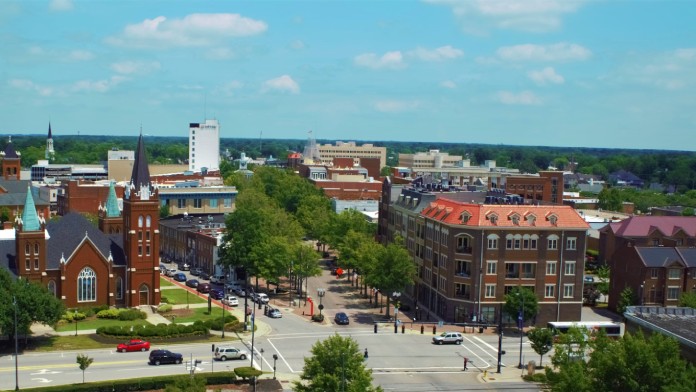
Fayetteville is the seat of Cumberland County and the anchor of a metro area shaped in large part by Fort Bragg, one of the largest military installations in the country. That military presence, combined with a population that has historically had lower median household incomes than the statewide average, shapes both who seeks treatment here and how care is paid for. Our directory currently lists 34 drug and alcohol treatment facilities in and around Fayetteville, spanning medical detox, inpatient care and a deep bench of outpatient options. You can also browse the full North Carolina rehab directory to compare nearby cities.
Cumberland County has been among the hardest-hit counties in North Carolina for overdose deaths since 2020, which has driven an unusually coordinated local response. The Cumberland-Fayetteville Opioid Response Team (C-FORT), started in 2018 under the county Department of Public Health, has grown into a coalition of roughly 160 treatment providers, peer support specialists and community organizations. In October 2024, the coalition opened the C-FORT Recovery Resource Center, a walk-in hub that connects residents to treatment providers, peer support, syringe services and free naloxone.
The local drug supply reflects national trends toward more dangerous combinations. Seventy percent of Cumberland County drug samples sent to the UNC Street Drug Analysis Lab through November 2023 tested positive for xylazine, a veterinary tranquilizer that complicates overdose reversal, and the county has begun detecting medetomidine, another tranquilizer, in its illicit opioid supply. Because fentanyl and these adulterants dominate the local supply, many people entering care here need medically supervised withdrawal before moving into ongoing treatment. Understanding the range of addiction treatment options available locally can make that first step less daunting.
Treatment in Fayetteville is coordinated in part through Alliance Health, the Local Management Entity/Managed Care Organization (LME/MCO) that manages behavioral health and substance use services for Cumberland County residents. For people navigating opioid use disorder, the area has a concentration of methadone and buprenorphine providers clustered along Melrose Road and elsewhere in the city.
Cost of Rehab in Fayetteville
There is no single price for addiction treatment in Fayetteville. What you pay depends on the level of care, the length of your stay, whether you need medically supervised withdrawal and how much of the cost your insurance covers. Statewide averages offer a useful starting point for setting expectations before you contact a facility and verify your own out-of-pocket cost.
These are state averages, and Fayetteville figures can land at or below them given the region’s cost of living. Insurance, sliding-scale fees and financial assistance can substantially lower the actual cost, so treat the numbers above as a comparison tool rather than a quote. Several factors move the final price up or down:





If cost feels like a barrier, start by verifying your insurance benefits with each facility. Many people find that a covered outpatient program, or an inpatient stay that steps down to lower-intensity outpatient care, keeps out-of-pocket spending far below the sticker prices above.
How to Pay for Rehab in Fayetteville
Across the 34 facilities in our Fayetteville directory, providers accept a wide mix of payment types, including self-pay, private insurance, Medicaid, Medicare and TRICARE. Given the city’s large military and veteran community, TRICARE acceptance is especially relevant here. The cards below show how many local facilities accept each payment type.





Understanding which programs work with your coverage narrows the search quickly. Here is how the major payment pathways work locally.
Medicare
Six facilities in the Fayetteville area accept Medicare, which covers medically necessary addiction treatment for adults 65 and older and for some younger people with disabilities. Coverage spans inpatient care, outpatient services and prescription medications used in treatment across Medicare’s different parts. If you are enrolled in Medicare, ask each facility whether it participates and what your copays and deductibles will be. Our guide to using insurance for rehab explains how to confirm coverage before you commit.
Medicaid
Fifteen Fayetteville facilities accept NC Medicaid, the state and federal program covering eligible low-income adults, children, pregnant women, seniors and people with disabilities. For Cumberland County residents with a serious mental illness or severe substance use disorder, behavioral health services are managed through a Behavioral Health and I/DD Tailored Plan. This care is coordinated locally by Alliance Health as the LME/MCO. NC Medicaid can cover screenings, inpatient and outpatient care, family counseling and medication-assisted treatment, including buprenorphine, methadone and naltrexone. You can reach Alliance Health at 1-800-510-9132, or the NC Medicaid Enrollment Broker at 1-833-870-5500 with eligibility questions.
Military Benefits and TRICARE
With Fort Bragg anchoring the region, active-duty service members, military families and veterans make up a significant share of people seeking care in Fayetteville. Fourteen local facilities accept TRICARE, which covers inpatient care, outpatient services, partial hospitalization, residential treatment and medication-assisted treatment. Veterans can also access care through the Fayetteville VA Medical Center’s substance abuse treatment program. For more on benefits and affirming care, see our rehab resources for veterans and military.
Insurance and Private Pay
Twenty-three Fayetteville facilities accept private health insurance, and 31 accept self-payment. Under federal parity rules, most private and marketplace plans cover substance use treatment on par with other medical care, though the specifics vary by plan. If you are paying without insurance, ask about total program cost up front and whether the facility offers financing.
Major insurance carriers accepted across North Carolina facilities include:
- Aetna
- Blue Cross Blue Shield of NC
- Cigna
- Humana
- Medicaid
- Medicare
- TRICARE
- UnitedHealthcare
Other Low-Cost Options
Nine facilities offer sliding-scale fees that adjust to income, 11 offer financial assistance, and 11 offer financing to spread payments over time. These options can make treatment reachable even without robust insurance. North Carolina also funds treatment for uninsured and underinsured residents through state block grants administered by the LME/MCO.
Free Treatment Programs
While our directory does not currently list facilities offering fully free treatment in Fayetteville, cost should not stop you from getting help. The C-FORT Recovery Resource Center provides free peer support, naloxone, and connection to treatment providers and several free and low-cost community resources are listed below. Rehab scholarships are another avenue worth exploring for residential care.
Levels of Care Available in Fayetteville
Fayetteville facilities span the full continuum of care, from medically supervised detox through long-term outpatient support. Our directory lists 14 detox providers, 15 inpatient programs, 33 outpatient clinics, 21 dual diagnosis programs and 4 sober living homes. The cards below show what is available locally.



Medical detox is usually the first step for people withdrawing from opioids, alcohol or benzodiazepines, and it matters especially in Fayetteville given how much fentanyl and xylazine appear in the local supply. Supervised withdrawal manages symptoms safely and sets a foundation for ongoing care. Learn more about medical detox.
Inpatient rehab provides 24-hour structured care in a residential setting, which suits people with severe substance use disorders or unstable home environments. These programs combine therapy, medical oversight and peer support. See what to expect from residential treatment.
Outpatient rehab is the deepest category locally, with 33 clinics. Outpatient care lets people attend therapy and receive medication management while living at home and keeping up with work or family, and it is often used as a step down from inpatient care. Explore outpatient and intensive outpatient programs.
Dual diagnosis programs treat a substance use disorder alongside a co-occurring mental health condition such as depression or anxiety at the same time, which improves outcomes when both are present. With 21 local programs, this level of care is well represented in Fayetteville.
Sober living homes and other aftercare supports help people maintain recovery after a formal program ends, offering structure and accountability during the transition back to daily life.
Specialty Programs in Fayetteville
Many Fayetteville facilities tailor treatment to specific populations and needs. The strongest specialty representation here reflects the city itself: a large veteran and military community, and high demand for alcohol and opioid-specific care.







Alcohol remains the most commonly treated substance locally, with 31 programs offering care for alcohol use disorder. Opioid-specific care is close behind at 25 programs, reflecting the county’s ongoing response to fentanyl in the drug supply and its cluster of providers treating opioid use disorder.
Given Fort Bragg’s footprint, 9 facilities offer programs designed for veterans and service members, addressing the trauma, deployment stress and co-occurring conditions common in this population. For younger residents, 23 young adult programs address young adult and college student substance use, and 3 facilities offer LGBTQ+ friendly care with LGBTQ+ affirming addiction care.
Free and Low-Cost Rehab Resources in Fayetteville
Beyond licensed treatment facilities, Cumberland County has built one of the more coordinated networks of free and low-cost support in North Carolina, much of it funded through opioid settlement dollars. If you or someone you love needs help right now, start with the crisis lines below, then use the local hubs to connect with ongoing care. For immediate danger, call 911.
Crisis and Immediate Help
- 988 Suicide and Crisis Lifeline — Call or text 988, available 24/7. For Spanish, press 2 or text “AYUDA” to 988. See our crisis and suicide prevention resources.
- SAMHSA National Helpline — 1-800-662-HELP (4357), free and confidential treatment referral, 24/7.
- NC Peer Warmline — 1-855-PEERS NC (1-855-733-7762), peer support during non-traditional hours.
- NC 211 — Dial 211 to connect with food, housing, mental health and substance use resources.
County Health and Recovery Hubs
- C-FORT Recovery Resource Center — 707 Executive Place, Fayetteville, NC 28305. Walk-in hub for peer support, free naloxone, syringe services, SMART Recovery groups, and connection to treatment providers. www.cumberlandcountync.gov
- Cumberland County Department of Public Health — 1235 Ramsey St, Fayetteville, NC 28301. Phone: 910-433-3600. Free naloxone and training; ask for naloxone training at the main line. www.co.cumberland.nc.us
- Cumberland Recovery Response Center — 1724 Roxie Ave, Fayetteville, NC 28304. Phone: 910-778-5900. Open 24/7 as a walk-in psychiatric and substance use crisis center offering detox and withdrawal management. cumberlandcountync.gov/home
Harm Reduction
- Free naloxone (Narcan) — Available at the C-FORT Recovery Resource Center, a vending machine in the lobby of the Cumberland County Detention Center (204 Gillespie St), and nearly 50 county pharmacies listed at Naloxone Saves NC. www.cumberlandcountync.gov
- North Carolina Survivors Union / NC Harm Reduction Coalition — Syringe services, fentanyl test strips, and naloxone kits. www.nchrc.org
Veterans and Military
- Fayetteville VA Medical Center, Substance Abuse Treatment Program — 2300 Ramsey St, Building 47, Fayetteville, NC 28301. Inpatient and outpatient substance use treatment for veterans. www.va.gov/directory/guide/state
Government and Medicaid
- Alliance Health (LME/MCO) — 1-800-510-9132. Coordinates Medicaid and state-funded behavioral health and substance use services for Cumberland County residents. www.alliancehealthplan.org
- NC Medicaid Enrollment Broker — 1-833-870-5500, for eligibility and enrollment questions. ncmedicaidplans.gov/en
Drug and Alcohol Use Statistics in Fayetteville
Cumberland County’s overdose numbers tell a story of crisis and, more recently, hard-won progress. After years among the highest overdose death rates in North Carolina, the county recorded its largest one-year decrease since 2011, which local officials credit to naloxone distribution and expanded treatment access through C-FORT.
The presence of xylazine and the recent emergence of medetomidine keep local officials cautious even as deaths fall, because these tranquilizers do not respond to naloxone and complicate overdose reversal. Because fentanyl continues to drive most overdose deaths here, understanding fentanyl overdose risk is central to prevention in Cumberland County. For national context on how these local figures compare, see our national substance use statistics.
Resources
- North Carolina Department of Health and Human Services. (2025). Cumberland County Overdose Data. https://www.dph.ncdhhs.gov/programs-services/chronic-disease-and-injury/injury-and-violence-prevention-branch/north-carolina-overdose-epidemic-data
- Cumberland County Department of Public Health. (2025). Public Health RFP #25-32-PH, Opioid Settlement. https://www.cumberlandcountync.gov/
- Cumberland County Department of Public Health. (2025). C-FORT Recovery Resource Center. https://www.cumberlandcountync.gov/departments/public-health-group/public-health/community-services/c-fort-(opioid-response)/c-fort-recovery-resource-center
- National Center for Drug Abuse Statistics. (2024). Cost of Drug Rehab by State. https://drugabusestatistics.org/cost-of-rehab/
- NC Medicaid, Division of Health Benefits. (2025). Behavioral Health and I/DD Tailored Plans. https://medicaid.ncdhhs.gov/tailored-plans
- Substance Abuse and Mental Health Services Administration. (2024). National Helpline and Findtreatment.gov.