




How We Rank Listings
Our directory is built to help you compare real treatment options in Lansing without wading through marketing claims. Every facility listed here is a licensed or accredited provider, and we prioritize listings that publish clear information about their levels of care, accepted payment types and treatment approach.
We organize results so that the details that matter most to someone starting a search appear first: location, the level of care offered, insurance and payment options and whether a program treats co-occurring mental health conditions.
We do not accept payment in exchange for a higher ranking. When a facility holds accreditation from a recognized body such as CARF or the Joint Commission, we note it because independent review is one of the clearest signals that a program meets established standards of care.
Rehab in Lansing: What to Know
Lansing is Michigan’s state capital and the largest city in Ingham County, a region of roughly 290,000 residents where much of the state’s Mid-Michigan treatment infrastructure is concentrated.
Our directory currently lists 26 drug and alcohol rehab facilities serving the Lansing area, spanning medical detox, residential care and outpatient services. If you want to widen your search across the rest of the state, the Michigan rehab directory covers every listed county.
Publicly funded behavioral health care in the Lansing area runs through the Community Mental Health Authority of Clinton, Eaton and Ingham Counties (CMHA-CEI), based at 812 East Jolly Road in Lansing. CMHA-CEI coordinates Medicaid-funded substance use and mental health services for the tri-county region and operates a 24-hour crisis line.
Two major hospital systems, University of Michigan Health-Sparrow and McLaren Greater Lansing, anchor the local medical network, and both connect patients to addiction treatment options that follow inpatient stabilization.
Local overdose data has shifted noticeably in recent years. The University of Michigan Health-Sparrow Office of the Medical Examiner recorded 82 drug-related deaths in Ingham County in 2025, and for the first time in the county’s recent history, cocaine was involved in more deaths than fentanyl.
County officials and local recovery advocates describe a growing pattern of stimulant use, often complicated by fentanyl and xylazine contamination in the illicit supply. That pattern shapes what local treatment looks like, with many Lansing programs now screening for polysubstance use and pairing medical stabilization with longer-term behavioral care.
The Ingham County Health Department, along with community groups such as Punks with Lunch and Lansing Syringe Access, has expanded harm reduction access across the city, including more than 20 free naloxone distribution points. For people ready to move from harm reduction into structured care, Lansing offers a range of settings described in the sections below.
Cost of Rehab in Lansing
Treatment costs in Lansing track closely with statewide Michigan averages, since most facilities set pricing by level of care rather than by city.
Michigan ranks among the more affordable Midwest states for residential care, though prices vary widely depending on program length, setting and amenities. The figures below reflect statewide averages for full programs.
These are averages, not quotes. What you actually pay in Lansing depends on your insurance, the length of the program and whether you need detox before residential or outpatient care.
Many people never pay the full sticker price, because insurance, Medicaid and sliding-scale arrangements absorb a large share of the cost. Understanding what your plan covers is the single most useful step before committing to a program, so it is worth verifying your rehab benefits early.





How to Pay for Rehab in Lansing
Of the 26 facilities listed in Lansing, most accept more than one payment method, and many combine private coverage with public funding to keep care within reach. The counts below reflect how many local facilities accept each payment type.





The right payment path depends on your coverage and circumstances. The breakdown below covers the options most Lansing residents use.
Medicare
Eleven Lansing facilities accept Medicare, which covers medically necessary addiction treatment for eligible adults 65 and older and for some younger people with qualifying disabilities.
Coverage typically includes inpatient care, outpatient services, and prescription medications used in treatment. If you are enrolled in Medicare, confirm with each facility which services are covered and whether the program is an approved provider before you enroll.
Medicaid
Fifteen Lansing facilities accept Medicaid through Michigan’s Healthy Michigan Plan, the state’s Medicaid expansion program for adults ages 19 to 64 with income at or below 133% of the federal poverty level. In the Lansing area, Medicaid-funded substance use services are coordinated regionally through CMHA-CEI and the Mid-State Health Network.
Covered services can include inpatient care, outpatient counseling and medication-assisted treatment for opioid and alcohol use disorders. No one is denied publicly funded services because of an inability to pay, though non-emergency cases may face a waiting period.
Military Benefits
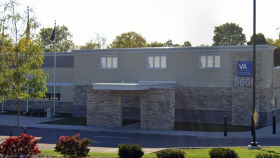
Five Lansing facilities accept TRICARE, and veterans have an additional option through the Lansing VA Clinic, part of the Battle Creek VA Medical Center system, which offers mental health services and connects veterans to substance use treatment. Additional support for veterans and their families is available through the VA and community partners described later on this page.
Insurance and Private Pay
Fourteen Lansing facilities accept private health insurance, and 22 accept self-payment or cash. Under federal parity law, most private plans are required to cover mental health and substance use treatment at a level comparable to other medical care, though specifics vary by plan.
If you are paying out of pocket, ask each facility about the total program cost rather than the daily rate, and confirm what is included.
Other Low-Cost Options
Eleven Lansing facilities offer sliding-scale fees and 11 offer financial assistance, both of which adjust the cost of care based on income. These arrangements are common at nonprofit and community-based providers and can substantially lower what you pay. Some programs also offer payment plans that spread the cost over time.
Free Treatment Programs
While no Lansing facility in our directory reports offering fully free treatment to all clients, several low-cost and grant-funded options exist through community providers and the public behavioral health system. People who cannot afford care may also qualify for support through rehab scholarships or state block-grant funding administered regionally.
- Aetna
- Blue Cross Blue Shield of Michigan
- Cigna
- Humana
- McLaren Health Plan
- Meridian
- Priority Health
- UnitedHealthcare
Levels of Care Available in Lansing
Lansing offers a full continuum of care, from medically supervised detox through residential and outpatient programs. Our directory lists 6 detox facilities, 7 inpatient rehab programs and 24 outpatient providers, along with 18 programs equipped to treat co-occurring mental health conditions.



Medical detox is often the first step for people with physical dependence on alcohol, opioids or benzodiazepines. Six Lansing facilities provide supervised detox, where clinical staff manage withdrawal symptoms and reduce the risk of complications.
Inpatient and residential care provides a structured, live-in setting with 24-hour support. Seven Lansing programs offer residential treatment, which many people choose for moderate to severe substance use disorders or when a stable home environment is not available.
Outpatient care lets people receive treatment while continuing to live at home, work or attend school. With 24 outpatient providers, Lansing has its deepest capacity here, ranging from standard weekly counseling to more structured intensive outpatient programs.
Dual diagnosis programs treat substance use alongside conditions such as co-occurring depression or anxiety. Eighteen Lansing facilities offer this integrated approach, which the local shift toward stimulant and polysubstance use has made increasingly important.
Three sober living homes in the area support the transition out of formal treatment. Recovery housing pairs well with structured rehab aftercare to help maintain progress made during a program.
Specialty Programs in Lansing
Many Lansing facilities tailor treatment to specific populations and substance types. The counts below reflect programs in our directory that report each specialty focus.





Alcohol remains one of the most common reasons people seek care in Lansing, and 21 programs treat alcohol use disorder specifically. Eighteen programs focus on opioid use disorder, often incorporating medication-assisted treatment given the ongoing risk from fentanyl in the local drug supply.
Two programs offer dedicated support for veterans and military members, complementing the services available through the Lansing VA Clinic.
Programs serving women, men and young adults make up much of the remaining specialty capacity, reflecting a treatment landscape built around the general adult population that state and university systems in the capital region serve.
Free and Low-Cost Rehab Resources in Lansing
Beyond licensed treatment facilities, Lansing and Ingham County offer a network of free and low-cost resources for crisis support, harm reduction and connection to care. The organizations below are verified public and community providers.
Crisis and Helplines
- 988 Suicide and Crisis Lifeline
https://988lifeline.org/
Free, confidential support 24/7. Veterans can press 1 to reach the Veterans Crisis Line. For more, see crisis and suicide prevention resources. - SAMHSA National Helpline
https://www.samhsa.gov/find-help/helplines/national-helpline
Free, confidential, 24/7 treatment referral and information service. - CMHA-CEI Crisis Services
https://www.ceicmh.org/services/crisis-services.html
24-hour crisis line serving Clinton, Eaton, and Ingham counties.
County Health Department
- Ingham County Health Department
https://health.ingham.org/health/index.php
Offers free naloxone, naloxone training, and connection to substance use services and peer recovery coaches.
Harm Reduction
- Punks with Lunch Harm Reduction Hub
https://pwllansing.com/
Provides free fentanyl and xylazine test strips, naloxone, and safer-use supplies. Contact 419-405-1308. - Lansing Syringe Access
https://www.lansingsyringeaccess.com/
Provides syringe access, overdose prevention supplies, and delivery by request at 517-258-2491. - Narcan Vending Machines
More than 20 locations across Ingham County offer free Narcan through the county’s naloxone vending machine network.
Veterans and Military
- Lansing VA Clinic (Battle Creek VA)
https://www.va.gov/battle-creek-health-care/locations/lansing-va-clinic/
Offers primary care and mental health services and connects veterans to substance use treatment.
Government and Medicaid
- CMHA-CEI Integrated Treatment and Recovery Services
https://www.ceicmh.org/
Coordinates Medicaid-funded substance use and mental health care for the tri-county region.
Drug and Alcohol Use Statistics in Lansing
The clearest recent signal in Lansing’s substance use data is a shift away from opioids as the leading cause of overdose death and toward stimulants.
In 2025, the University of Michigan Health-Sparrow Office of the Medical Examiner recorded 82 drug-related deaths in Ingham County, with cocaine surpassing fentanyl as the substance involved in the most fatalities, a reversal from prior years driven in part by fentanyl and xylazine contaminating the broader drug supply.
Local officials also point to polysubstance use as the dominant pattern, with most fatal overdoses involving two or more substances, often an opioid combined with a stimulant. During three days in March 2025, Ingham County recorded five overdoses, four of them fatal. These deaths were concentrated in northeast Lansing and Lansing Township, which the health department linked to fentanyl or xylazine contamination of stimulants.
Compared with national figures tracked in broader substance use statistics, the county’s rising stimulant involvement mirrors a trend seen across much of the Midwest.
Resources
- Addictions.com. (2024). Alcohol & Drug Rehabs in Michigan. https://www.addictions.com/rehabs/michigan/
- WLNS 6 News. (2026). UM Health-Sparrow annual report shows continued drop in drug-related deaths. https://www.wlns.com/news/um-health-sparrow-annual-report-shows-continued-drop-in-drug-related-deaths/
- WLNS 6 News. (2025). Four people fatally overdose in Lansing over three days. https://www.yahoo.com/news/four-people-fatally-overdose-lansing-004717724.html
- Ingham County Health Department. (2026). Substance Use and Harm Reduction Resources. https://hd.ingham.org/health/health_promotion_and_prevention/substance_use.php
- Community Mental Health Authority of Clinton, Eaton, and Ingham Counties. Crisis and Medicaid Services. http://www.ceicmh.org/
- State of Michigan, Department of Health and Human Services. Healthy Michigan Plan. https://www.michigan.gov/healthymiplan
- U.S. Department of Veterans Affairs. Lansing VA Clinic, VA Battle Creek Health Care. https://www.va.gov/battle-creek-health-care/locations/lansing-va-clinic/
- U.S. Census Bureau / Ingham County. (2025). Population estimate. https://www.census.gov/quickfacts/fact/table/inghamcountymichigan/PST045225