



Expert Insights
I recently heard about a new type of recovery program called contingency management, which shows some pretty remarkable results.
Contingency management simply means providing incentives and rewards for completing certain recovery activities, like attending a meeting, taking a negative drug test or going to counseling. Rewards include sunglasses, headphones, gift cards, candy and clothes. Believe it or not, it’s backed by science, and it works.
In the VA, for example, there is a 92 percent rate of negative drug tests among program participants. Rewards work better than counseling alone, and the administration knows it. Biden is said to launch more programs from the National Drug Control Policy, with the Department of Health and Human Services increasing their reward budget to nearly $600 per participant!
I’m excited to see how this changes long-term recovery outcomes.
How We Rank Listings
Every facility on this page is scored using a consistent set of factors so treatment seekers can compare options on more than marketing alone. We look at the levels of care a center provides, the payment types and insurance it accepts, whether it holds accreditation from bodies such as The Joint Commission or CARF and the specialty programs available for specific populations.
We also weigh operational signals and verified user feedback to reflect a center’s current quality. Listings are organized to help you find care that fits your clinical needs, budget and location.
Sponsored placements, when present, are labeled as such. A higher position does not imply a medical endorsement of one program over another. The right fit depends on your situation, and we encourage you to verify current services and insurance directly with any facility before making a decision.
Rehab in Bridgeport: What to Know
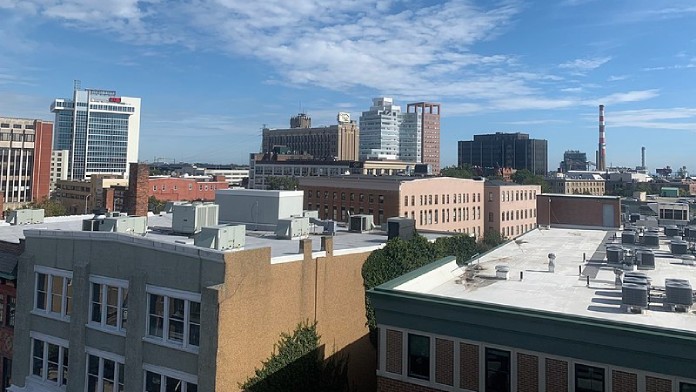
Bridgeport is Connecticut’s most populous city, with roughly 148,000 residents, and sits at the center of the Greater Bridgeport region in Fairfield County along the Long Island Sound. Its coastal location on the I-95 and Metro-North corridor places it within the Bridgeport-Stamford-Danbury metro area and close to New York.
Treatment seekers here have access to 26 rehab facilities in and immediately around the city, spanning detox, residential and outpatient care. You can view the full state picture on our Connecticut rehab directory.
The city’s addiction care landscape is anchored by two major hospital systems and a strong community-clinic sector.
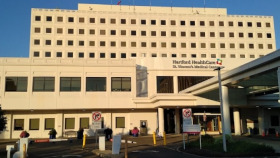
Bridgeport Hospital, part of Yale New Haven Health, and St. Vincent’s Medical Center both serve Fairfield and New Haven counties, while federally qualified health centers such as Southwest Community Health Center provide outpatient substance use treatment on a sliding-scale basis.
Liberation Programs, a longstanding regional behavioral health nonprofit, runs harm-reduction-based outpatient and medication-assisted services in the city, including mobile outreach vans that deliver MAT prescriptions and recovery-coach support. For a broader look at the treatment options these providers offer, see our guide to addiction treatment options.
Opioids drive most of the local overdose burden. Statewide, fentanyl was detected in 78% of Connecticut’s fatal overdoses in 2024, and Bridgeport’s health department reports that fentanyl and other synthetic opioids are involved in more than 85% of overdose deaths in the city. Cocaine, frequently mixed with fentanyl, is the second most common substance found in fatal overdoses across the region.
Understanding how opioid use disorder develops can help families recognize when it is time to seek care.
Because so many Bridgeport residents rely on public coverage, most local programs accept Connecticut’s Medicaid plan and offer reduced-cost options. The Greater Bridgeport region is also served by The Hub CT, the Regional Behavioral Health Action Organization for southwestern Connecticut, which coordinates free naloxone training and connects residents to treatment.



Cost of Rehab in Bridgeport
The cost of treatment in Bridgeport tracks closely with statewide averages, since most facilities set pricing by program type rather than by city. Connecticut ranks 35th nationally for treatment affordability, with an average cost of drug and alcohol rehab of $57,667 before insurance.
Given Fairfield County’s higher cost of living, prices at private, amenity-rich programs in and around Bridgeport typically sit at or above these state figures, whereas community clinics and publicly funded programs cost substantially less. The numbers below reflect statewide averages by level of care.
Actual out-of-pocket costs are usually far lower than these raw averages. Most people use insurance, sliding-scale fees or public funding to cover a large share of treatment, and outpatient care costs a fraction of residential care. Keep in mind that several factors influence what you will ultimately pay.




Before committing to a program, it is worth verifying your rehab benefits, so you know what your plan covers and what your out-of-pocket responsibility will be.
How to Pay for Rehab in Bridgeport
Across Bridgeport’s 26 facilities, treatment seekers have a range of ways to cover care. Nearly all local programs accept self-payment and private insurance, and most work with public coverage through Connecticut’s Medicaid and Medicare programs. Community health centers and nonprofits add sliding-scale fees and financial assistance for people who are uninsured or underinsured.






The right payment path depends on your coverage and income. Here is how the most common options work for Bridgeport residents.
Medicare
Medicare covers medically necessary addiction treatment for eligible residents, including inpatient hospital detox, outpatient counseling and medication management. Eleven Bridgeport-area facilities accept Medicare. Coverage typically spans Part A for hospital-based care and Part B for outpatient services, with Part D helping cover medications used in treatment.
Coverage rules for Medicare and addiction treatment can be detailed, so it helps to confirm what documentation your plan requires before intake.
Medicaid
Connecticut’s Medicaid program, known as HUSKY Health, is one of the most important payment sources in Bridgeport given the city’s income profile. Sixteen local facilities accept HUSKY, which covers detox, outpatient and residential treatment and medications used in recovery.
HUSKY covers medication-assisted treatment such as buprenorphine and methadone, which local providers like Liberation Programs and Southwest Community Health Center use as part of opioid use disorder care.
Insurance and Private Pay
Twenty-three Bridgeport-area facilities accept private health insurance, and 24 accept self-payment. Under federal parity law, most commercial plans must cover substance use treatment comparable to other medical care, though your out-of-pocket costs depend on your deductible, network and plan tier.
If you plan to pay privately, ask about program length and whether financing is available to spread payments over time.
Other Low-Cost Options
For residents without robust coverage, eight local programs offer sliding-scale fees based on income and 12 offer financial assistance. Federally qualified health centers in Bridgeport are required to serve patients regardless of ability to pay, making them a reliable starting point for low-cost outpatient care.
If cost is a barrier to residential treatment, rehab scholarships and grant-funded beds may help close the gap.
Levels of Care Available in Bridgeport
Bridgeport offers care across the treatment continuum, from medically supervised detox through long-term outpatient support. Local counts include 9 detox facilities, 8 inpatient programs, 25 outpatient clinics and 20 programs equipped to treat co-occurring mental health conditions.

Medical detox is usually the first step for people with physical dependence on alcohol, opioids or benzodiazepines. Supervised detox manages withdrawal safely and connects patients to ongoing care. Learn what to expect during medical detox before you begin.
Inpatient and residential rehab provides 24-hour structured care, which suits people with severe substance use disorders or unstable home environments. Bridgeport’s eight inpatient rehab programs typically run 30 to 90 days.
Outpatient care is the most widely available level in Bridgeport, with 25 clinics. It lets people live at home while attending scheduled treatment, and ranges from standard weekly sessions to more intensive schedules. Explore how outpatient rehab works and who it fits best.
Dual diagnosis programs treat addiction alongside conditions such as depression or anxiety at the same time, which improves outcomes for the many people whose substance use overlaps with mental health needs. Twenty local programs offer this integrated approach for co-occurring depression and related conditions.
Sustaining recovery after a program ends is its own stage of care. Continuing support, alumni groups and step-down services help protect your early progress. See our guidance on rehab aftercare for how to plan the transition home.
Specialty Programs in Bridgeport
Many Bridgeport facilities tailor treatment to specific populations, which can make care feel more relevant and effective. The counts below reflect programs offering focused tracks for particular groups and needs.






Alcohol and opioid programs make up the largest share of specialty care in Bridgeport, reflecting the substances most often involved in local treatment admissions and overdoses. Eighteen programs focus on alcohol use disorder, and 13 offer dedicated tracks for opioid use disorder. For younger residents navigating school, work and social pressures, 20 programs offer young adult and college student substance use support.
Population-specific care is also available for groups that benefit from an affirming environment. Six programs offer LGBTQ+ affirming addiction care, and three provide rehab resources for veterans and military members and their families.
Free and Low-Cost Rehab Resources in Bridgeport
Cost should never be a reason someone goes without getting help. Bridgeport residents can reach a range of free and low-cost services, from 24/7 crisis lines to harm-reduction supplies and community clinics.
The resources below are a starting point; several connect callers directly to treatment and transportation.
Crisis and Treatment Access Lines
- 988 Suicide & Crisis Lifeline.
Call or text 988
24/7 support during a mental health or substance use crisis. In Connecticut, 988 is operated by United Way of Connecticut/211.
Find more crisis support resources. - DMHAS 24/7 Access Line.
1-800-563-4086.
Connecticut’s Department of Mental Health and Addiction Services line links residents to detox and treatment and can arrange transportation to care. - Connecticut 211.
Dial 211
Free, confidential, around-the-clock referrals to substance use and human-services resources statewide. - SAMHSA National Helpline.
1-800-662-4357.
Free, confidential treatment referral and information service, available 24/7 in English and Spanish.
Community Health Centers and Nonprofits
- Southwest Community Health Center.
https://swchc.org/
A federally qualified health center offering outpatient substance use treatment, MAT and sliding-scale fees regardless of ability to pay. - Liberation Programs.
https://liberationprograms.org/
A regional behavioral health nonprofit providing harm-reduction-based outpatient care, MAT, recovery coaching and mobile outreach vans serving Bridgeport seven days a week.
Harm Reduction
- CT Center for Harm Reduction (Advancing CT Together).
https://act-ct.org/
Provides syringe services, naloxone (Narcan) kits and training and sexual health testing across southwestern Connecticut. - The Hub CT.
https://catalystct.org/the-hub/
The Regional Behavioral Health Action Organization for southwestern Connecticut, coordinating free naloxone and QPR suicide-prevention trainings and connecting residents to treatment.
Government and Insurance
- HUSKY Health (Connecticut Medicaid).
https://www.huskyhealthct.org/members.html
Covers detox, inpatient and outpatient treatment and medications for addiction. Apply through Access Health CT or the state Department of Social Services. - City of Bridgeport Health & Social Services.
https://www.bridgeportct.gov/government/departments/health-social-services
Coordinates local overdose-prevention and harm-reduction efforts with the Connecticut Department of Public Health.
Drug and Alcohol Use Statistics in Bridgeport
Connecticut recorded 982 accidental drug overdose deaths in 2024, the lowest total since 2016 and a 26% drop from the 1,329 deaths in 2023. Health officials credit wider naloxone distribution for part of the decline, but fentanyl remains the dominant threat, and Bridgeport, as the state’s largest city, continues to see a heavy opioid burden. The figures below place the local picture in statewide context.
The data underscores why opioid use disorder care and naloxone access are central to Bridgeport’s response. Cocaine, often mixed with fentanyl, is the second most common substance found in fatal overdoses across the region, and xylazine, a veterinary sedative that naloxone cannot reverse, has emerged as an adulterant in the local drug supply.
For national context on how Connecticut compares, see our overview of national substance use statistics.
Resources
- Addictions.com. (2024). Alcohol & Drug Rehabs in Connecticut. https://www.addictions.com/rehabs/connecticut/
- Connecticut Office of the Chief Medical Examiner. (2025). Accidental Drug Intoxication Deaths, 2024.
- City of Bridgeport, Health & Social Services. Drug Overdose Statistics. https://www.bridgeportct.gov/government/departments/health-social-services/community-health-education/epidemiology/drug-overdose-statistics
- Connecticut Department of Public Health. (2024). Opioid and Drug Overdose Statistics. https://portal.ct.gov/dph/health-education-management–surveillance/the-office-of-injury-prevention/opioid-and-drug-overdose-statistics
- Connecticut Department of Mental Health and Addiction Services. Access Line for Substance Use Treatment. https://portal.ct.gov/access-line
- United Way of Connecticut / 211. Substance Use Disorder Resources and Information. https://uwc.211ct.org/
- United States Census Bureau. (2020). Bridgeport city, Connecticut and Fairfield County QuickFacts.