

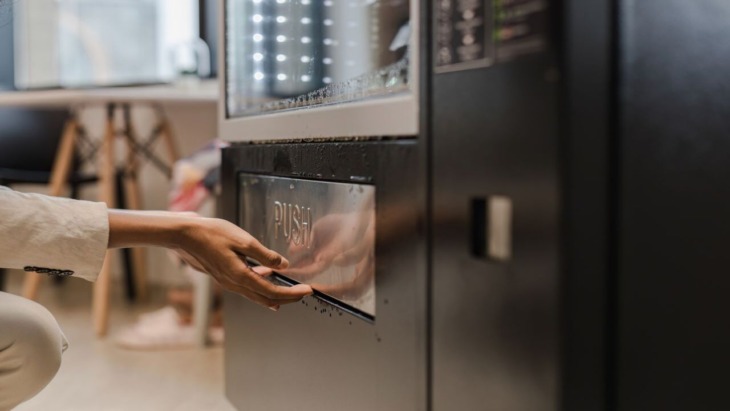
Naloxone access in Oklahoma looks different than it did three years ago. The state’s naloxone vending machine program, which was the largest of its kind in the country when it launched in May 2023, no longer exists. The machines that remain are now stocked and paid for by local nonprofits and health centers.
For Oklahomans who counted on those machines, the practical question is where the medication comes from now.
What Happened to the State Program
Oklahoma’s Department of Mental Health and Substance Abuse Services ran the vending machine program for a little more than a year before canceling it in late 2024.
More than 40 machines were purchased. Eighteen of them never left the warehouse, according to records obtained by Fox 25.
Operating the 25 machines that were deployed cost the department more than $14 million, roughly double the original estimate.
In 2024 the state pulled machines from their original locations and used the usage data it had collected to identify higher-risk areas, then redistributed them based on that analysis and needs assessments.
In announcing the transition, the department pointed to community ownership as the foundation for sustainable overdose prevention. Machines are still being handed off this year.
Who Is Filling the Gap
East Central Oklahoma Family Health Center received three machines from the Oklahoma Primary Care Association for its sites in Wetumka, Henryetta and Wewoka. Wetumka and Wewoka sit in counties the state health department classifies as rural.
CEO Donna Dyer said the organization got an initial stock and will pay for refills out of its own program income.
As of July 9, the three lobbies had distributed 49 naloxone kits and 50 fentanyl test strips since the machines were installed in May. Each site is open 52 hours a week.
Dyer said the organization intends to keep the machines running and will look for other revenue if it has to.
At Oklahoma State University, the campus machine is a partnership with HOPE, a nonprofit providing free and low-cost HIV and STI testing.
Ryane Draper, assistant director of campus wellness, said her team stocks it with harm reduction kits containing naloxone and fentanyl test strips, among the machine’s most popular items.
Understanding Fentanyl and Overdose Risk
Fentanyl is a synthetic opioid far more potent than heroin. Most Oklahomans who die from it did not knowingly take it. It turns up in counterfeit pills pressed to look like prescription medications, which is how a single pill can be fatal to someone with no history of regular opioid use.
Shelby Salazar started the nonprofit Talk About Ty after her 22-year-old brother, Ty Hughes, died in 2020 from a pill he believed was oxycodone.
She restocked machines in towns east of Interstate 35, sometimes several times a week, and said the one outside Lawton needed refilling constantly.
Illicitly manufactured fentanyl poisonings in Oklahoma climbed from 127 in 2020 to 730 in 2023, then fell to 487 in 2024, according to the Oklahoma State Department of Health.
Signs that someone may be developing an opioid use disorder include needing more of a substance for the same effect, withdrawal symptoms between doses, using alone, pulling back from work or family, and continuing to use after a frightening episode.
Funding and Legal Questions Ahead
Two changes are affecting what these organizations can stock. A July 2025 federal executive order stated that certain harm reduction resources and practices facilitate illicit drug use in violation of federal law.
The Substance Abuse and Mental Health Services Administration notified partner organizations in late April that federal funding would no longer be approved for fentanyl test strips or other substance test kits.
Oklahoma removed test strips from its drug paraphernalia statute in 2023, so organizations can still stock them using their own money, but not with state funds.
Separately, House Bill 2012 would have extended authorization for state-registered harm reduction programs through July 1, 2027.
It passed the House and was not heard on the Senate floor, so it died. Rep. Daniel Pae, R-Lawton, said he plans to introduce another extension bill next session.
Free naloxone is still available statewide through the OK I’m Ready mail-out program and through partnerships with some police departments, health centers and schools. The fentanyl test strip option has been removed from the mail-out website.
Finding Addiction Treatment in Oklahoma
Naloxone reverses an overdose. It does not treat the opioid use disorder underneath one, and an overdose reversal is one of the clearest signals that treatment is worth pursuing.
Practical next steps:
- Search addiction treatment centers in Oklahoma and filter by the level of care you need
- Ask providers whether they offer medication for opioid use disorder, including buprenorphine or methadone
- Request naloxone through the OK I’m Ready mail-out program or ask a local health center
- Call SAMHSA’s national helpline at 1-800-662-4357, free and confidential, 24 hours a day
Addictions.com lists verified treatment centers across Oklahoma. Search local options to compare programs and payment types accepted. You can call
800-681-1058
(
