

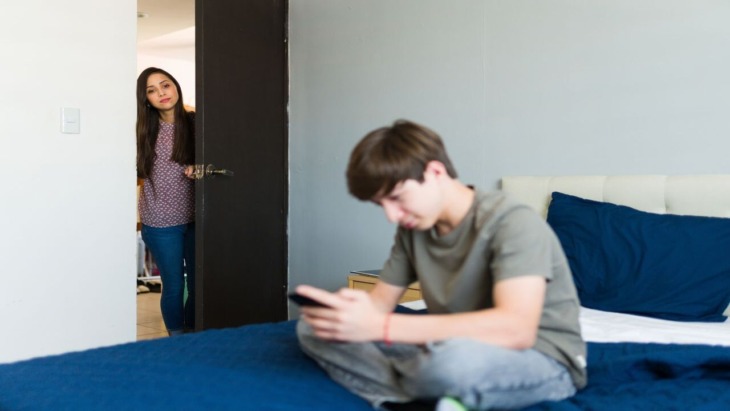
As Nebraska students head back to classrooms this month, federal drug agents are asking parents to have a specific conversation at home.
The concern is not a substance sold in a parking lot. It is a pill ordered through a phone app and delivered to the front door.
The DEA’s Omaha Field Division issued the warning on August 10, timed to the start of the school year. The agency wants Nebraska families to understand how counterfeit pills move through social media platforms, and why a pill that looks like a prescription medication may contain a lethal dose of fentanyl.
Why the DEA Is Focused on Phones
An estimated 95% of American teenagers between the ages of 13 and 17 have access to a smartphone. Working from that reality, the DEA released a series of short videos called “Hidden on Your Kid’s Phone,” built for parents and caregivers rather than for law enforcement audiences.
“Social media is just another avenue that drug dealers are using to push counterfeit pills and other poisons to a new generation,” said Dustin Gillespie, Special Agent in Charge of the DEA Omaha Field Division.
He urged families to sit down together and talk about the fact that pills sold online often contain deadly amounts of fentanyl, and said staying aware of a child’s phone activity is a potentially life-saving measure rather than a sign of bad parenting.
How the Sales Actually Work
The pattern the DEA describes is consistent enough that parents can learn to recognize it. Sellers advertise on ordinary posts and on disappearing stories, frequently substituting code words and emoji for drug names.
Once a buyer responds, the conversation moves to encrypted messaging apps such as WhatsApp, Signal, or Telegram.
Payment runs through consumer apps including Venmo, Zelle, and Cash App. Delivery can be as simple as a package dropped at a door.
For a parent, the practical problem is that none of this resembles a drug transaction. There is no meeting place, no cash changing hands, and much of the message history erases itself by design.
Understanding Fentanyl and Counterfeit Pills
Fentanyl is a synthetic opioid used in medicine for severe pain. Illicitly manufactured fentanyl is far more potent by weight than heroin, which means small differences in a single dose carry real consequences.
The core danger in the counterfeit pill market is misrepresentation. A pill sold as a familiar prescription medication may instead contain fentanyl, and the person buying it has no way to know.
Pressed pills can be made to closely resemble legitimate pharmaceuticals, so appearance is not a reliable safety check.
What Regional Seizure Numbers Show
The DEA Omaha Field Division covers five states: Iowa, Minnesota, Nebraska, North Dakota, and South Dakota. Across that entire territory, agents seized more than 67,000 fentanyl pills in the first seven months of 2026.
The agency described that pill total as lower than in past years, while fentanyl powder seizures across the same five states rose nearly 87% compared with the same period last year.
Combined, the division’s pill and powder seizures account for more than four million potentially lethal doses removed from those five states.
These are regional figures covering all five states rather than Nebraska alone, and the DEA did not break them out by state.
Signs Nebraska Families May Notice
Opioid use in a teenager or young adult rarely announces itself. Changes worth attention include unusual drowsiness or nodding off at odd hours, very small pupils, slowed or irregular breathing, a sudden drop in school performance, pulling away from longtime friends and activities, money going missing, and new secrecy about phone use or package deliveries.
Any single one of these can have an ordinary explanation. Several appearing together is a reason to start asking questions rather than to wait and watch.
Finding Addiction Treatment in Nebraska
Families do not need to wait for an emergency to get an assessment. A primary care provider or a local treatment program can help determine whether an evaluation makes sense and what level of care fits.
For opioid use specifically, medications including buprenorphine and methadone are the evidence-based standard of care, and outpatient programs across Nebraska provide them alongside counseling.
Naloxone, the medication that reverses an opioid overdose, is available without a prescription at pharmacies and through many local health departments and community organizations. Keeping it at home is a reasonable precaution in any household where opioid exposure is possible.
Addictions.com lists verified addiction treatment centers throughout Nebraska. Search by city to compare programs, treatment types, and payment options. You can also call
800-681-1058
(
